
Imprints Are Closing. Now What?
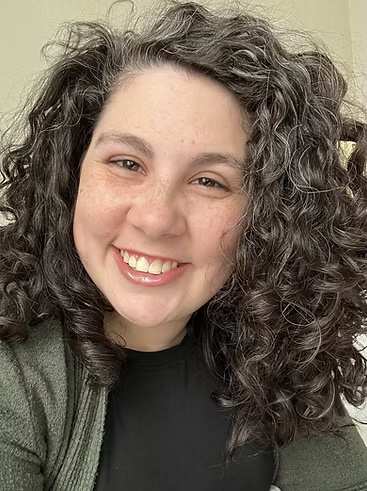
Literary agent Vicki Weber on the state of publishing, querying smarter, and why you shouldn’t stop writing
If you’ve been paying attention to publishing news lately, you know it’s been rough. Roaring Brook shut down. Dial Books for Young Readers closed. Simon & Schuster let editors go across nearly every imprint. It’s enough to make any writer wonder whether it’s even worth querying right now.
We brought literary agent Vicki Weber onto the show this week to talk about all of it—and she did not hold back. Vicki is an agent, a bestselling children’s book author, and the founder of At-Home Author. She’s also been writing some of the most clear-eyed industry analysis we’ve seen on her Substack, which Lisa and I have been borderline obsessing over. (If you’re not subscribed, fix that.)
How Harry Potter Broke Middle Grade
One of the most fascinating parts of the conversation was Vicki sharing a theory she first heard from an editor at a Big Five imprint: Harry Potter was a major contributor to the decline of middle grade. The first book was already on the long side for the category, but it was a hit—so publishers chased that success. Each book got longer and the characters aged up, until what started as middle grade ended as YA at over 250,000 words. Other publishers tried to replicate the formula, and over time middle grade books got progressively longer and more mature. Pair that with declining literacy scores, and you end up with shelves full of books kids simply can’t read.
Vicki was quick to note that this is just one piece of a much larger puzzle, but it’s been compounding for years—and we’re seeing the effects now.
The Push Toward Commercial Fiction
When we asked Vicki to sum up what’s happening in publishing right now, her answer was blunt: “Everybody’s throwing spaghetti at the wall.” Decision-makers at the top are focused on financial viability, editors are trying to acquire the least risky projects to keep their jobs secure, and across the board there’s a major push toward commercial fiction—books built for mass appeal and the joy of reading—because that’s what sells at volume. If you’re writing literary fiction, that’s worth knowing. It doesn’t mean there’s no room for it, but the landscape has shifted.
Write Another Book (No, Seriously)
Vicki’s number one piece of advice for querying authors surprised us with how simple it was: write another book. Too many writers treat the process as a straight line—write a book, query, get an agent, sell—when it’s really more of a squiggle. Every new manuscript sharpens your craft, and having multiple projects ready opens doors with more agents. Vicki spoke from experience: when she parted ways with her first agent and re-entered the query trenches, she prepped packages for every submission-ready manuscript in her portfolio. She had her first offer of representation within 24 hours and three offers by the end of the week—each on a different manuscript.
The other key? Read between the lines of what agents say they want. If an agent says they’re looking for “the next Eyes That Kiss in the Corners,” don’t just think “picture book.” Think about what makes that book work—the lyricism, the emotional arc, the cultural grounding—and match the essence, not just the category.
Start Building Your Audience Now
One thing that really stuck with us: Vicki is building an email list for her adult fiction pen name right now, before she’s even on submission. She ran Facebook ads at a dollar a day for 30 days, picked up around 500 subscribers, and is using newsletter swaps through platforms like StoryOrigin and BookFunnel to keep growing. Her query letter includes her subscriber count as a selling point. You don’t need a published book to start—you just need people to talk to.
Her advice on marketing in general was refreshingly practical: find strategies you actually enjoy. If TikTok isn’t your thing, don’t force it. A Substack, a podcast, a newsletter—whatever feels natural. The goal is consistency and authenticity, not going viral.
The Bottom Line
Publishing is in a turbulent season, and Vicki didn’t sugarcoat that. But the through-line of the entire conversation was this: don’t stop writing. Don’t self-reject. Don’t assume a “no” means “never.” The industry is shifting, and the writers who understand what’s happening—and adapt—are the ones who’ll come out the other side.
“There is more than one path to success, and anything worth doing is worth doing well.” — Vicki Weber
Listen to the full episode wherever you get your podcasts, and subscribe to Vicki’s Substack for more of the industry insight we can’t stop talking about. Got questions for us? Send them our way for our next Ask Beth & Lisa episode!

Author
Beth McMullen is the author of the Mrs. Smith’s Spy School for Girls series , the Lola Benko, Treasure Hunter series, and The Secret of the Storm series (Aladdin/S&S).
She is also the author of the Spy Mom series (Hyperion).
Beth lives in Northern California with her husband, kids, and very grumpy cats. She's obsessed with podcasts and might give up writing in order to have more time to listen. Could happen.

The Truth About the "Second-Time" Query: Life After Losing a Literary Agent, with Amy Trueblood




