
Literary Agent Ann Rose: What Your First Chapter Needs
Send us Fan Mail Literary agent Ann Rose (Marsal Lyon Literary Agency) returns to Writers With Wrinkles for a candid, funny, and reassuring conversation with Beth and Lisa about the current state of publishing—and how writers can keep going anyway. Ann is also the author of The Seemingly Impossible Love Life of Amanda Dean and A Hexcellent Chance to Fall in Love. The episode opens with a frank look at an industry in flux. Ann and the hosts dig into why publishers have grown so risk-averse, wh...

 Apple Podcasts
 Spotify
 Castro
 RSS Feed
 Literary agent Ann Rose (Marsal Lyon Literary Agency) returns to Writers With Wrinkles for a candid, funny, and reassuring conversation with Beth and Lisa about the current state of publishing—and how writers can keep going anyway. Ann is also the author of The Seemingly Impossible Love Life of Amanda Dean and A Hexcellent Chance to Fall in Love.
The episode opens with a frank look at an industry in flux. Ann and the hosts dig into why publishers have grown so risk-averse, why "branded" and name-recognition titles are crowding out fresh voices, and why debut authors and previously published writers alike are finding the trenches tougher than ever. They also tackle the hard truth that marketing has largely shifted onto authors' shoulders—and that, post-Twitter, no one has cracked the code on selling books online.
From there, the conversation turns practical and hopeful. Ann shares exactly what hooks her in a first chapter, what makes her stop reading, and how to push past the "messy middle" of a draft. If you're querying, pivoting genres, or rebuilding after a book that didn't sell, this one's for you.
In this episode:
- Why publishers are playing it safe—and what that means for debuts and option books
- How the marketing burden has shifted to authors, and why there's no magic bullet
- The two things Ann needs in a first chapter: voice and character agency
- Why "starting with action" can backfire if we don't yet care about the character
- The power of the unexpected: write down your first idea, then find your seventh
- Red flags that make Ann stop reading, and the "and then" trap that kills momentum
- Trusting the reader and leaving space on the page (a lesson from Brian Selznick)
- Advice for authors dropped after a disappointing option—and how to shake off imposter syndrome
- Pivoting genres and riding the pendulum: why what's "dead" always comes back
- Ann's midpoint challenge: move your ending to the middle and raise the stakes
- Her #1 piece of advice for writers: stay in your own lane and stop comparing
- What's at the top of her wish list: feminine rage, women doing bad things for good reasons, and gripping, feminist-leaning suspense
Whether you're a debut writer, a seasoned author starting over, or somewhere in the messy middle, Ann's message is one to hold onto: control what you can—your writing—and don't be afraid to get gritty.
Learn more about Ann and find the full blog at writerswithwrinkles.net. Next time: an Ask Beth and Lisa episode—send us your questions! Until then, happy reading, writing, and listening.
Visit the Website
Find Full Episodes on YouTube!
Writers with Wrinkles Link Tree for socials and more!
Threads: @WritersWithWrinkles
Insta: @WritersWithWrinkles
Bluesky: @bethandlisapod.bsky.social
Twitter: @BethandLisaPod
Support Writers With Wrinkles - become a subscriber
Email: Beth@BethMcMullenBooks.com
Writers with Wrinkles Link Tree for more!
01:13 - State of Publishing
07:45 - The Marketing Burden
11:17 - What Makes a Great First Chapter
13:47 - What Separates Good from Great
19:03 - Advice for Authors Starting Over
21:58 - Genre Trends & the Pendulum
24:01 - Tackling the Messy Middle
25:44 - Ann's #1 Advice & Wishlist
Beth: [00:00:00] Hi, friends. I'm Beth McMullen
Lisa Schmid: And I'm Lisa Schmidt
Beth McMullen: And we're the co-hosts of Writers With Wrinkles. This is season five, episode 17 and today we're excited to welcome Anne Rose to the show. Anne is a literary agent with the Marsal Lyon Literary Agency, author of The Seemingly Impossible Love Life of Amanda Dean and A Hexcellent Chance to Fall in Love. I love that title so much, I just have to say. When she isn't writing books or wrangling Rosebud authors, you'll find her on the elliptical, searching for the best taco, or rewatching Call the Midwife for the thousandth time. So welcome, Anne. We are super excited to have you back on the show.
Ann Rose : I'm so excited to be here. Thank you very much
Lisa Schmid: So I originally, of course we've had you before and loved you, I originally, I think I reached out to you like two months ago. And at the time there was like all this chaos in the industry happening online. And to be quite honest, I've forgotten what that [00:01:00] particular chaos was because so much has happened subsequently. Let's just talk about the state of the world in publishing right now
Ann Rose : I don't even remember what it was either.
Lisa Schmid: either.
Ann Rose : there's been so much chaos.
Lisa Schmid: much
Ann Rose : is happening? Gosh, it's ... i've been agent- I was, like, looking into this. Like, how long have I been doing this for? And I've been doing it for a while, and it feels different. Even through 2020 this is a different industry.
I feel every year I say that too, but I feel like it's transi- it's just been transist- transit- transitioning, I can say that word, just o- just over and over trying to figure out who it is. Things that ha- worked in the past aren't working anymore. Publishers are kinda scrambling right now.
I think with the economy the way it is, they're just very risk adverse, which sucks for everyone, right? So we're seeing ... We're not seeing great things.
Lisa Schmid: It's funny that you mention that. I got a pass yesterday on my middle grade, [00:02:00] it had made it through the steps, the editorial team, and it came back because with a pass, sadly, because it's... They're all... They want all branded stuff, like gaming books and... You know what I mean? And it just felt three, five years ago, this would've gone through, but now it's like everything has changed so much, what they're looking for is so narrow, it's hard to just to fit into that, which is... It's sad to see it. I knew it was a possibility, but it's really interesting seeing what's going on out there
Ann Rose : Yeah, and you bring up a really good point, because you said that they're looking for branded, right? So they're looking for things that already have name recognition. They are so risk adverse. They don't want anything that doesn't have a name already attached to it.
Lisa Schmid: Yeah
Ann Rose : So for our debut authors, that has been so hard.
It's one of those hurdles that, I know I keep struggling to fight against year after year, and it gets harder and harder. I'm still gonna do it. I'm still gonna push. I'm still gonna fight. That's ... I don't [00:03:00] mind doing that. But I ... It is, it's exhausting out there getting the same passes "Oh, they don't have a big enough brand," and it's what are you even talking about?
Lisa Schmid: Yeah, I think they are. It is very risk-averse, and it's, I've heard this kind of a couple times with this particular book, and it's just interesting seeing why the passes are what they are. And I know it's not just with middle grade. I know it's across the board that everything is more difficult. What else are you seeing out there just in general besides, besides middle grade? With YA and adult fiction, everything. What's your thoughts?
Ann Rose : I would say across the board debuts are definitely getting hit hard. It's definitely been a hard fight to battle out there of trying to get a debut published. Again, I'm still fighting for them, but it is definitely one of those hurdles that's just keeps coming up over and over again.
Another thing that I don't love out there is this whole we didn't sell enough books to take on the option, right? [00:04:00] So before when you used to get a publisher, yeah, you used to get a publisher who would, invest a little bit of time and, let's do a few books. Let's see if we can build something.
Now it's eh, this didn't sell as much as we thought it would, so we're out. Peace. And it's just like, how do you... Ugh, it's how do you come back from that, right? So
Beth McMullen: Yeah.
Funny too because writing is, the experience of writing, the cumulative craft work that you do, course makes you better. And it's rare that you see a sophomore effort from an author, a new author. Because unless they break out huge, they get dumped for their option, so there's no second book.
Or you see a lot of them coming around and doing either hybrid or self-publishing or something like that because they have their second book or third or fourth or whatever, and they're getting better. You can see that. And they just ... I remember my very first book that I published with Hyperion, [00:05:00] and this was, I think, 2011, so a long time ago now was a lot of this talk of, "This is we're your career partner.
We're in it together. It's a lifetime." And it takes you a beat but you're like, "Wow, none of that is true." You're my lifetime partner if I sold 50 million copies of something, but beyond that, not so much. It's true. I wish it wasn't. It's a bummer, but
Ann Rose : and it feels like a lot of that pressure is put onto the author, right? Because, the publisher does what the publisher does to try to sell the book and, y- they have hundreds of books that they're trying to sell. Where do they focus their time? So if you aren't that lead title, then you're not getting that extra push that it could poten- the book could potentially need in order for it to succeed, right?
Beth McMullen: Yeah
Ann Rose : and when you're not a lead title, then you have that battle to fight
Lisa Schmid: It's funny, I just learned something the other day. I was at a bookstore and the, and I didn't know this went on. the bookseller was like, "Oh yeah, come [00:06:00] here and see, what goes on behind the scenes when I'm looking at what to buy." I don't know if this is true across the board, but it was just specifically he was showing me that, say a sales rep from a cer- certain distributor, they pick their favorites, which is obviously their lead title, and in the remarks, this is what the bookseller says, like there, there's all these remarks, like why you should buy it, da. And then he's "And see, as you go through the list, the remarks start to dwindle as you go further back till there's nothing." There's no remarks on these books that are coming out the same season, but there's nothing the salespeople aren't doing anything for it.
And he goes, "So by the time I get to those books, I've already spent my money." And so I just thought, oh my God, this is a new dimension that I did not know about. And again, I don't know if that's across the board, but I found that to be very interesting.
Ann Rose : Did he, did they... are you willing to share? Was it a certain platform that this
Lisa Schmid: It
Ann Rose : [00:07:00] Okay. Yep, that's what I've heard. Yep
Lisa Schmid: Yeah. And so he was like, "This is what we get to see as a bookseller," so he was going through it with me, and I was like, "That's really interesting. Let me see my book."
Ann Rose : Yeah.
Lisa Schmid: So
Ann Rose : Nothing.
Beth McMullen: I almost feel like you should be ... yes, the publisher absorbs all of the in terms of the upfront expenses of editorial, and distribution, and production, and those are not insignificant. But the marketing, which feels to me like one of the most important pieces of the pie, is really the author's responsibility for the most part now.
Unless you happen to be that very lead title, a lot of it now is your responsibility. And what we have learned living in this ecosystem of aspiring writers or writers who are, have been at it for a while but are recognizing that the industry is changing, is that nobody knows how [00:08:00] to do it.
There is no magic bullet for marketing. What works for one person doesn't work for the other. It's a really complicated space. And it fills me with panic, absolutely 100%. I hear book marketing and I start to sweat. It's
Ann Rose : Yeah.
Beth McMullen: way it is
Ann Rose : Most of us aren't geared toward that, right? We're not... And I know I, I'm probably the worst self-advocate there is. I am great at advocating for my authors, but for my own books, I'm like, "Ah, yeah, I have some stuff. I wrote it. It's fine," right? And so that's not great. You have to be pretty much a big self-advocate if you're gonna have any book out there.
So yeah, it's
Lisa Schmid: And things have changed so much. I think back in the Twitter days of old you could sell books. Not e- not super effectively, but it was such an engaged audience, and it was so cohesive. The book people, and the librarians, and the writers, and And it'll... we were all there in that same space. And then when Twitter imploded, we all fractured out to [00:09:00] different platforms, and there's still not that,
Beth McMullen: no
Lisa Schmid: place where you can sell books. And it really, it's like a void now. You can post something and nobody sees it. And so you do it just out of the pure exercise of doing it, and then you see, you go back a week later and there's two likes if you're lucky.
And so it's really tragic.
Beth McMullen: It is, it's rough out there, for sure
Lisa Schmid: It is rough. The one thing I'm taking away from this, which I'm, it's interesting, is that debuts, we've always talked about how debuts are lucky because they don't have sales track record, then now when I'm hearing debuts are having a hard time. Okay, so there's the debuts are, like, struggling, the people with sales track, bad sales track are struggling. it's just, what's left?
Ann Rose : It's just those authors that have already established books and platform that have sold well that ... I like to use the analogy of a train and we're all cars on the track, right? And the ones that are established, they're still chugging along, right? They're still making [00:10:00] books.
They're still doing the thing. Chook. But everyone else is like wait. We got unhooked. We got unhooked. Wait for us" Oh
Beth McMullen: And
Lisa Schmid: Oh my gosh
Beth McMullen: that back list that drives so much of the sales now for publishing companies, and they know it, so they're gonna stick with the people they know are gonna sell back list. And then, yeah, they're up front. Their new ones will do maybe okay, maybe not as good as their glory days, but it doesn't matter.
They're still, it's still that person that they're behind. It's very interesting.
Lisa Schmid: Ugh.
Beth McMullen: We can't solve all these problems right now. I wish we could
Lisa Schmid: I still have faith that somehow, some way, people can still get published. So with that in mind, I'm gonna
Ann Rose : Yeah.
Lisa Schmid: to a really positive subject, about querying, because you are a fabulous agent. And so we're gonna be throwing some stuff at you, and the very first question I have is what do you [00:11:00] think is the most important element in a first chapter?
Like, when you're getting a query, what is it that you're looking for?
Ann Rose : So I'll say that there's probably two things that are most important in the first chapter. One is voice, and two is establishing agency for the character, so a reason to like hook into and to connect to the character themself, right? So if you don't ha- if those two things are missing, it's really hard to sink into the narrative and wanna keep reading.
So th- that's it. I, it sounds so easy, but it's very difficult
Beth McMullen: I like the agency, 'cause I think people don't always think about that. They'll be consumed with voice or I need the inciting incident or I need da, and then you lose that, that really important element that brings the reader in
Ann Rose : So a lot of times the advice is, you start with action, but the problem with action is that we don't know what the char- we, how do we connect to them, right? I [00:12:00] will say a lot of times, especially in fantasy, you will start with a, they'll start a book with a character running.
Why are they running? I have no idea. I'm not a runner. Props to anyone who can run. I cannot run. That is not me. I will die in the zombie apocalypse. I have already figured that out. It is okay. I've made my peace, right? But they're running. Who are they running from? Why are they running? Is this a choice?
Y- did they steal something? Did they murder some- Like, we don't know. So it's like there's action, yes, but I don't know enough about this character to care about them, about why they're running
Beth McMullen: Yeah. see that a lot too with thrillers,
Where you're thrown right into some heavy action, and you're like, "I don't care if they all die. I don't even know these people." It's irrelevant. The really good ones you in the action and make you care at the same time, and that's a really neat trick when you see it because it's just, it's su- it's so calibrated that you know that you're [00:13:00] in the hands of somebody who's gonna tell you a good story.
I
Ann Rose : I always like to, I like to say it's agency. So it's like a small compelling goal that the main character is trying to achieve while we're setting up the larger framework in the world and the goals around them, so
Beth McMullen: Yeah. It gets you on their side right away.
So what separates in your mind a good manuscript from one that you're like, "Absolutely, yes, I have to have this"? 'Cause we hear a lot about "This is perfectly fine. It's a good book, but it's not making me, scream it from the rooftops."
Ann Rose : I think it's an element of the unexpected. So it's that, it's a good story, but also, oh, I didn't... No I didn't really see that coming. Oh, is that what they're going to do? Oh, okay, that's interesting choice, right? So it's those kind of ones that make your brain go, ooh, wait, what's that? So it doesn't feel like it follows along that same linear kind of pathway, in a...
If that makes sense. But I don't wanna... I say linear, now I'm worried [00:14:00] everyone's gonna be like you can't tell a story in the right order?" And I'm like no," like... So I don't know.
Beth McMullen: It's that f- it's like that freshness. I always feel like you can tell me the same story 10 times, and if on the 10th time it has these elements of freshness where something is not quite, again, like you said, expected, that's enough. That I'm in
Ann Rose : Yeah. So a lot of times it comes down to you're ma- as you're plotting out or however you write or, even if you're a pantser and you get to a point and you're like, "Oh, I know what the- I know what they're going to do next," it's wait a minute, pause, time out. That was your first idea.
Maybe just write that down. Come up with 10 more ideas if you can, and pick one of the ones that are, like, the l- the lesser expected ones, right? So if you get to that seventh idea and it's "Oh, they could totally do that. That makes sense. That's amazing. No one's..." That's what you should do. So it's not always going with the, "This is what they should do," but wait a minute, what else can they do?
Beth McMullen: Yeah, you have to [00:15:00] take some risks even if it kinda makes you a little uncomfortable
Ann Rose : Yes
Lisa Schmid: So on the flip side of the coin what causes you to stop reading a submission?
Ann Rose : Wow. Obviously, like the m- the main things, right? The inherent misogyny or racism or homophobia or all of those things are big red flags to me right away. So that's gonna make me immediately stop reading. Otherwise it's just I don't know, the opposite of what we were just talking about.
It's the expected, it's the boring. It's, oh, okay, so Jane met- Jane is, in the 1500s and she wants a husband, and she meets Jack, and Jack is a very good guy, and then they c- get married. It's oh, okay, great. So good for Jack and Jane.
Beth McMullen: I think sometimes you get crushed under those tropes. People are writing to the tropes and they're so worried about going, swerving out of their lane, but the fun stuff comes when you swerve out of your [00:16:00] lane. The really good books are the ones, again, that are like, "Wow, didn't see that coming." And yeah, I also find in books that lose me, it's this sort of and then this happened, and then this happened. So it's like a series of scenes that are just stacked up one next to each other, and nothing causes anything else, and nothing's ever at risk, and there's nothing to lose, and it's just we had lunch, and then we did this, and then we...
And you're like, what? Nothing. There's no momentum, it's just... Yeah, and I think I think you forget it's really hard to write well
Ann Rose : Yeah. It's missing that cause and effect, right? That
Beth McMullen: Yes
Ann Rose : did something, therefore this happened, right? That kind of moment. So it's the choices, it's the actions, and also the inactions that should be, like, pushing the plot forward, not the and thens, right? We went to the, we went to the mall, and then we bought a car, and then we crashed our car, and then
Because there's conflict, they crashed the car, right? But, and then we got a tow truck. But it's o- [00:17:00] okay, and?
Beth McMullen: I don't care.
Ann Rose : Yeah.
Beth McMullen: We had on, the author Brian Selznick last year, I think, and he said something in our interview with him about leaving space on the page for the reader,
And it really stuck with me. Really stuck with me. I think about it a lot, and the way that he was describing it was leaving room for the writer to-- or the au- the reader to bring their own thoughts and feelings to what you're doing. Don't treat them like an idiot. And so I've been working on this project, and I've been really trying very hard to leave that space, to not err on the side of telling the reader what I feel like they need to know. If they can't figure out what they need to know from what I've written, I haven't done a good enough job, and I gotta go back and revise it.
It's just-- it is interesting. It does-- I think the [00:18:00] deeper you get into the craft, the more you realize, like, how complicated it can become to do it well.
Ann Rose : Yeah. Absolutely. It absolutely can. It's the trusting the reader, right?
Beth McMullen: Yeah.
Ann Rose : to trust the reader
Beth McMullen: a lot of us feel like we can't, we gotta tell them everything. What if they get it wrong?
Ann Rose : Right? But then it goes back to you need to trust yourself, right? It's trusting the reader, but it's also trusting that you are setting the things up in the way that they're going to understand it, so
Beth McMullen: And people wonder why all us writers are, like, out of our minds. It's a lot of stuff going on. You gotta manage a lot of stuff.
Ann Rose : Yeah
Beth McMullen: So what advice do you have for authors, this is changing gears a little bit for authors whose previous books didn't sell well, who find themselves dropped for that option or whatever it is, and they are back in the query trenches, starting over after feeling like they were done with this part?
Ann Rose : I think first I hope that they have found a partner with an agent that doesn't just drop them just because their [00:19:00] second book doesn't sell. I know for my- for myself I'm not gonna just abandon an author because their book didn't, quote unquote, "sell well enough". We're gonna figure it out.
We're gonna figure out a way to attack, getting a different project out there. Maybe we pivot to a different genre. Maybe we pivot to a different age group. Maybe we do, work with what the ideas that we have and creating stronger hooks. So I like to dig into it with authors, so I'm not gonna be one to high and dry, kick them to the side.
But if they do find themselves in that situation where they have been and they're out querying again, first, here's a virtual hug for all of you. Because that is tough. Second, I think you just have to shake off that imposter syndrome, 'cause I know that anyone out there back in the trenches after all of the things is gonna feel pretty beat down.
So you had a book published. That is amazing. It didn't, quote unquote, "sell well enough". That is not your fault, so all we can do is just work on the next thing. So [00:20:00] just do your best and just, you can hope for the best. There are, like, strategies of pivoting, for example. So you wrote a mystery, and it did not do super great, so you pivot to maybe thriller or suspense or horror or, maybe you completely pivot and, "I'm gonna write a rom-com", right?
So there's ways to get back in the game, always
Beth McMullen: find it really interesting how many, middle grade in particular has been pretty hard hit by the changes in readership over the last couple years. So many middle graders have pivoted to adult.
Ann Rose : I've seen it
Beth McMullen: Fun to watch, 'cause I feel like you, maybe you enjoyed them as a middle grade writer, but suddenly they're, like, unleashed as an adult writer, 'cause they can use bad language, and they can do more crazy violence or whatever, and you're like, "Wow,
Ann Rose : Yeah
Beth McMullen: I'm impressed"
Ann Rose : I never gave up on middle grade when middle grade got tough, so I still have a very vast array of middle grade authors on my [00:21:00] list, and we are still selling middle grade books. So is it a challenging fight? Absolutely. But there are some of us that just stuck in with the game and we're like, "You know what?
The pendulum's gonna swing one way. It's gonna always swing back." So just wherever you as a writer feel the most comfortable I would say stay there, right? 'Cause the pendulum is eventually going to come back. And it's about that timing, right? Publishing is 90% timing these days
Beth McMullen: Yeah. I feel like I'm old enough, I'm old enough now that seen rom-coms die times. They die, they come back. They're, they're basically zombies themselves, right? Because they just, they're never actually dead. They're just a little quiet for a while, and then they're back, and everybody's "Oh my God, the rom-com.
We love the rom-com." And I'm thinking, "Oh, here we are in the cycle again." It's like the washing machine
Ann Rose : Yeah, and every sub- every genre is having its rough time too. In [00:22:00] romance, for example, we're hearing how, ooh, contemporary romance is having a really s- struggle right now. So all those contemporary romance authors are like, "Aah!" And they're scrambling. And it's just, it's okay.
It'll be okay. We'll get back through this
Beth McMullen: romantasy, which everybody was like romantasy." I just heard that romantasy was starting to, swing back down into, ugh, yeah. It's I think just I think you said this already, just write what you wanna write.
Lisa Schmid: Yeah, it's hard. And I think, I'm in that place where as a middle-grade writer, that's how I identify as, is a middle-grade writer, and I'm trying to write a cozy mystery to pivot and do something new, I have been s- like, s- just struggling with it, and it's because I think I'm in the grieving process of not being in the space that I got into writing for.
Ann Rose : Right
Lisa Schmid: so that's that's kinda sad.
Ann Rose : What about a middle grade cozy [00:23:00] mystery?
Lisa Schmid: It's just, it's still a middle... And I write, that's kinda what I write now,
Ann Rose : Okay.
Lisa Schmid: cozy mysteries. So it should be... That's the one thing I am like she can drink and she can swear." I do both of those, so I can relate on that level. So I'm like, I'm plugging away.
I'm trying to do my 250 words I don't know, once a week.
Ann Rose : I ha- I have this idea. I've got 40,000 words written. I'm, like, at my midpoint right now. I'm like, "Oh, I have a, still half a book to write," like
Beth McMullen: The midpoint's the worst, right? 'Cause you're like, "I'm almost... No, I'm not almost there. I'm, like, still in that messy middle"
Lisa Schmid: And it's everyone gets stuck there. I just saw Aaron and Trotta Kelly posted something about "I heard that you have to write, I've got a beginning and an ending. Somebody said I have to write a middle," and I'm like, "Oh no, that's a myth.
Ann Rose : Yeah. Move along
Beth McMullen: Skip the middle. If somebody could figure out how to skip the middle, that would be [00:24:00] wonderful. I'd be down with that plan
Ann Rose : I have a challenge for you then, which I think actually helps out a lot of writers. So I think a lot of times, especially in early writers and early drafts, the middle feels so murky because we- there's not enough going on, right? There's not enough stakes, there's not enough conflict, there's not enough this.
So the challenge would be then take your ending, move it to your midpoint, and how do you up the stakes for your ending?
Beth McMullen: That's actually a really good idea
Ann Rose : I know. You're welcome.
Lisa Schmid: you need to take your own advice, girlfriend.
Ann Rose : Oh, I, I know. I know I do
Lisa Schmid: You're just like, "Wait a minute, I've solved my own problem."
Ann Rose : I and I'm working on a horror right now, and so I, I know my own problem. I'm about to murder someone. It's gonna be fine. It's
Lisa Schmid: Oh my God, can I murder someone with you?
Ann Rose : Yes, totally. Yes.
Beth McMullen: Yeah, you guys are having a lot. Cozy mystery, there's always a dead body right at the front. Horror, lots of dead bodies, maybe, potentially
Ann Rose : Potentially, [00:25:00] yes.
Lisa Schmid: Horror is
Beth McMullen: I'm feeling a little nervous in this crew right now.
Lisa Schmid: We're all living in a horror movie, so just
Beth McMullen: oh, we sure are.
Lisa Schmid: Write what
Beth McMullen: We
Lisa Schmid: Ann.
Beth McMullen: are
Lisa Schmid: Okay, so okay, so what... This is the question, I know it's a really basic question, but I think it's everyone always is hanging on every word when you answer these kind of things, is what is the one piece of advice that you would give writers right now that are, like, out there trying to get an agent or a deal? That's a broad question, but
Ann Rose : Yeah, I think, I feel like I've answered this before, and I don't think my answer has changed much. And
Lisa Schmid: okay
Ann Rose : it's just to stay in your own lane. And I know that's really hard, but everyone's journey on this wild road of publication it's different. Everyone's path and journey is different. And so if you start looking at the lane next to you and start comparing they got this," or, "They got that," or, "They did [00:26:00] this," or, "They did that," you're side- you're getting off track for your journey.
Because you can't. There's no comparison. This industry is subjective. It's about timing. It's about so many other things that you just have no control over. The only thing you can control is your writing, and that's it. That's all you can do. So you gotta just kinda put on, just forward focus and just look ahead for yourself
Beth McMullen: Yeah, that is very true because you will always find a way to make yourself suffer by comparison.
Ann Rose : Yeah
Beth McMullen: It's rare that you'll see somebody achieving something and be like, "Oh, I already did that."
Ann Rose : Right?
Beth McMullen: You're always like, "Wait a minute. Should I be doing that? What's happening?" Okay, and then you just get completely sidetracked and lose your thread, which is not good
Ann Rose : Everyone's posting XYZ. Do I need to make a post about S- XYZ? Spends six hours making post about XYZ, posts it, gets two likes. Was that worth my time and energy? I don't know[00:27:00]
Beth McMullen: Totally really important thing for people to hear. Because yeah I think you can go down that rabbit hole and feel like you have to do all these things because that's the only way you're gonna succeed, and then don't write anything 'cause you're spending your whole time learning how to make TikTok videos, and you hate it.
You don't really want to do it, nothing happens, and you don't have your next book because you spent all your ti- yeah. It's like a, it's a chicken and the egg. Just goes around and around. So what are you looking for right now? What's the top of your wish list?
Ann Rose : Gosh feminine rage novels. So yes, I would love all of those for sure. I want stories of women doing bad things for good reasons, is definitely another way to put it. So I would love all of those things. I feel like we're all a little angry on the inside, and I think that yeah, I know, weird, right?
Beth McMullen: I would say more than a little.
Ann Rose : So I, I'm here for it. Come share with me. I want to experience this with you. I [00:28:00] want to rage with you. So that's probably the top of my list. I'm really looking for some more suspense novels some things that are thrillers, like just really gripping, edge-of-your-seat kind of stuff.
Also, if it has a feminist bend to it, it's definitely be still my heart. So
Beth McMullen: That's gonna be the headline of this podcast: Ann Rose is looking for your rage.
Ann Rose : I am. I am.
Beth McMullen: it. I love this. 'Cause I am just, I feel certain that these books are out there, right? Because you can't hold it all in. It's gotta go somewhere, and why not put it in a book?
Ann Rose : Yes. And be ugly and dirty and get gritty and be afraid. Do the thing that makes you afraid in your book. I think that's, I think we need to see a lot more of that right now, because I think everyone's being a little still too mild. So
Beth McMullen: Tentative, not really leaning into it. I love this. This is the perfect, this is the perfect place to wrap up. I want everybody to hang onto that message. Keep on spinning that over in your head. So thank [00:29:00] you so much for joining us yet again. We love talking to you. It's always a great way to spend an episode, so thank you again for coming
Ann Rose : Thanks for having me. I really appreciate it
Beth McMullen: And listeners, remember you can find out more about Anne by visiting our podcast notes and the blog at writerswithwrinkles.net. And Lisa and I will be back next time with an Ask Beth and Lisa episode, so if you have questions, thoughts, feelings, any of that, please send them our way. And until then, happy reading, writing, and listening
seventeen
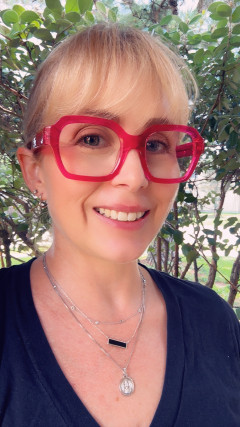
Literary Agent
Ann Rose is a literary agent with the Marsal Lyon Literary Agency, author of The Seemingly Impossible Love Life of Amanda Dean and A Hexcellent Chance to Fall in Love. I love that title so much, I just have to say. When she isn't writing books or wrangling Rosebud authors, you'll find her on the elliptical, searching for the best taco, or rewatching Call the Midwife for the thousandth time.