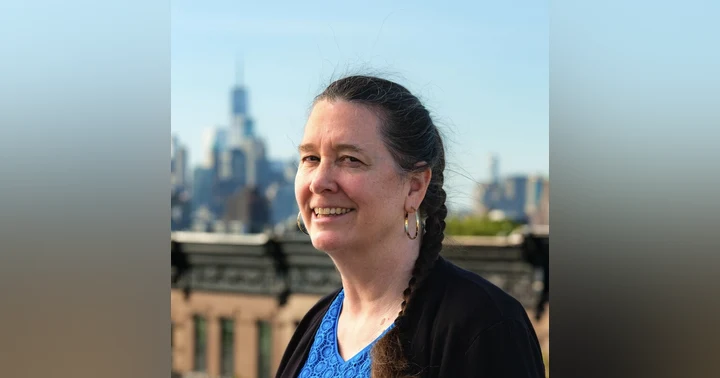
Literary Agent Ann Rose: What Your First Chapter Needs
What Literary Agent Ann Rose Wants in Your First Chapter
If you're querying right now, you already know the truth: publishing is hard, and it feels harder than it did even a year ago. In a recent episode of Writers With Wrinkles, hosts Beth McMullen and Lisa Schmid sat down with literary agent Ann Rose of the Marsal Lyon Literary Agency for an honest, funny, and surprisingly hopeful conversation about the state of the industry—and what writers can actually do to break through.
Ann represents authors across middle grade, YA, and adult fiction, and she's also a published author herself (The Seemingly Impossible Love Life of Amanda Dean and A Hexcellent Chance to Fall in Love). That dual perspective—agent and author—made for a conversation packed with practical craft advice and real talk about the business. Here are the takeaways every aspiring writer should hear.
Publishing Is in Flux—Especially for Debuts
Ann didn't sugarcoat it. The industry feels different than it did even during 2020, and publishers have become deeply risk-averse. With a shaky economy, houses are gravitating toward "branded" projects with built-in name recognition and away from anything that feels like a gamble.
That shift hits debut authors hardest. Ann described fighting the same battle year after year—hearing that a talented new writer simply doesn't have a big enough platform yet. She's still fighting that fight, but she was candid that it's exhausting.
There's a second squeeze, too: publishers are quicker than ever to pass on an author's next book if the first didn't hit sales targets. The old promise of a "career partner" who would invest in building a writer over several books has largely evaporated. As Beth put it, that lifetime-partner language tends to hold only if you're selling at blockbuster levels.
Marketing Has Shifted Onto the Author's Shoulders
One of the most relatable parts of the conversation was the collective anxiety around book marketing. Publishers still absorb the big upfront costs of editorial, production, and distribution—but the marketing push, arguably the most important piece, now falls largely to authors unless they're a lead title.
The hosts and Ann agreed on the uncomfortable bottom line: nobody has cracked the code. There's no magic formula. What works for one author flops for another. And since the fragmentation of the old book-Twitter community, there's no longer a single online gathering place where writers can reliably reach readers. You can pour hours into a post and watch it land with a couple of likes.
The takeaway isn't despair—it's permission to stop chasing every trend. As Ann noted, spending six hours on a post that earns two likes may not be worth the time you could have spent writing your next book.
The Two Things Ann Needs in a First Chapter
When the conversation turned to querying, Ann got specific about what hooks her on page one. Two things matter most: voice and character agency.
Voice is the part most writers already obsess over. Agency is the one they forget. Ann's advice cuts against the common wisdom to "open with action." The problem with pure action, she explained, is that the reader has no reason to care yet. A character running from danger means nothing if we don't know who they are or why they're running.
Her fix is to give the character a small, compelling goal early on—something they're actively trying to achieve while the larger world and stakes assemble around them. That immediate sense of wanting pulls the reader onto the character's side right away.
What Makes a Manuscript Unforgettable—and What Makes Ann Stop Reading
A good manuscript and a can't-put-it-down manuscript aren't the same thing. The difference, for Ann, is the unexpected. The books that make her brain perk up are the ones where a choice surprises her, where the story doesn't follow the most obvious linear path.
Her practical exercise for writers: when you reach a plot decision and think you know exactly what your character will do, pause. That's usually the first, most predictable idea. Brainstorm ten more, then choose one of the fresher, less-expected options. Take the risk, even if it makes you a little uncomfortable.
On the flip side, beyond obvious red flags like bigotry on the page, the fastest way to lose her is the predictable and the boring—and what she calls "and then" plotting. When scenes simply stack up ("we did this, and then we did that") with no cause and effect, nothing is at risk and there's no momentum. Strong storytelling runs on therefore, not and then.
Trust the Reader—and Trust Yourself
Ann and Beth lingered on a piece of wisdom from a past guest, author Brian Selznick: leave space on the page for the reader. Resist the urge to over-explain. If readers can't figure out what they need from what you've written, the answer is to revise—not to spell everything out and treat them like they won't get it.
That trust runs both directions. Trusting the reader also means trusting that you've set things up well enough for them to follow. It's one of the things that makes writing well so genuinely hard.
Advice for Writers Starting Over
For authors who've been dropped after an underperforming book and find themselves back in the query trenches, Ann offered both a virtual hug and a strategy. First, look for an agent who won't abandon you over one book's numbers. Then, shake off the imposter syndrome—a book not selling "well enough" is rarely the author's fault.
From there, think about pivoting: a mystery that didn't land might become a thriller, a horror novel, or a rom-com. Genres move in cycles, like a pendulum or a washing machine. What feels dead always swings back. Her advice is to write where you feel most at home and trust the timing, because in today's market, timing is most of the game.
Bonus: The Midpoint Challenge
Stuck in the dreaded "messy middle"? Ann shared a challenge that helps a lot of writers: take your ending, move it to your midpoint, and figure out how to raise the stakes for a new ending. If the middle feels murky, it's usually because there isn't enough conflict—and this exercise forces it back in.
The One Piece of Advice She'd Give Every Writer
Asked for her single best tip, Ann didn't hesitate: stay in your own lane. Every publishing journey is different, and the moment you start comparing yours to the writer beside you, you lose your thread. The industry is subjective and timing-driven—most of it is out of your control. The one thing you can control is your writing. So keep your focus forward.
And what's at the top of her wish list right now? Feminine rage. Stories of women doing bad things for good reasons. Gripping suspense and thrillers with a feminist edge. Her invitation to writers was to get gritty, get a little ugly, and lean into the thing that scares them—because too many manuscripts are still playing it too safe.
Want more conversations like this? Listen to the full episode and find the blog at writerswithwrinkles.net. Subscribe to Writers With Wrinkles for honest talk about the craft and business of writing.

Author
Beth McMullen is the author of the Mrs. Smith’s Spy School for Girls series , the Lola Benko, Treasure Hunter series, and The Secret of the Storm series (Aladdin/S&S).
She is also the author of the Spy Mom series (Hyperion).
Beth lives in Northern California with her husband, kids, and very grumpy cats. She's obsessed with podcasts and might give up writing in order to have more time to listen. Could happen.
Why Middle Grade Books Got Too Long For Kids To Read (Encore with Vicki Weber)