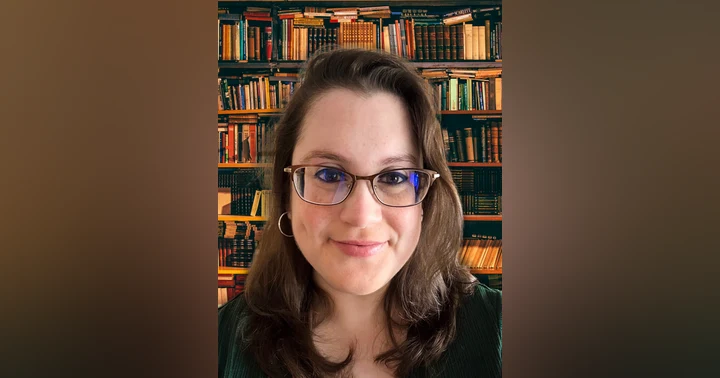
Stop Querying Wrong: Agent Nikki Carrero Breaks It Down
Send us Fan Mail Beth and Lisa talk with literary agent Nikki Carrero, from The Rights Factory, to break down the querying process from the agent’s side — what gets you noticed, what gets a pass, and how to make the most of The Call. Highlights• Nikki runs monthly pitch parties on Threads — currently her only open submission path since she’s closed to general queries. • Biggest query red flags: word count outside genre norms, miscateg...

 Apple Podcasts
 Spotify
 Castro
 RSS Feed
 Beth and Lisa talk with literary agent Nikki Carrero, from The Rights Factory, to break down the querying process from the agent’s side — what gets you noticed, what gets a pass, and how to make the most of The Call.
Highlights
• Nikki runs monthly pitch parties on Threads — currently her only open submission path since she’s closed to general queries.
• Biggest query red flags: word count outside genre norms, miscategorized genre, and sending to agents who don’t rep your category.
• Personalization? Just use her name. “Dear Agent” won’t auto-reject you, but do double-check pronouns.
• Multiple passes don’t always mean bad writing — it may be wrong agents, weak hook, or pacing issues in the opening pages.
• Nikki is an editorial agent: developmental notes, line edits, and reader reactions all in the margins.
• Watch your social media. Agents notice public venting in the query trenches — keep it in private group chats.
Questions to Ask on The Call (with prospective agent!)
• How editorial are you, and what does your revision process look like?
• Will I see the pitch letter and submission list?
• What happens if the book doesn’t sell — do you stay with me?
• Always ask for a boilerplate contract before signing.
Nikki’s Parting Advice
Patience and persistence. Self-publishing is not a fallback. Keep writing new books — voice and craft develop over time, and the writers who stick with it are the ones who break through.
Visit the Website
Find Full Episodes on YouTube!
Writers with Wrinkles Link Tree for socials and more!
Threads: @WritersWithWrinkles
Insta: @WritersWithWrinkles
Bluesky: @bethandlisapod.bsky.social
Twitter: @BethandLisaPod
Support Writers With Wrinkles - become a subscriber
Email: Beth@BethMcMullenBooks.com
Writers with Wrinkles Link Tree for more!
29:24 - [Ad] Unlock The Mind Atlas
30:10 - (Cont.) Stop Querying Wrong: Agent Nikki Carrero Breaks It Down
Beth McMullen: Hi, friends. I'm Beth McMullen.
Lisa Schmid: And I'm Lisa Schmid.
Beth McMullen: we're the co-hosts of Writers With Wrinkles. This is season five, episode 14. And today we're excited to welcome Nikki Carrero to the show. is an avid reader and writer with a background in book selling, publishing, social media and digital marketing, event planning, and education. She reads approximately 150 books each year, lives with a chronic illness, and has an adorable mini Australian shepherd named Mochi. Nikki has made books her entire personality, believing words hold power, a chance to es- escape, an opportunity to showcase how we feel, the ability to learn about others, experience new things, and even explore our own lives. At the base of it all, Nikki loves to see people fall in love with stories. She's also an agent with The Rights Factory. We are very excited to have you here, so welcome to the
Nikki: Yeah. That's helpful. Thank you for having me. I'm excited too.
Lisa Schmid: So I found you on Threads, as I do so many people. you do these pitch parties every month, correct?
Nikki: I do, yes.
Lisa Schmid: So I'm, okay I'm dying to hear all about this. I'm wondering I think on your last pitch you said you had over 500 pitches. have you, how long have you been doing this? Have you signed anyone? And how's it going? Like, how is it, how has it evolved from whenever you started it to now?
Nikki: I think more people definitely know about it now. I get tagged pretty regularly on threads of people mentioning that I do this event. So it's definitely circulating. It stays roughly within the same ballpark on the amount of pitches. I think the first one I ever did was around 500. Second one was like 400.
This past month was 600 that we hit. So that was great, and I actually just found out that it was broadcasted on TikTok by somebody who had found out about it. So I think that pulled in some new people as well. Me posting about it on Instagram definitely helps find new people. That one gets pushed out of all of my posts pretty far.
Yeah, I think I started it in January. I think it was a this year project. I love that I don't fully remember. But yeah, I think it started in January, and I wanted it to be something that people could rely on. I like schedules. I like calendars. I know life happens, but I like to try to be a little predictable there.
And I had seen somebody else doing pitches, but more so when they wanted to open to pitches every couple months. And if you weren't, I don't know, if you weren't notified about their post, you'd miss it. And as, I've been the querying author, I know how stressful it is to just try to get a foot in the door or to wish you had seen it and you find it a day later.
And so I just wanted to make it a little bit more accessible. I also do a lot of live pitches, whether they're virtual or in person, but I know not everyone can afford them, and not everyone lives near one. So
Lisa Schmid: So back to,
Nikki: that I do of people signing up to pitch me because they're probably already pitching me online on threads.
But it's a little bit of a different experience. You can post your pitch for practice. You can, have the chance for other people, other agents to see it, get other interest from readers even that might start following you because they're interested in your pitch versus signing up for a set time where you get to talk for five or ten minutes, depending on the event, with one agent, get feedback.
That's one of the things that I can't do on the threads pitches. I can't really give you feedback. I do not have time for 600 pitches and feedback. As much as I have to stop myself from doing it, there are so many times I want to. But if I did it for one, I wouldn't f- feel fair about not doing it for everybody.
Lisa Schmid: Like curious, have you actually, have you made requests from those pitches pretty consistently? Have you found a little nugget in those troves of pitches?
Nikki: Yeah, I've definitely requested, I wanna say at minimum 10 each month. Out of 600, that's still not that many, but it's probably more than I have time for. So I've requested 10, and then what I do is they're- they get the chance to query me, because a small 500-character pitch or less is not enough for me to know your writing style and to get the full scope of the story.
So I don't wanna just jump to a full and then crush their dreams there. So I start with the query stage still. But it-- I'm closed to queries publicly, so it's their only way to actually query me at this point if they don't sign up for one of the other events. So I've definitely requested. I believe I have a couple of fulls from some of them over the past few months, but that's as far as that's gone, because I am very behind on my full manuscript requests.
Lisa Schmid: That's,
Beth McMullen: That seems to be the, that seems to be the norm, right? It's hard to keep up. It's a lot.
Nikki: Yeah I have-- I think I've got about 20 right now, full manuscripts sitting, waiting for me. But what I do with the fulls, at that point, I've already gotten past a partial, which means I like the story and I wanna see how the story progresses. And I can usually tell by page 100 if I'm going to want to offer.
'Cause an ending can be fixed, but the writing style, the pacing, everything like that, you get the, like a full scope, in my personal opinion, by page 100. But I take notes. After the partial, I start over with a full, and I start taking notes from the start, so I don't necessarily have time to do that just every day.
I'm also-- I've gotten very lucky with my client list, but they are very avid writers. And so I'll be in the middle of editing one project. It might take me two, three weeks with everything else going on. And I comment on everything. I warn them ahead of time. I'm like, "You're going to get a mix of developmental feedback, line edits, and beta reader reactions as I yell at your characters in the co- in the margins," 'cause that's just me.
M- but they'll be like, "Oh, great. So you're gonna send this back. I just finished my next book, by the way."
Lisa Schmid: Oh my gosh.
Nikki: I'm like, "Okay, I'm not reading that right now. I don't have time." But all of them are speed writing, and they're all great, right? They're going through multiple process, like readers and everything like that. It's not the first draft that I'm seeing, thankfully. But it's-- they're just so quick that I'm trying to assess when can I take on new clients comfortably without overwhelming myself?
Lisa Schmid: Yeah.
Beth McMullen: I think that's a misconception too sometimes with people who are just entering the business, that the agent's job is not to be acquiring new clients, it's to service the clients that he or she already has. And I think a lot of times people don't understand that maybe you are looking at new stuff, but not every day, not every minute.
It's not your primary function. So it's g- it's good to remind people of that.
Nikki: It's really tricky when you first start out because you wanna start. You wanna pick up a story you enjoy, and you want to scream about it from the rooftops. But there is a very different level when you get used to it, when you acquire a few, when you sign a few people, that you start to realize as your time gets more and more filled, that it's no longer, "I would buy this at a bookstore.
I enjoy the story. There's nothing wrong with it, but I don't wanna scream about it from the rooftops."
Might not remember in three, six months, and that's not just because my memory is really bad. The ones that I get so excited about that I can't stop is that when I pick up the full manuscript, right?
I, I-- the partial may have been waiting forever. The full might be waiting forever for me to start. But when I pick up that full manuscript, I can't put it down. Most of the people that I have signed with, whether it was an R&R and then the second time that I was reading it or the first time I came across it, I read it pretty much in a two-day period.
And I just couldn't stop thinking about it, and I offered immediately. So it's really just getting me started that takes a while, but once I start, I did that, I think, on Monday. I read one that I loved. I really enjoyed reading it. I could easily see it in a bookstore. My biggest issue that I did tell this author was that it's been done before, and I didn't see how the story would stand out until I got to the last quarter of the book.
So I gave her as much feedback. I think I wrote an entire essay to this person that I'm hoping did not overwhelm them 'cause they never answered, which is fine. Not everyone can respond on QueryTracker, so I know that. And I don't know why, but I sent this long essay basically saying, "The story's been done, but if you can take this concept that you end with and weave it throughout, it will stand apart from some of those stories."
Beth McMullen: I think this is gonna warm the hearts of many of our listeners because there are a lot of aspiring writers out there who love the idea of a more editorial agent, somebody who does provide Feedback in that working relationship, and it's becoming more and more rare for some of the reasons that we touched on.
Just it's a time issue. It's difficult to provide that level of feedback and many agents who used to do it maybe don't do it as much anymore. So people are gonna feel hopeful hearing this from you.
Nikki: It's exhausting, and it takes a lot of time, and the one thing that we don't have is time.
Beth McMullen: Yeah.
Nikki: It's about getting your book out as quickly as we can, but in the best shape that we can. So if it already comes to us that way, and we just need to do some tweaking or really finesse one part of your plot, that will help so much.
Beth McMullen: Yeah.
Nikki: a few clients that I loved their initial story, but maybe a, they'd written six different drafts of it and morphed them together, and a character isn't consistent all the way through. They've rewritten the entire book, and so that means that I start from scratch on that next one. In fact, it's almost, it's in a way slightly worse than starting from scratch because I need to meet with them and say, "What did you change?"
Beth McMullen: Yeah.
Nikki: not each word, but what did you change? Because I have a perception of what I think the story is about, and you may have changed that on me when you added 20,000 words.
So it gets tricky, and the time, for, I don't know. I don't know where you guys are located, but it's, 2:45 in the afternoon here. We started at 2:30. No idea when you're actually posting this, but just for concept, I got to my computer at 9:00-ish this morning, and I have been living in my email account all day just answering people and responding to people and following up with people.
I've done no editing. Most of my editing happens between 7:00 PM and 11:00 PM or on weekends. So timing is tricky.
Beth McMullen: the email box is where our hours go to die. I have the same experience, where you look up and you're like, "Wow, it's now... I've spent five hours doing this, just trying to get through so that I'm in a steady state." It's rough.
Nikki: Definitely is, and I think one of the mis- m- misconceptions of agenting, there, there's people that are very cynical about the business, and so they say, "Agents are just in it for the money." I promise you, none of us are actually here because of money. Not the right career if that's what you are after.
So a lot of people are like do you really need the agent? They're just going to take money from you." And it's first of all, we never take money from you. We aim to get you the best deal, and then the publisher pays us. You as the client should never pay your agent. There's no reason for that.
But it's-- We don't get paid until we make that deal, so all of our back and forth, all of our finessing of your manuscript and making you wanna pull your hair out to try to perfect something to the best of our ability is to help get you that shot with editors, and it's not guaranteed.
Beth McMullen: No.
Nikki: It might have to be shelved.
It might go into hibernation, and then we might start on another project, and there's no promise on anything. That's the less hopeful part of it.
Beth McMullen: no, I know, that's the balance.
Nikki: Yeah. But it's still exciting, and it's still fun, and I honestly love meeting with authors but also with editors. My first two months agenting last year, I spent meeting with 100 editors online.
It was a very busy two months. But I had a lot of fun. I just love networking and meeting people and figuring out what they love about books. And it's very clear when people don't love them anymore.
Beth McMullen: Yeah, and that happens.
Nikki: Yeah. And there are authors who think that they are gonna become an author because it's easy.
Beth McMullen: I don't know where the anybody gets that idea.
Nikki: Movies.
Lisa Schmid: Yeah. Yeah.
Nikki: and other books that try to capture publishing and do not do it properly.
Lisa Schmid: Yeah. So let's start with I wanna jump into our first question, and this is something that I think we ask all our agents because it's such an important question. And what's the biggest mistake in query letters that almost immediately makes you just say decline?
Nikki: Word count, if I had to choose something really quick. I haven't even read the query letter yet, because it shows us that with your title and your name and your email address on the side. We click on that. So the word count is pretty prevalent. I've had submissions anywhere from 50 words-- I don't do picture books, by the way.
So I have responded to those people and asked, "Is this actually 50 words, or did you mean 50,000?" Because some people leave out the zeros, and they just think, they just forget that part. But I've gotten them anywhere from 50 words to 457,000 words.
Lisa Schmid: my God
Nikki: Yeah. So word count is the biggest issue, and it's not because we don't wanna put the time in. That's part of it. We don't have the time, and there's gonna be a lot more work that book needs. But it's also that editors won't take the chance on a debut, most often, there are always exceptions to the rule but they won't take the chance on a debut author who is breaking standards, because there's no guarantee in sales.
There's no guaranteed readership. And the longer your book is, the more pages it is, the l- more it costs, both for them to produce and for them to charge readers, which causes the sales to drop. So they don't wanna take that risk. It's too risky for them at that point, and people who say that every word is absolutely necessary in their book, I really think might benefit from a developmental editor at that point.
Beth McMullen: And that's being kind. I
Nikki: I like to think that every story deserves to be told, but it's, yeah,
Beth McMullen: but
Nikki: of them have already been told,
Beth McMullen: yeah, and this business, as we've already touched on, is incredibly competitive, and you can't go in as a brand-new writer and say that you're the exception to the rule, right? If
Nikki: you gotta assume you're not.
Beth McMullen: King you can write 500,000 words. Go for it, because you've actually already proved you're the exception to the rule.
But if you're a
Nikki: Once you have a track record
Beth McMullen: absolutely.
Nikki: you have a track record and you've got proof that you have a readership that will buy whatever you write, you get to start breaking some of those rules. Within certain boundaries, of course, but yes, you get to start breaking some of those rules. You don't get to do it as a debut author.
Beth McMullen: No, and then you just get rejected before anybody's even had a chance to see your stuff, and that's a
Nikki: Yep.
Beth McMullen: Don't do that to yourself. Cautionary tale right here. Don't shoot yourself in the foot by saying, "Here is my 450,000-word manuscript."
Nikki: What really hurt me was I did still read the query after that. It was book one of five.
Beth McMullen: No, did he ha- did he or she have all five in one book? No, that ...
Nikki: no, it was just, it was
Beth McMullen: excuses for them.
Nikki: I also, the other thing is miscategorizing, and I know how complicated that can be. I know authors have a really hard time trying to pick what genre and category they fit in, especially because the ones that we pitch it as are not always the way it shows up in a bookstore, right?
You don't go to the upmarket section of a bookstore. It doesn't exist. So it gets complicated to try to learn what all of the terminology means. But if you try to weasel your way into my inbox claiming that something is a romance, but you have pitched it and your query letter even states that it is a fantasy, and I'm not open to fantasy,
It's an automatic no.
One, you're not listening to my guidelines. It's also just I'm not the right agent for you. I either already have my fill of fantasy, or I don't represent fantasy for a reason.
Beth McMullen: Yeah.
Nikki: So
Picking the agent matters.
Beth McMullen: Yeah and doing your homework. This next question is the same, along the same lines of query letter homework. Personalization in queries. You can read an awful lot of query letter advice in various places saying, "Find something out about the agent that you can connect with," and then people will spend, 'cause I've been asked about this, we've been asked about this, of time trying to figure out a connection to the agent that they want to query.
So in your universe, and, and- And, what you experience. Does it matter? And what are the parameters of what's acceptable and what's not in that personalization?
Nikki: As long as you use my name, I don't care if you have found any other reason to query me. The dear agent ones are really bad. The no name at all, no dear line at all. I've gotten query letters that are three sentences before. Write a proper query letter. There's plenty of research out there for that.
Beth McMullen: Do people really do that? They write "Dear agent"?
Nikki: It's a placeholder that they forget to change. I don't think they're doing it maliciously. I think they forget to change it 'cause QueryTracker auto-fills,
Beth McMullen: Yes. Oh, boy.
Nikki: auto-change.
Beth McMullen: good. Second cautionary tale of the
Nikki: Yes, and it's one that people freak out about. Now, that's the thing. If you write "Dear Agent" to me, it's not an automatic pass. I will read it. I will know you're human. I will laugh about it. Do not freak out about that. It's not the end of the world. But it's nice when you use my name. I do appreciate that.
There are some people who are pickier about it. And I use picky lovingly, not in a derogatory manner. But if they specify in their query form their pronouns, take that into account. Don't call them by something else. That one's important, but a lot of the time it's pretty safe to just go by a first name.
I, I always like to think that if someone is being a stickler, if an agent is being a stickler about they absolutely must have some kind of personalization, you must refer to me as Mr. or Mrs. Is that the right vibe for what you want in your agent? Are you going to feel comfortable asking them questions?
Are you going to feel comfortable talking to them about your concerns? If yes, awesome. Query them, follow their guidelines, and you're okay. But if they can't acknowledge that you are human and might slip up and write "Dear Agent" by accident, for me personally as an author, I wouldn't feel comfortable having that agent who thinks that you must be perfect from the get-go.
Lisa Schmid: I think no matter how you try-- I remember when I was querying I would make mistakes no matter like how hard I like
looked at everything, and I'm like scouring it, and I'd hit send, and then I'd just be like, "Oh my God." And I was actually talking to a friend the other day while she was about to query something, and she did s- she wasn't used to Query Manager, and it was her first time using it, and she put something in the wrong line and sent it, and she's oh my God." it
Nikki: Yeah, no, it...
Lisa Schmid: And I'm just like: Don't worry about it, it's
Beth McMullen: Deep breaths. Deep breaths.
Lisa Schmid: Yeah,
but we all do it.
Nikki: I've had a funny experience with it because I had-- I've even gotten comments about this, 'cause for the record, agents can see the comments that you leave for them or you leave about them on QueryTracker. Just a note, if you ever want to query them again and you're being nasty, we can look.
We can see.
Lisa Schmid: is this? I am not familiar with Query Tracker, so what do you mean notes about
an agent?
Nikki: when you go to an agent's profile on QueryTracker, there is a comments tab, and you can see what other people say. A lot of time people are using it to track, and they're labeling "I queried this day. I got rejected this day." And it just shows you the scope of how long it took to hear back, which is helpful.
A lot of other people are copying and pasting the feedback that they get and calling agents out. I got called out once because I didn't include their title in my rejection, and it's because the one-- there was one time that I did, that the way that it was set up in the sentence made it so bad. The... I don't wanna say the title here, that's not fair.
But it came across like I was against an entire population of people because of what their title was. And so they called me out just copying that one line, that "I am not a good fit for this," and it was awful. And I responded to them in a private message, 'cause I can't respond to the comments. I sent them a private message and I said, "I need you to know that's not the intention.
That was not what I meant." I used the title. And Patrick, who runs QueryTracker and QueryManager and is wonderful and responds very quickly, even on weekends, so grateful for him, put a note, a community note on that comment saying, "Please note that this is the title," because it looked awful, and I was just starting out.
I was terrified. I was like, "I would never want that to be the message." But I got called out once for not using a title, 'cause they're like, "Some personalization would be nice." I'm like, "Honestly, that's not personalization. That's a form reply that we have your title here in brackets that auto-fills for you."
Lisa Schmid: Right.
Nikki: but they just wanted some sense of personalization. I'm like, "Honestly, your book just wasn't for me. I have no feedback for you."
Lisa Schmid: Yeah.
Nikki: and they,
Lisa Schmid: to know that
Nikki: yeah.
Lisa Schmid: That's something that you can see, because I bet people have made comments. And people get their feelings hurt. It's just, it's... we see it
Nikki: You see it on threads?
Lisa Schmid: time. Yeah we see
Beth McMullen: All the time
Lisa Schmid: people do get their feelings hurt.
We're, we're all creatives. And I think the biggest thing I always say is check your ego at the door, because this is a career of rejections and, critic- criticisms and you just, it's, you gotta roll with the punches. And when people take it personally, it... And then voice that opinion or that hurt it just never ends well
Nikki: And I think we're also entering-- We're already in it, to be honest, but I'm gonna be generous. We're entering a new stage of what social media is doing for publishing, and everybody knows that as far as, publishers are looking at your social media accounts, and those numbers count. But it's one thing to try to find camaraderie in the query process, but find it in a group chat.
I can't stress that enough. Agents are looking at your social media, and if you are complaining every day or whining every day or anxiety, panicking publicly every day, it tells us that you might not be a good client Because you're going to require a lot more hand-holding, you're going to be an anxious mess, and when you go on sub, what are you going to start saying about publishers?
When you get a book deal, what are you going to be saying about the publisher publicly? And we can't trust that. We can't trust that it's only in the query trenches because you're not proving that you can be professional online.
Beth McMullen: And that's actually-- That-- Thinking about it as this is a professional endeavor, would you do this in your job, whatever it is? Would you say this about your boss? Would you... all of those things. I think so muddied because r- writing feels so personal. It feels like an extension of yourself.
And so when somebody says, "This doesn't work for me," or, "This doesn't land," or, "I don't like this," really hard to train yourself to think, "They're not saying this about me. They're saying this about the work, and we are two separate things. I am not the actual book." But if you're gonna be in this business in any capacity, it is a super important lesson to learn early.
Nikki: I think for me, I was never someone who could handle rejection. I didn't like rejection. I don't think anybody likes rejection. But becoming an agent before I queried actually helped me not be hurt by the responses, because these people that are rejecting me could honestly enjoy the story, but it could be similar to something they already have.
It could just be it's really hard to sell on the market, and I already know that.
So I'm already just holding out hope someone might see a way to do it, but it doesn't... it-- you gotta think about it from that point of view, and a lot of people view agents as gatekeepers, but we're honestly following what we're told is what the editors want.
If we give them things that they're not asking for, they reject it automatically, so what would be the point? It might not be the right time in the market for your piece. It might not be refined enough for your piece. A lot of the rejections, it doesn't always come down to the writing skill. I'm gonna clarify that.
I-- The writing skill pushes my decision to offer, right? If you have that writing skill, it's not something I can edit for you. It's just inherently known. You've already practiced it. It shows. Your voice is very clear. It, it shows. But I'm not often rejecting because it's bad writing, is what I meant to say.
It's not about you can't write, I'm rejecting you because you're incapable of this. That has nothing to do with it, or very rarely. There's a couple I get that I'm like, "Okay, this is the first thing you have ever written, and you threw it at whoever you thought might- Read it, and you didn't put any research into this process at all, let alone a second draft.
But very rarely is that actually the case. Most of the time it is, your book would be enjoyable, I could buy it from a bookstore, but I don't want to read it 10 times and scream about it in 100 meetings to editors, and, write a pitch and email it to everybody, and then shout about it constantly.
It, it's-- I have to love the story so innately that I want to talk about it over everything else.
Lisa Schmid: So this next question, it feels like this kind of is answering this already, but you might wanna elaborate on it. So if a project gets multiple passes, which often happens with great writing but not for me, what might that indicate? And that kinda sounds like what you were just saying
Nikki: It could be a mix of things. A lot of people like to say the mir- if you are only getting passes and no requests, that it's probably your query letter. I don't always agree with that. It really depends on the situation. But my argument would first be you might not be querying the right agents. Because if you are querying agents who are not open to that genre, it's automatically going to be a pass even if you have the best query letter ever.
'Cause it's not always just about what is selling, d- when I was starting out, everybody did want romantasy still, and I don't represent it because I, and I tell all of my clients this and people I sign also, I don't have an inner eye. I can't visualize while I read. So you stick me in another world, and I am lost, and it's going to take me a year to maybe read your book, and I will have questions about almost every sentence you wrote.
My brain will just not latch onto it. I have tried. I have so much appreciation for authors and for the editors who manage to, but it's not for me, and I would not be the right agent for you. So you send me fantasy, I'm sorry, my brain failed. I can't help you. Go find the right agent that's looking for this.
Obviously, you're still going to, find all the agents looking for fantasy, and then you have to fine-tune it a little bit more, and you still might get those passes. But my first question would be are you sending it to the right agents? If you are, I would then say take another look at your query letter.
Is there a strong hook? Is there a strong vision here that you can help the agent to come up with that editorial vision for how they would pitch it? Because while it is an agent's j- job to form that, and I think I've changed almost all of the comp titles that my clients queried me with in the first place, it doesn't change the fact that you are trying to hook us and engage us with your query letter, which is a marketing tool, that if you don't have a vision for the scope of your project, it makes it that much harder for us to have one
Beth McMullen: Yeah, it shows that innate understanding of your own work that you could do the elevator pitch. You could describe it like you know it that well, and you're that confident in it. I think that is a really good indicator that you've been with this material long enough
that you're to the point where you should be querying. y-
Nikki: Yeah.
Beth McMullen: it's at that point where you feel like, "Okay, this can go out now to see how it's received."
Nikki: I do think it's tricky because sometimes when you write the whole project first, there's just so many details you wanna cover. There's so much about the story that you love. A big suggestion is to honestly try to write this material first, and then write the project. If you already have the project done, it's too late, I get that.
But for your future projects try to write the full synopsis first. Try to write the hook the log line, the pitch first. You can always refine it once you finesse the story. But it will help because you won't have all of the tiny details floating around in your head.
Beth McMullen: I worked with somebody recently and it was actually a horror fantasy type project, and we were working on her query letter. And it was killing her to take out all the details. She was like but..." And I was like, "I know. I know this hurts, but it has to be done." Is really one page, and your novel's 350 pages long, and you cannot cover everything.
You've just gotta hit the highlights. But like viscerally painful
to
Nikki: it, awful, but what I will say, and maybe I'm the odd one out here, I actually enjoy it. But I enjoy it because I like the back cover copy of a book. Now, I usually go into reading blind. I don't actually tend to read back covers anymore, but I like how they're written. I like how th- they're honestly fairly simple, and it is simple enough for you to grasp the story.
It often ends either with a question or that the stakes, like will they or w- won't they? That is what you are doing for your query letter. It's not identical, no, but the plot portion is very similar. You are trying to hook the reader and make them want more without confusing them. If you confuse them, you've lost the plot.
Beth McMullen: Literally.
Nikki: Yes. As will they. But that's why I don't say it's always the query letter, because also, if your query package includes the first 10 pages or the first three pages or the first 25 pages, that's part of it too. And if you get a pass, is it the query or is it the pages? If you get a request to a partial and then a pass I would say it's something in those first 50 pages or whatever their partial request was, because that is telling you they liked the premise enough and they like your writing style, but the progression of the story and the pacing did not work for them.
Right.
Beth McMullen: that's all good data to take in too when you're in that stage. also feel like it's a good idea to go back and look at your query letter. You've written one, you've sent it out a few. Maybe it hasn't gotten traction, maybe it's gotten a little, but review it again, right? Just sit down with it, see if it's still working.
Is there anything you could tweak that would make it better? It feels like more of a living document rather than something that you've just put to bed and you're never gonna change it.
Nikki: Yeah.
Beth McMullen: it's okay to go back in and tweak and adjust and whatnot
Nikki: the biggest lesson is, one, knowing that it is a living document, that all of this is. You may have fine-tuned, or some people even hire editors for their manuscripts before they query. Which depending on the situation is not something I recommend, because your agent needs to know what can come from you,
Beth McMullen: Yeah.
Nikki: for, working with you in the future.
But it also depends on your situation. I know some people with severe dyslexia need someone to help them proofread it before they send it out, and they know that and they are comfortable with p- investing in that, and that's their choice. But at the same time, it's just y- you need to remember that all of this is changing.
You will have to do edits with your agent. You will have to do edits with a publisher. You are not done.
Beth McMullen: You're never
Nikki: It's never done. There are people who publish their book who look at it later and go, "Really? I didn't cut that sentence?"
Beth McMullen: That's me. I do that I do that.
My, my very first published book, I... If I flip it open now, what page, I look at it, I'm like, "Really? That was the choice that I made? What was I thinking?" And that book
Nikki: Yeah.
Beth McMullen: out in 2012. It's done.
Nikki: Yeah. Yeah.
Beth McMullen: what
Nikki: But- I'm
Beth McMullen: more... If you could give one bit of advice to querying writers, what's one thing that you wish they understood before they jumped into this whole process?
If you could tell them one thing, keep this in your mind as you start this querying journey, and it definitely does feel like a journey for most people.
Nikki: gonna give you more than one. Partially 'cause this one thought ties into what we were just talking about, in that you have to have patience in this process. There are more and more people today that are querying for three months and then say, "I give up. I hate this. I'm going to go self-publish."
Self-publishing is not a fallback, or it shouldn't be. It's-- The people who do self-publishing well, so much time, so much money, so much self-marketing And they're soaring, and so people see those success stories. But it is so much work and so much extra learning that you have minimal time to write. It is not the fallback.
Yes, more and more authors are having to market themselves even when they're traditionally published. It's the way of the world at the moment. But it is a different level. You are not paying for your editors in traditional publishing. You are not paying for your cover designers.
You are not paying to have your book formatted or align with both Ingram and Amazon and get it posted to all of the retail sites. That's all on you in self-publishing, and people don't realize that. And then they self-publish, and they're like now I self-publish, so I can look for subrights."
If you didn't sell that in a major way, we can't get you subrights on anything. We would have had more luck with it as a debut book. So yeah, patience, really important. Please be patient. If you're going this route, put both of your feet in it. Not to say you can't be hybrid. You can self-publish some books and try to go trad for others.
That is fine. I have clients that are doing that too. But with the same project, p- pick which direction you wanna go in, at least for a while. If it does really well, and then you wanna hand it off to trad one day, that's an awesome idea. Just don't bank on it happening. The other advice I would give to querying authors is it is a business.
As much as we don't want our art to be a business, it is a business. You've created this beautiful story, and you wrote that for you. But as soon as you send it into the query trenches, we are no longer thinking about what it does for you. We're thinking about what it does in the market. And so your book might not be the right one right now.
It might not be ready to query. I have a friend who is a best-selling author who didn't get an agent till her fifth manuscript. That one did not sell on submission, and I think it was either her sixth or her seventh that eventually sold. It takes time, and it takes dedication, and it can be crushing, but perseverance is really important.
The people who stick with it are the ones that are most successful, I think. 'Cause even those really easy, quick stories that are like, "Oh, I queried, and two weeks later, I have an agent," which is unheard of. It happens, but it's unheard of. If that's the only book they've ever written and they got lucky, can they write a second book?
Do they know how? Are they gonna get there? Or are they just riding the high?
Beth McMullen: episode.
Nikki: But are they just riding that high, and then they're gonna flounder? And I think that's-- we all have imposter syndrome to some degree, so I'm not trying to instigate that further. But it's just waiting for your time It can be exhausting, but it's out there.
Just keep learning, right? Don't keep doing the same thing. If something's not working, see what you can pivot to. That doesn't mean changing genres if you don't wanna change a genre, but maybe it means fixing your pacing or I read one recently that it was filled with the cliches that you do not want.
Opening pages, the character wakes up from a dream.
Beth McMullen: Oh, goodness.
Don't do
Nikki: they let go of the breath they didn't know they were holding. Or if you end the whole story where they wake up from a dream, or they had amnesia. It's just, if it has been done so often and you're writing it because you enjoy those stories, they exist.
Go read them. Write us something different. Take something that you love, like a trope that you love, and find a new way to do it, right? Or mix and match multiple different things together so that it is unique on its own. I read A Killer Kind of Romance by... Oh, I don't wanna butcher her name. Hold on.
I prefer to actually know the name of the author. Sorry. Letizia Laurelli. I'm hoping I'm pronouncing that right. But this book felt so different to me. It was-- It's marketed as a romance, but it's like a murder mystery romance.
Beth McMullen: So
Nikki: she-- It's fresh. This woman has a podcast where she's sharing about these murder mystery books that she loves, and then all of a sudden people start dying in her town in the same way as the book she's talking about.
And then she has to figure out who's the killer, and she questions if the love interest might end up being a killer. And it's just, it's so different, and it was so much fun.
Beth McMullen: That's what my agent said to me very early on. She said, "There's no new stories. There's only
Nikki: Yeah.
Beth McMullen: takes on old
stories." And I like... I really... That stuck in my head all these many years because I think she's actually really right.
Nikki: Yeah.
Beth McMullen: Everything's been done, but can you do it in a fresh way that's interesting, breathe some new life into the idea?
Nikki: And I also think taking the time to write multiple books is not a bad thing because it not only helps refine your writing skill, but it helps refine your voice in writing. And if it's the first book you've ever written and the first book you're querying, we can sometimes tell that your voice is not fully developed in the book itself.
I read one I loved. I absolutely loved it. I asked to meet with the author because I had a hesitation. I read the partial, and before I asked for the full, I was like, "I wanna talk to you." And it was a case where the person had not specified the genre, so I didn't know where she was seeing this sitting.
But I was getting confused while reading because the characters were, I think, in their 50s, 40s or 50s maybe. But- The tone and the voice to me, and I will say this is a very subjective business, but to me it was so rooted in young adult. And it was like, "This character could be 17. If you wanna do it as a young adult, I think you could sell this.
I think this would be great. I think it's fresh, I think it's different. I love your voice. It's magical, it's amazing." And so I said, "It would require changing some of the timelines of this person's life that spanned a lot longer in your version." And she ultimately chose to not do that. She wanted to keep it the way that it was because it was more authentic to the things she was basing it off of.
And that's fine. It's her story. But at that point, it was no longer for me.
Lisa Schmid: Interesting.
Nikki: yeah it's about finding that voice, and she knew that her voice was what was catching me as a young adult, which was really funny, 'cause she was not a young adult. But she has a strong voice. She has such a unique voice that I can't wait to see that book published one day.
I just don't have a vision for how to sell an adult book with a young adult voice.
Beth McMullen: Yeah
Nikki: That was hard for me to picture. So it ended up being a pass for me, but the book is going to be amazing.
Lisa Schmid: So now that we've talked about-- We've covered so much good information, and now they have gotten the call that-- which we
Nikki: Yes.
Lisa Schmid: Hold out hope for was, I've got the call scheduled." What questions... Because that's the first thing I called my friends and I'm like-- I think I called Beth and I'm like, "What am I supposed to ask?
What am I..." And Beth gave me a list of questions. What should writers ask when they get that call?
Nikki: Everything. You wanna ask as much as you can. There are lists online that give you 700 something questions. A lot of that should ideally be covered with what the agent tells you. Every agent handles it a little differently. I tend to give my spiel of certain things, but save the editorial comments and vision to the end of the call so that I have time for their questions in between.
But that said, I also don't usually flat out offer until after we talk about the vision. Because if they completely disagree, then it's not a right fit and I shouldn't be offering to them, right? We have to at least align a little bit. There can be compromise, there can be give and take for sure.
But if they don't like the direction my brain went with their book, then it's not a partnership, and that's where that ends for me. But as far as the questions go knowing what type of agent they are, some are editorial, some are not, right? Are they expecting you to have it basically perfect or as perfect as writing can be before they send it to you?
Are they only going to give you maybe line edits, or are they not even going to do that? Do they just send it out as is? Asking them about their submission process. First of all, their timeline, which please do understand that can have a little bit more give and take, especially depending on the agent and the agent's current list, because editors sometimes take six to 12 months to get back to you, sometimes longer, and we can't-- we try not to send the same project or different projects to the same editor.
So it might mean waiting before we send something out on submission which also is not a bad thing if it's not really the right time in the market for your story just yet. But asking, their process. And what I mean by this is that there are agents who do not share the pitch letter or the sub list with the client, and that's their choice, but you should know.
My personal belief is that it is your work, and you should get to know what is associated with your work when it is sent out. So I run the pitch by all of my clients so that they-- I run the pitch by the client it's for not a whole group at the time, but I run it by them and let them, give me feedback if there's anything they wanna change, any anything that didn't come across clearly that they're concerned about.
I've usually fine-tuned their, like a, their little bio paragraph, so make sure that's accurate. A lot of people, when they're querying, will include where they live, and I take that out. I'll include like a country, especially if it's relevant to the story. But to editors, it sometimes matters where they're located, but I don't want people tracking them down to their house , so I just kinda take the address out of there.
So yeah, asking, "Will I get to see the pitch letter? Do you take feedback? What in the sub list do you share with me? Do you share anything with me? Or do you do a weekly check-in?" Everyone does it a little bit differently, and you just have to see what works for the two of you.
I personally share a separate tab, like a separate spreadsheet with each client for their book, where they can keep track of what publisher and what imprint has received it, has acknowledged receipt of it, and is theoretically reviewing it, even if they haven't started reading yet which ones have passed, which ones have never responded, and they can see some of that.
And the clients that want all of the feedback, barring any specific details I'm not supposed to share, 'cause sometimes they reference other books or another client of mine or something like that I will share that feedback with them, and I will also give them the option to opt out of that. Some of them say positive feedback only, some want all of it, and some are like, "You know what?
I don't think I can handle that while I write my next book. Don't send me any feedback." I'm like, "Okay." And that's just the way it is for me. But again, every agent is different. I have a friend with an agent that sends, I think, a weekly check-in on Friday "These 10 passed. This one's reading."
I- Don't personally love it for me. I don't know if I'd handle that well as an author, because I feel like that would just ruin my entire weekend. I don't think I want that weekly check. I don't wanna know how many people passed at the end of my week. It's a big number sometimes, and it's scary.
Beth McMullen: told my agent, "Tell me what you think I need to know."
Nikki: Yeah. That's fair. I try to read the client, and I try to be like...
Beth McMullen: don't wanna know.
Nikki: I've got clients with anxiety. If this is going to mess with you and your mental health, I don't wanna share it with you, but it is your choice if you want it. And I give them that choice. And I had one that was funny recently.
She's "You know what? I think for my mental health, I don't want it." Four hours into submission day, she's "I've already failed. It's four hours in. Can I please have access?" Which I completely understand, because not... You have, as an author, you have a lot less control in the submission process, and so wanting to see it makes sense to me.
So she now sees it, and she set a reminder for herself. She's only allowed to check it once a week.
Beth McMullen: I feel like experience too makes a difference.
Nikki: Yeah.
Beth McMullen: By like my 10th book, pfft, whatever, just
Nikki: Yeah.
Beth McMullen: me... I- if there's
Nikki: Yeah.
Beth McMullen: then please tell me. Otherwise, I got other stuff to do. So I think it's just, your first one, it's all so foreign and strange. I could see how you'd
Nikki: That's scary.
Beth McMullen: moment because I don't understand any of this, and I wanna understand."
So I totally get that. You might think, "I don't wanna know", but in practi- in practice, like, "I must know. I need to know, even if it's
Nikki: Yep.
Beth McMullen: me a little bit freak out a little bit."
Nikki: I'd say two other things to make sure that you ask about is communication style, because I text all of my clients, or if they're international, I use WhatsApp so that we can communicate. They can still email me. If they're sending a manuscript or a ton of questions, they email me.
And I still do video calls. I have one after this where we're going to brainstorm their project. But some people don't do video calls except for that offer. I know people who haven't seen their agent in three years. There are some who never get their phone number and only communicate by email.
And so I'm not saying every agent should be texting. It's not... it takes time. I've got four messages from different clients right now waiting for me, and it takes a lot of time. It's just the person that I am. I like being in constant communication, but not everyone works that way. So you gotta find someone who works with what you like and what works for you.
And then the other part of it is termination. Are they signing on for your career and they're going to stick it out, and if this doesn't sell on sub, they're going to pivot to your next project with you? Or if this doesn't sell on sub, do they drop you? And that also comes with the contract. You should ask to always see a boilerplate contract after an offer meeting.
Because what that means is it's a blank contract. It's not personalized to you. You can't sign this version, or it won't mean anything if you do. But you can see their terms, and you can see what happens, if they leave the agency, if that's even listed in there. But what happens if you leave them and the agency, and can you terminate?
I know there are some clauses out there that if you terminate... First of all each renewal is for a full year, and some people you have to give notice before you can actually terminate. But some people also say that if your project has been edited at all by this agent, you can't shop it around to any other agent for six months, nine months, a year, and that's your work.
So always ask to see the contract before you agree to sign with someone.
Beth McMullen: Yeah, that's good advice. The more information you have, the better position you're in to say yes or no. This has been an amazingly informative conversation, and I think our listeners are going to be like jotting wild, wildly jotting notes down as they... Hopefully not while they're driving. We know people listen in the
Nikki: Oh,
Beth McMullen: get home, and then you can
Nikki: no. I just...
Beth McMullen: your notes. But thank you so much for coming on and sharing all of this with us. We are very grateful that you made the time.
Nikki: I'd also love to say, as a way to get you to not take notes while you're driving, a lot of what we covered I also share in a Substack that you can find,
Beth McMullen: Oh, good.
Nikki: and you can sign up for so that you don't have to go to Substack if you don't want to. But I try to share parts of the industry and the process, all from how to find agents to how to find comp titles.
I think the one everyone voted on next is what kind of social media posts to post before you even have an agent.
Beth McMullen: Ooh, I bet that's gonna be really popular.
Nikki: Once I write it.
Beth McMullen: We will put that link in the podcast notes directly. So
Nikki: Thank you.
Beth McMullen: wants to jump on that will be there for you to just click and join and follow along. And listeners, remember, again, check out the notes. More information about Nikki, you can find the Substack or the blog is at writerswithwrinkles.net. So again, thank you so much for coming. We have really enjoyed having you here today.
Nikki: Thank you for having me. I've had a great time.
Beth McMullen: Lisa and I will be back next episode with an Ask Beth and Lisa, so if you have questions, thoughts, feelings, please send them our way. And until then, happy reading, writing, and listening