Why Fiction Needs More Older Characters (And What It Took to Publish an Anthology About Them)
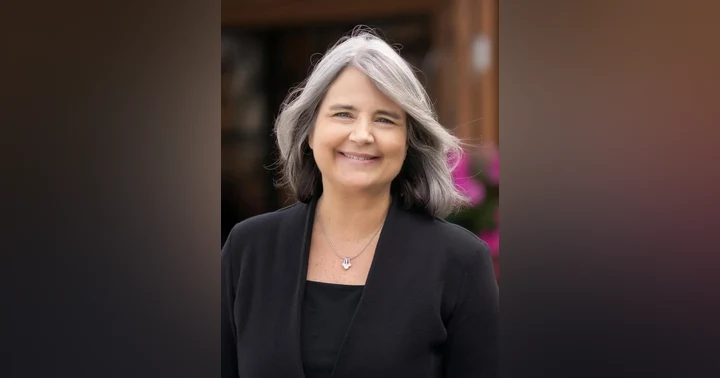
Picture the usual leading lady in a new novel. She’s thirty-something and gorgeous, and the worst thing in her life is a latte spilled on white shoes. That was the observation Beth McMullen made when she sat down with Beth Weinhouse for the latest Writers with Wrinkles conversation on The Confetti Club. Reading 20 Over 60, she said, felt “like a breath of fresh air, even though some of the stories are quite sad.”
20 Over 60 is a collection of 20 short stories by writers who are 60 and over, writing about life at that stage. Some of the stories are funny and some are sad. There’s even a ghost story, a science fiction story, and a fantasy story. As Beth Weinhouse describes it, the mix includes “well-known authors, lesser-known authors, but all very talented writers with lots of different experiences and perspectives.”
It started as a small act of rebellion
More than twenty years ago, Beth and her co-editor David Galef, an English professor, were reading 20 Under 30, a collection by hot, trendy young writers. The stories were great, but the two of them were around forty and couldn’t help wondering: “So our work doesn’t matter anymore?” Their answer was 20 Over 40.
People told them they’d be doing 20 Over 60 someday. They said no. They didn’t want to edit “a book about disease and decline and death.” Then they actually turned 60. “Wait a minute,” Beth remembers thinking, “that’s really not what our life’s about.” So, in her words, “we took our words back.”
“Great idea, but I’m not the right person”
Here’s the part writers will want to hear. Agents and indie presses all gave the same polite response: what a great, important idea, but short story collections are a hard sell. Beth and David suspected ageism. If it’s such a good idea, why won’t anyone publish it?
So Beth, a journalist, reframed the problem. “I said, think like a publisher. Publishing is a business, after all.” They put together a presentation on how much more older people spend on books, how much more time they spend reading, and how many book clubs and adult communities there are. Regal House Publishing “got it instantly.”
Beth McMullen’s reaction was the same one a lot of authors will have: she wanted the slide deck.
Not the wise grandmother, not the crotchety sidekick
Beth is clear that she has no problem with younger authors writing older characters. Recent bestsellers like The Correspondent and Remarkably Bright Creatures do it well. But too often, she says, older characters are a cliché: the technophobe, the sage, the sidekick. “They’re not the people I know,” she says. For 20 Over 60, she and David wanted the whole point of view to come from the older character, and they wanted the characters to be surprising.
Behind the scenes of editing 20 authors
A few of the most useful (and surprising) behind-the-scenes details from the conversation:
- Finding the writers: They asked professor friends, writer friends, and book club friends for favorites. They read literary magazines, and they put out a call through the Authors Guild, which brought in hundreds of submissions.
- Working as co-editors: People warned them it would strain their relationship. It didn’t. They read separately, then compared notes, and almost never disagreed. The hardest part was choosing between several great stories on the same theme.
- The one that got away: A Tessa Hadley story they’d hoped would close the book was lost when the contract didn’t arrive in time. Beth ended up twisting David’s arm to include his own story instead. She wants everyone to know that wasn’t self-promotion.
- Light-touch editing: After years at magazines with a single house voice, Beth enjoyed letting 20 distinct writers sound like themselves. She also had a reassuring moment: when she compared her edit of one story to the version published in The New Yorker, the changes matched.
A little advice on ghosting
At one point the conversation took a turn for anyone who has waited on a reply that never came. One agent simply stopped answering about a story the author was eager to include. Lisa Schmidt shared a line from her own agent: “No is a complete sentence.” Beth Weinhouse’s response, which we’re adopting as policy: “I want a letter. I want a proper email.”
Hear the whole conversation
There’s more in the full episode, including the story behind the permissions chase, Beth’s Reader’s Digest stories, and how two editors worked side by side and stayed in sync. 20 Over 60 is available anywhere books are sold. You can learn more at bethweinhouse.com and davidgalef.com.
Press play on this week’s episode of The Confetti Club to hear Beth Weinhouse tell it in her own words.

Author
Beth McMullen is the author of the Mrs. Smith’s Spy School for Girls series , the Lola Benko, Treasure Hunter series, and The Secret of the Storm series (Aladdin/S&S).
She is also the author of the Spy Mom series (Hyperion).
Beth lives in Northern California with her husband, kids, and very grumpy cats. She's obsessed with podcasts and might give up writing in order to have more time to listen. Could happen.
Writer's Block Isn't One Thing: How to Get Unstuck Fast