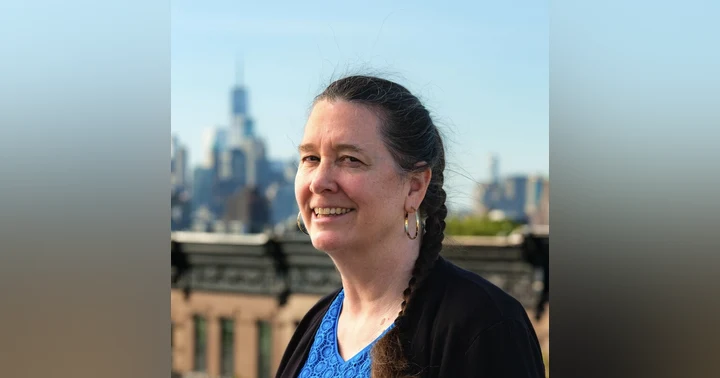
An Acquiring Editor Reveals What She's Buying Right Now

Most rejected picture book and middle grade manuscripts aren't turned down because they're bad — they're turned down because an editor has already seen five just like them. Susan Marston, the new editorial director of Albatros Books' US expansion (and former 25-year editorial director of the Junior Library Guild), joins us to lay out exactly what's landing on her acquisitions list right now — and what's already been done to death. We talk about why Albatros — the largest publisher in the Czec...

 Apple Podcasts
 Spotify
 Castro
 RSS Feed
 Most rejected picture book and middle grade manuscripts aren't turned down because they're bad — they're turned down because an editor has already seen five just like them. Susan Marston, the new editorial director of Albatros Books' US expansion (and former 25-year editorial director of the Junior Library Guild), joins us to lay out exactly what's landing on her acquisitions list right now — and what's already been done to death.
We talk about why Albatros — the largest publisher in the Czech Republic — is betting big on the American market, what makes a manuscript feel "irresistible" to an editor who's read literally thousands of submissions, and why she thinks the industry needs way more funny books, shorter word counts, and readers who aren't just "a boy and a girl who are best friends." Susan also gets specific about the exact gaps she's trying to fill: mysteries that go beyond the Sherlock-and-sidekick formula, horror-lite for middle grade, memoir, magical realism, and chapter books that actually try something new.
If you write for kids, this is the episode where an active acquiring editor tells you, out loud, what she wants to see land in her inbox.
In this episode:
- Why Albatros Books chose now to expand into the US market
- What "fun nonfiction" means as an acquisitions strategy
- The gap in chapter books Susan is actively trying to fill
- Why humor is one of the hardest — and most underrated — things to acquire
- Her take on the "boy and girl best friends" trope in middle grade, and why it's fading
- Why she'd take a great 200-page book over another 400-page epic any day
- Where to send your submission (and what she's hoping lands in that inbox)
Submissions: Albatros Books is actively acquiring picture books and chapter books from North American authors. Submission guidelines are on their website — send yours to submissions@albatrosbooks.com.
Hit play, grab a pencil, and get ready to take notes — then head to writerswithwrinkles.net for the full breakdown and links mentioned in this episode.
Visit the Website
Find Full Episodes on YouTube!
Writers with Wrinkles Link Tree for socials and more!
Threads: @WritersWithWrinkles
Insta: @WritersWithWrinkles
Bluesky: @bethandlisapod.bsky.social
Twitter: @BethandLisaPod
Support Writers With Wrinkles - become a subscriber
Email: Beth@BethMcMullenBooks.com
Writers with Wrinkles Link Tree for more!
00:00 - Welcome Susan Marston
01:30 - Susan's Picture Books: What Color Is Your Favorite Month?
02:30 - The Story Behind What's in the Basket?
04:00 - Getting Lost in the Story (the Pool & Christmas Trees Mix-Up)
05:30 - Why Albatros Books Is Expanding into the US
07:00 - What Albatros Has Signed So Far
08:30 - US vs. International: How Albatros Decides
10:30 - The Chapter Book Gap Susan Wants to Fill
12:00 - Why the Industry Needs More Humor
13:30 - Susan's Favorite Chapter Book Series
14:30 - Balancing Trends with an 18-Month Publishing Lag
16:00 - The Graphic Novel Trend She's Sticking With
16:30 - Rethinking the "Boy and Girl Best Friends" Trope in Middle Grade
18:30 - Why Kids' Books Don't All Need a Heavy Issue
20:00 - Magical Realism Picks & Favorite Picture Books
22:30 - What Susan Is Actively Acquiring Right Now
24:30 - The Case for Shorter Books
27:00 - Where to Submit to Albatros Books
Beth McMullen: [00:00:00] Hi friends, I'm Beth McMullen
Lisa: Lisa Schmidt
Beth McMullen: And we're the co-hosts of Writers With Wrinkles. This is season five, episode 26, and today we're excited to welcome Susan Marston to the show. Susan is a Brooklyn-based consultant specializing in children's books and the editorial director of Albatros Books, where she's actively expanding the Czech publisher's presence in the US. Susan was the editorial director of the Junior Library Guild for 25 years, and is the author of the forthcoming What's in the Basket?
An Easter Adventure. So welcome, Susan. Thank you so much for joining us today. We're excited to have you here.
Susan Marston: Thank you. It's fun to be here
Lisa: So you are also an author, and I would love for you to tell us about your books
Susan Marston: Okay first one is
Beth McMullen: Aww!
Susan Marston: What Color Is Your Favorite Month? And this one is co-authored with Topanka Sakinova, and [00:01:00] she is a genius. So this is, this just goes through each month, and it's not regular colors. There are things like fox brown, icicle gray, snowman white, and you find them in the pictures.
Beth McMullen: Oh,
Susan Marston: so
Beth McMullen: cute
Susan Marston: it goes through each month. You can also find a horseshoe on every page, and the illustrations are just beautiful,
Lisa: Oh my God,
Susan Marston: and
Lisa: gorgeous
Susan Marston: so full that we couldn't even put authors and illustrator on the cover. Yeah, back cover.
Beth McMullen: have, you don't have
Susan Marston: We're down, we're back here.
Beth McMullen: in the back.
Lisa: All right. Oh my God, that's a beautiful book.
Susan Marston: So it's really beautiful.
Beth McMullen: is
Susan Marston: Came out in May
Lisa: you guys can't see it, but we can. Just trust us, it's gorgeous
Susan Marston: And it's great for a teaching situation, and it- there's a lot that you can go back to again and again. So great for individual one-on-one with kids.
Lisa: And you have some books that are coming out, correct?
Susan Marston: Yeah. The next one that's coming out is called What's in the [00:02:00] Basket? And when I was a kid, I went to the library. I can still picture the exact place in the library where I found this Easter book that was completely magical, and I loved it.
And we took it out, and I read it, and then took it back to the library, and I never saw it again. I could never find it again. Wanting to do something, a magical Easter book, I looked at all the Easter books that were out there, and I didn't find one that was, A lot of them ver- were similar.
Lisa: Right
Susan Marston: The concept that I came up with for What's in the Basket?
is three little toys, a lamb, a chick, and a bunny are-- wake up in a new world. They don't know where they are, and they're actually-- it is a lift-the-flap book. They're actually in an Easter basket, so they are w- wandering around, and they trip over some Easter eggs, decorated Easter eggs, and some chocolate and [00:03:00] some bubbles.
And at the end, they find out-- They've heard this voice say, "What's in the basket?" And it's actually the child at the end
Is revealed, says, "Oh, we're in the basket." So-
Beth McMullen: Oh, that is very cute, and I like the little twisty ending, a, that's like a, that's a fun reveal. You don't always think about those with the, the picture book, flap book, board books.
You have a mystery. I love it
Susan Marston: so fitting that into the little, the logistics of a lift-the-flap book was very complicated. And as I was writing it I was doing a lot of swimming. So one time I was in the pool swimming thinking, thinking, trying to figure out exactly how to fit this all together.
And when I got out of the pool, there's a grocery store next door, and in between there were Christmas trees, and I was like, "Why is it Christmas? I thought it was Easter." But it was just Easter in my head.[00:04:00]
Lisa: Oh my gosh. That's... It's amazing. It's amazing how we can get so absorbed in our story and our thoughts,
Susan Marston: Yes.
Lisa: that you lose yourself for a little bit,
Susan Marston: I absolutely did.
Lisa: Oh my God, that's so funny.
Beth McMullen: This is
Lisa: Yeah
Beth McMullen: books, right? It's that, that full escape from reality. Even
Susan Marston: Absolutely
Beth McMullen: book, you can have that moment outside of the book. I love that. That's great. When does this book come out? What's its release
Susan Marston: It's coming out in January
Beth McMullen: Okay, great. We will keep an eye open for that.
Lisa: So I'm very excited. So first of all, I found out about Albatross Books through my friend, and I told her I won't say anything 'cause there hasn't been an announcement yet.
Susan Marston: Okay. I was wondering
Lisa: Yeah, no, I won't say anything, I promise. But she was the one who told me about Albatross Books expanding to the US market. And first of all, I just wanna say I love this book, and I can hardly wait till the [00:05:00] announcement. It's so clever and funny, and so
Susan Marston: Agreed
Lisa: to you for snagging that wonderful story. So that's how I found out about you, and I immediately said, "Of course I wanna talk to you for Writers with Wrinkles." And so we're curious what prompted this big move with Albatross to expand to the US market?
Susan Marston: Well, Albatros is actually the largest publisher in the Czech Republic, but Czechia is not enormous, and so the market is not enormous. So they do a lot of foreign sales, and that is a lot of how they expand. But the US market is a very desirable, very big market, and sales here can help sales elsewhere, not to mention just the number of people who buy books here.
So they started their expansion in 2021, and I started in 20- April, 2025, and so [00:06:00] we are doing a big growth spurt now. And we're expanding in all kinds of ways, really exciting. So their bread and butter and their specialty is fun nonfiction. And that is something that attracted me to, to working with them because I was familiar with their books from Junior Library Guild.
And they always have really fun ideas and and now that I've met all the people, they have such creative, open people who try new things. They're very innovative. It's very exciting. This April, I got to go to Prague and Brno, where they have offices, so I met even more people than I already knew.
And so my familiarity with the, the-- with the American market, having read all different publishers for more than 25 years, but making decisions for the whole group for 25 years it was just a wonderful fit. We've signed up four picture books [00:07:00] from North American authors, so that's really exciting, and I'm always looking.
And if you are interested in-- We, we're do- we're doing nonfiction. We-- Yeah, so we have lots of nonfiction. Our sticker books and board books are done in-house. We are-- we have a license that we just did, so we're doing licensing. And signed up four picture books, and I'm-- And we do a lot of books that we purchase in translation.
So we're expanding in all kinds of ways. But finding North American authors, that's really been fun. So far I've signed up four picture books.
Beth McMullen: It's interesting because, we hear so much about publishing being there's such chaos, and how do we deal with AI, and blah, blah, blah, blah. It's very gratifying and exciting to hear about a publisher expanding, moving [00:08:00] into new markets, trying
Susan Marston: Yeah
Beth McMullen: things. It's great to hear that 'cause it does sound... You said that you feel like this is a very creative company, and it sounds like that creativity is also on the back end with the business model and how they're going to approach all these
Susan Marston: Yes
Beth McMullen: in looking to expand. What a great place to land at a great time
for
Susan Marston: it is very exciting. Yes, I'm having a ball.
Beth McMullen: of experience that they're g- they're benning- benefiting from. So are you planning... Is Albatros planning to publish books that are tailored specifically for the US market? Are you going to just acquire these books and then publish them all over? How are you approaching the different segments of the market,
Susan Marston: Yeah, so
Beth McMullen: being
Susan Marston: there,
Beth McMullen: own beast?
Susan Marston: there are-- the what's published in Czechia and what's published here are independent, but they go back and forth. So not-- ideally every book that I [00:09:00] sign up would be a hit here and there. I don't know... i'm not restricted to that, but I do present, "Here are the books that I would like to see, I'd like to publish."
And we talk about them, and then they say, "Okay." There's one in particular that I'm not sure is necessarily an international kind of book, but I think we're gonna make it so fun that it's gonna be irresistible. Finding books that are entertaining. I'm very excited about diverse books, but also with universal stories so that there's carryover to whatever language or market.
That is-- that would be the ideal
Beth McMullen: So you're able to look at each one and assess, is this
going to be a good fit for primarily US, international?
That's actually so exciting because, in Junior Library [00:10:00] Guild you really had that sort of, it was a universe that you knew the boundaries of, where this feels like really it can keep on just expanding out into different
Susan Marston: Yes
Beth McMullen: which I love that. I love talking about publishing in an expansive way rather than a condensing way, if just generally.
Susan Marston: So we- so far we've been doing nonfiction and picture books. We have a chapter book coming out that is a translation from Polish, which is th- such a great book, wonderful book. But we're also looking for other chapter books. It's a form I feel like there there's room for lots of innovation.
A lot of times because at Junior Library Guild I was reading books from every single publisher, I would see, oh, they have one and they have one and they have one, and there was a lot of similarity. So I'm really looking for books that are not like other people's books. So whether [00:11:00] that's in one format or another, or whether that is...
So innovation and creativity and humor. Please humor. There's not, there are not enough funny books in the world, and those are the ones that kids say, elbow their friend and say, "You have to read this. This is so funny." So
Beth McMullen: to that. We say that all
Susan Marston: that's, yeah
Beth McMullen: M- I swear, that comes up once an episode where... And I think it's not only for kids, but adults too. There's
Susan Marston: Oh, 100%.
Beth McMullen: humor is somehow something we should avoid when, good Lord, now we need it more than ever.
Susan Marston: More than ever. And also yeah, certain kinds of humor are really gonna be limited to certain audiences. So like potty humor is not as fun for adults as it is for kids. I remember my older son, when he was 18 months old, he was walking up the stairs and he just kept saying, "Butt," and then laughing his head off.
And I was like, "How do you know that's funny?" And he did, he thought that was hilarious. [00:12:00] But I thought it was funny that he thought it was funny, but I didn't actually think it was funny. Clever humor,
Beth McMullen: Yeah
Susan Marston: Is that, is for all audiences is really sought after. And I don't know what
Beth McMullen: everybody who's
listening is jotting down hu- humor
Susan Marston: you think of award-winning books or award-winning films or award-winning, it's not usually the humor, but oh my gosh, humor is hard.
Lisa: Do you have a favorite chapter book series that you just like you immediately think "Oh, I want that"?
Susan Marston: Dory Phantasmagori I love without question. There's also oh, what is it called? I'll get back to you on the other one.
Lisa: I'm sorry to put you on the spot. You're like, "That wasn't part of the questions."
Susan Marston: My colleague Liz and I at JLG, we used to say we shared a brain because I would say, "Oh," and she would say, "Oh," and then we would together we would come up with whatever it was.
Lisa: that's very similar to us, so [00:13:00] I totally get it
Beth McMullen: book titles than... Yeah, I can, especially if I read on my e-reader and it doesn't, I don't see the cover, then the
Susan Marston: Oh, it's really different. Yeah
Beth McMullen: in my... And then people will say, "What are you reading?" And I will have no idea what the title is, which is a little disturbing.
Susan Marston: Yes
Beth McMullen: Let's move on to when you're looking at things as, through your editorial eye, you're evaluating a manuscript, do you balance what's trending now with how the market might look when a book is published? We all know it takes time to publish books. There's always like a 18-month lag from that, or two-year lag from that moment when the author gets the contract and the, the book hits the shelf.
So how do you deal with balancing trend and knowing that there's that long window before the s- the book actually hits the shelf?
Susan Marston: I've been reading kids' books since I was a kid. I would say all the time except for when I was in college, so I really have [00:14:00] a, Somebody will mention something that was ha- that was published during that time, and I will have no idea what they're talking about. But I was a teacher. I- Then I was at Junior Library Guild, and so I- and now I'm on the Bank Street Children's Book Committee, so I'm pretty on top of what's out there.
I know what I like. I know what works with kids 'cause I'm a parent also. I was a teacher. So I'm not really looking at trends, although one trend that I saw develop and o- that I love is the move to graphic novels. At JLG, we started before there were... Children's publishers were widely doing graphic novels, and when one of- when my kids were little, there were just not enough.
So the move to graphic is fantastic, and it's such a great organizing way for nonfiction also. So that's a trend I'll stick with. But that's a [00:15:00] format trend and
Lisa: think about, like, how do you feel like middle grade's gonna fare over the next couple years?
Susan Marston: I think that There are two things about middle grade that I've been frustrated by, I would say. When I first started at Junior Library Guild, actually before that when I was in grad school, book characters were 75% male characters And now, s- such a change. We had trouble finding enough books with boy characters, male characters, for all categories, no matter what it was.
And there was that time in between where middle grade was always a boy and a girl who were best friends. I don't think we have that so much now, but that was like, that was the that was how s- everybody cha- solved that problem with who's gonna read this [00:16:00] book. And certainly we know boys will read about girls in certain situations and girls will read about boys in certain situations, but also they also wanna read about kids who are like them.
And that's true of diversity of all kinds. I don't think we should forget the boys in middle grade, especially in middle grade. The exciting page-turners that are... even s- for example, in sports books, the trend has been to only have to mos- mostly have girl characters which I love girls' sports, I love books about girls' sports, but also books that boys are gonna love.
I also love that one.
Lisa: Yeah。
Susan Marston: that's one
Beth McMullen: It's like
Susan Marston: thing.
Beth McMullen: I feel like publishing always
Susan Marston: balance. Let's say
Beth McMullen: Yeah.
Susan Marston: Yes.
Beth McMullen: Yes,
Susan Marston: happens with everything.
Beth McMullen: Yeah
Susan Marston: Potter, everything was a Harry Potter knockoff. After Hunger Games, everything was a Har- a, a Hunger Games knockoff. So [00:17:00] there's a lot of going to the trend. I remember my son in middle school, I was always reading to him.
I would read to my kids even as they got older a lot of books that I was considering for JLG. So I remember hi- his teacher in middle school said, "What kinds of books would you like for the classroom?" And he raised his hand and he said, "Oh, anything but more dystopia." And then all the other kids were like, "Dystopia, dystopia."
So he was like, he had read a lot more 'cause I had read a lot to him, and he was done, and I was done, but then it just kept going. It doesn't all have to be trendy. We can do all different kinds of books for all different kinds of readers all the time.
Lisa: Yeah, I think one of the things we're always talking about is how issue-driven everything is. It's like, can we just have an adventure?
Susan Marston: Please.
Lisa: just,
Susan Marston: Yes.
Lisa: just have an adventure.
Susan Marston: Yes
Lisa: [00:18:00] doesn't need to have a heavy issue. And, I'm guilty of writing, a book where some- a main character had anxiety. But it wasn't the core theme of it. Do you know what I mean? I just... I see so many books come out, and I'm like, "Oh my God, where's something funny? I just want funny. I want light. I want an adventure where there is no big problem in his, you know, life that he has to solve. That, he just needs to,
Out whatever problem's in front of him."
Susan Marston: Yes,
Lisa: 'cause
Susan Marston: agree. I agree that,
Lisa: up
Susan Marston: Especially when we're competing with other attractive, fun things,
We want it to be fun and attractive and entertaining. Irresistible. I want it to be irresistible. I think you can also have books that are so clever that they stay with you. It can be entertaining and it can be
Lisa: All right. Thought-provoking
Susan Marston: Thought-provoking and eye-opening and one that'll just stay with you if, especially if [00:19:00] there's I think certainly some sci-fi. I don't think there's enough sci-fi, honestly and magical realism, things that just stick with you and you gotta and
Lisa: magical realism, is there any book that you were like, "Oh my God, I love that book," that
of
Susan Marston: the first one that comes to mind is not a children's book, but like Water for Chocolate I just,
Lisa: Ja
Susan Marston: adore.
Beth McMullen: Good one
Susan Marston: But there are picture books that with magical realism like one by Gerty Nolan, Raising Dragons, or Harvey Potter's Balloon Field, Farm, excuse me, or, the, these are old because I've been thinking about them. But I don't know if you know the picture book Dinner at Magritte's by Michael Garland. So cool. That one will blow your mind. Or the ones, I love the p- the kinds with paintings where, the what's her name? In the, the, who goes into the lilies of the Monet painting and m-
Beth McMullen: Oh yeah,
Susan Marston: I'm trying, I'm coming up with [00:20:00] Mirette, which is not right 'cause that's Mirette on the high wire.
So she's not the one who goes into the paintings. But that kind of thing I think k-kids really and, the ones that have the echoes at the end where you're like, "Wait a minute, this is the beginning. No, this is the end. No, this is the..." Yeah, so things like that
Beth McMullen: My favorite picture book is I Want My Hat Back
Susan Marston: Okay, I wonder why. That's, yeah, that...
Beth McMullen: funny, and it
Susan Marston: Funny
Beth McMullen: and it's snarky, and it's got the best voice of any picture book that
when it came out, I remember reading it to my kids, I was just keeled over laughing, and they real- they really liked it. They share my bizarre sense of humor. And then when it came time to they're grown now, I was cleaning out the picture books, and I was like, "Oh, that one I'm keeping. That one is mine." I love that. It's... what I want more in all kinds of fiction. Make me laugh, make me think, keep
Susan Marston: Yes.
Beth McMullen: You don't have to hit me over the head with some, a [00:21:00] moral lesson.
It's okay. I'll pick it up as we go along. You don't need to tell me all that stuff.
Susan Marston: It's funny because when we read that one at JLG we were a little concerned. Is this gonna be too much? Are people gonna be worried about this?
Beth McMullen: Totally.
That's what
Susan Marston: we took the leap. It was good.
Beth McMullen: I thought it was like it had a little bit, it was a little demented, and that's what I loved about it. This is a little demented.
Susan Marston: Yeah
Beth McMullen: I, and as an adult I appreciated that creativity. We're
Susan Marston: Yes
Beth McMullen: approach childhood with kid gloves like it's this precious, pure, innocent time.
For many kids have been exposed to lots of crazy, off-the-wall, terrible things, and like to treat them as if they're fragile is doing them a, a disservice. Anyway, love that book.
Lisa: It's a good book okay. So we have [00:22:00] covered a lot of ground with what you like and maybe what you're looking for, but what are you actively looking to acquire, like right now? What is at the very top of your list? And I know everyone's gonna be like, "What is it?"
Susan Marston: Yeah, so I think we're still actively looking for picture books. I would like readers that are more than two friends because Frog and Toad was about two friends.
Lisa: Right
Susan Marston: I would like mysteries that are more than a Sherlock Holmes mystery with a genius and a sidekick. Pulse pounding, exciting page-turner, early, younger middle grade would be fantastic.
We're not really doing too much in the way of epic fantasy or YA. That's just too much right now for the staff that we have. But exciting books, we're always looking for that. So [00:23:00] I'm personally, I read lots of horror books for JLG that I would not ever personally have read on my own. I know it's very big.
I know kids like to be scared. So I would say horror-lite, not grotesque stuff. I'm not gonna do that. But suspense for sure. And if you have a great nonfiction idea I love memoirs. So that's really... it has to be something that a kid would be interested in. But yeah, so I'll... something fresh, something new, magical realism, funny, exciting.
That's
Lisa: And so like the middle
Susan Marston: Yeah
Lisa: with the lower middle grade is, do you look, is there a sweet spot for you as far as word count?
Susan Marston: I feel like there are not enough short books around, honestly. There, 200 [00:24:00] pages used to be a thing and it doesn't seem to be anymore. I'll tell, I've told this story to other people, but this is I love this story. Trev Jones, who was ush- used to be the editor-in-chief of the School Library Journal, went out to lunch with Beverly Horowitz post when Harry Potter was huge, and books had just gotten bigger and bigger.
And so Trev, with a total straight face, says to Beverly, "We've decided we're not gonna star anything over 350 pages." And Beverly, who was the edit- I don't know what exactly her title was, but an editor at Bantam Doubleday Dell, was just floored, like all panic. And Trev was just joking, but sometimes a short book would be good.
Beth McMullen: Gotten very long, and I feel like in this environment where you're competing with the iPhone and the video games and the this, that, and the [00:25:00] other, like 400-plus words for a 10-year-old is really heavy lift. it's a big
ask
Susan Marston: and it's not just for 10-year-olds. That's a, that is a topic that we talk about on the Bank Street committee because it's all volunteers doing the work, and they're good readers, obviously. There's a lot of librarians and teachers and people with an ed- educational and reading exper- reading expertise their backgrounds.
But sometimes the books are just so long, it's how much time should we put into this book when we could have read three other books in the meantime?
Beth McMullen: Yeah, I just wanna
go
Susan Marston: obviously,
Beth McMullen: with my red pen
Susan Marston: you know yourself, you've read books that you don't ever want to end. So I get it. Personally, right now I cannot handle a book that's gonna be a super- that's gonna be an epic.
I can't do [00:26:00] that right now but I think kids who don't have to make such a commitment would
Beth McMullen: Yeah
Susan Marston: be enticed by an exciting fast-paced book
Beth McMullen: I actually got "The Calamity Club" that Catherine Stucker, that new, her new one this, that came out this summer, and I got it on my Kindle, and I had no idea it was like 650 pages. I started reading, and it's quite good. It's compelling. I know it's not for everybody, but she's a very good writer and she just sucks you into these characters and... But I'm reading and I'm like, "I gotta... I wonder how far along I am," and I was at like 8%. then I thought, "Oh my God, how long is this book?" And then I had a friend who had the hard cov- the hard, the hardcover, and she was like, "Did you not see the book?" I'm like, "No, I've never seen the book."
Susan Marston: I mean it, yes. That is one of the dangers of a Kindle read, definitely.
Beth McMullen: shocking. I was shocked. J- just, took me completely unawares. But I did, it was good and I did, I [00:27:00] stopped noticing that it was long after a while. But for the most part, I agree with you. I'm not in for over, 100,000 words. Please, no. No.
Lisa: Yeah
Beth McMullen: 80 I can handle.
Yeah. Anyway, that wraps up our time with you, Susan. We are not gonna take the rest of your day. You are on vacation, so we want you
Susan Marston: I
Beth McMullen: your vacation.
Susan Marston: you
Beth McMullen: you so much for taking a little bit of time out today to be with us and sharing
Susan Marston: My pleasure.
Beth McMullen: We are totally
grateful.
Susan Marston: if, people want to send things to Albatross, we have submission guidelines on our website, and our submission address is submissions@albatrossbooks.com
Beth McMullen: Perfect.
Lisa: Awesome
Beth McMullen: all of that in the podcast notes and the blog at writerswithwrinkles.net so everybody who's listening can just grab it. I feel like there's a lot of things in here that we talked about that'll be super interesting for people considering things for submission right now. Hopefully everybody had their pencil out and was taking notes. we [00:28:00] will be back next time with an Ask Beth and Lisa episode. So if you have questions, thoughts, feelings about that, please send them our way. If you have topics you want us to discuss, let us know. until next time, happy reading, writing, and listening.