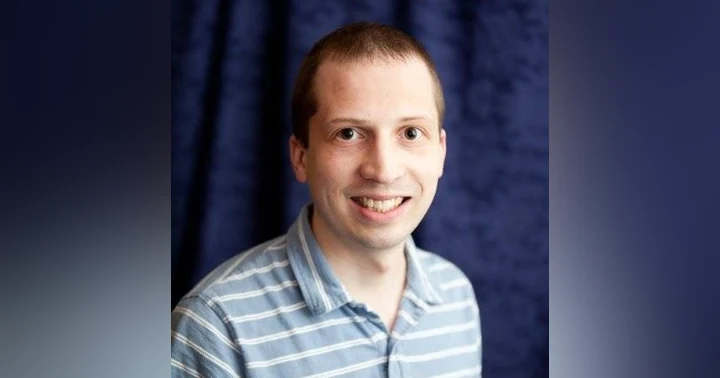
Self-Publishing Mistakes to Avoid, From the Draft2Digital CEO


 Apple Podcasts

 Spotify

 Castro

 RSS Feed
Your book cover is metadata, and the wrong one is a fast way to earn a one-star review. Draft2Digital co-founder and CEO Kris Austin shares how to self-publish a book the smart way: the cover mistake he sees most, the two features most indie authors skip, and why libraries want your book even if you're in Kindle Plus.
Self-publishing is a skill you build by doing, and a few small decisions (category, cover, print, pre-orders) quietly decide whether readers ever find your book. Kris explains what scammers and AI-generated "slop" have done to the publishing pipeline, why Draft2Digital added a $20 activation fee, and how readers are discovering books now that bestseller lists have lost their pull.
In this episode
- The number one mistake new self-publishers make, and why it leads to bad reviews
- Why covers, descriptions and BISAC categories are all "metadata"
- How to fix a book that landed in the wrong category
- D2D Print and pre-orders: the two most underused features
- How Kindle Plus authors can still sell to libraries
- Going wide: bookshop.org, Tolino (Germany) and international readers
- Why Draft2Digital introduced a $20 activation fee
- Where AI helps authors and where it hurts
- How BookTok, Facebook groups and Reddit changed book discovery
- The advice for nervous authors: finish the book, and don't panic
Mentioned in this episode
- Draft2Digital and D2D Print (print-on-demand conversion from your ebook)
- Bookshop.org
- Tolino (formerly the Tolino Alliance)
- BISAC and Thema (book category standards)
- Writers With Wrinkles blog and notes: writerswithwrinkles.net
Hit play to hear what to fix before you hit publish. Then head to writerswithwrinkles.net for the blog post, and follow the show so you catch our next Ask Beth and Lisa episode. Got a question for us? Send it our way.
Ready to turn your manuscript into a published book? Writers With Wrinkles Press handles editing, cover design, formatting, and distribution, and you keep 100% of your royalties. Visit WritersWithWrinklesPress.com and write CONFETTI on your submission to get $500 off your publishing package. Your book. Your moment. Let's make it a celebration.
Visit the Website
Find Full Episodes on YouTube!
Writers with Wrinkles Link Tree for socials and more!
Threads: @WritersWithWrinkles
Insta: @WritersWithWrinkles
Bluesky: @bethandlisapod.bsky.social
Twitter: @BethandLisaPod
Support Writers With Wrinkles - become a subscriber
Email: Beth@BethMcMullenBooks.com
Writers with Wrinkles Link Tree for more!
00:00 - Welcome to Writers With Wrinkles
01:30 - The #1 mistake new self-publishers make
03:30 - Why your book cover is metadata
05:30 - Why books land in the wrong category
08:30 - Fix a category in hours, not months
10:30 - Print on demand with D2D Print
12:15 - Pre-orders: easy extra sales for series authors
14:08 - Why so few authors publish in print
16:38 - Growth for wide authors: libraries, even from Kindle Plus
20:08 - Bookshop.org, Tolino and international readers
24:08 - Do your research, but don't get paralyzed
27:08 - Give yourself grace: self-publishing lets you course correct
28:08 - Why Draft2Digital added a $20 activation fee
32:08 - From 70% rejected titles to 20%
34:08 - AI as a tool: who it helps and who it hurts
37:08 - How readers find books now: BookTok, Facebook, Reddit
40:08 - Word of mouth, community and the fading bestseller list
43:38 - Advice for nervous authors: practice, and don't panic
44:38 - Wrap-up and what's next
Kris Austin: Writers With Wrinkles Podcast Interview
[00:00:00]
Beth McMullen: Hi friends, I'm Beth McMullen
Lisa: And I'm Lisa Schmidt
Beth McMullen: And we're the co-hosts of Writers With Wrinkles.
This is season five, episode 34, and today we are very excited to welcome Chris Austin to the show. is the co-founder and CEO of Draft2Digital, one of the world's largest digital publishing and distribution platforms for self-published authors and independent publishers. Since its founding in 2012, Draft2Digital has grown to support over 300,000 authors from around the globe who have collectively released over 1.1 million titles.
So welcome, Chris. Thank you so much for joining us today. We're happy to have you.
Kris Austin: Yeah, thanks for having me. Very excited
Beth McMullen: So Lisa and I started a small press, actually it just launched in the beginning of October, and we put out our first book. I have got to tell you, navigating the distribution platforms for independently published titles [00:01:00] was mind expanding.
Kris Austin: Yes, I imagine. Yes.
Beth McMullen: I'm trying to keep my language clean. So this feels like a very timely conversation for us to be having because I know, in this world you are one of the, the experts with deep knowledge so I'm excited to jump into our questions. I just want to get started with if a first-time author, somebody who's brand new to this universe, came up to you with a finished manuscript, what would you tell them to do first?
So what are the mistakes that you're seeing on your end what are the mistakes that authors who want to self-publish are making?
Kris Austin: Sure. Yeah, absolutely. I would say probably the number one is not getting a cover that matches the book content. People-- authors tend to be really creative people, which is fantastic, which is exactly what you want. But when readers are looking for books they want to read they [00:02:00] do look at the covers, and the covers tell them, and they know how to recognize the types of stories they're interested in from the covers.
And so one of the number one reasons for bad reviews on books is that they didn't get the book they were expecting to get, and that comes down really to your cover image and your description. Are they gonna get what, what you're selling them? And so I encourage new authors to look in their genre at other books that are selling in that area that you're trying to feel like your book is probably similar to or what, and kinda get some idea for what the sort of tropey type stuff is on covers.
Like a space opera is gonna have some giant ship in the middle of space, just as an example. It's really interesting when you start looking at covers from that perspective. What's the cover trying to tell a reader? And so I would say that's the number one thing is you need to get a cover that matches your book's content 'cause that's how readers quickly identify a book they wanna read.
Beth McMullen: I was really surprised when [00:03:00] Lisa and I first started working on our book a cover is considered metadata. You think about a cover as just like an image or it looks nice, but it is considered part of the data that will help a reader find your book. And what I ended up doing with ours is, so it is a nonfiction writing craft book, and I combed through all the top book covers looking for the similar elements that were then going to inform potential buyers this is what you're getting. Think that, like what you're saying, this idea that all these little pieces are so important to that discoverability element that gets the eyeballs, that then gets the person to buy book. So I'm really glad you said that because sometimes when you say to people, "The cover's really important," and they're like, "Don't judge a book by its cover," and I'm like no, everybody judges books by their cover."
That's just facts,
Kris Austin: [00:04:00] Yeah.
Your goal should be to help the reader find your book. So like you said, metadata is how you do that. I liked how you framed that. I never thought of it that way. Covers are metadata, and it's so obvious once you say it. And but that includes, yeah, your description and your title and your BISAC categories, the genres you choose.
'Cause there's a lot of books out there. Readers have a lot of books to choose from, and when they do come across yours and read it, you want them to be glad they picked it up. You don't want them to be like, "Oh, this is not what I thought it was gonna be." And so give them a chance to find the book they want.
Beth McMullen: We have heard a number of authors say that got a one-star review because the person didn't like the cover or the cover was something that them. There ... and you know what? All you need to do is go into a bookstore and browse the shelves and see the covers, and you can tell exactly what we're talking about.
Genres have specific elements, and designed to help these readers find what they want to read, and [00:05:00] there's nothing quite as terrifying as a reader who gets a book that they don't think matched their expectations. They will go online and pop off about it, and we don't, we as authors don't want that to happen.
Kris Austin: That's the wrong reason for someone to give you a bad review. So yes, that, that would be the most frustrating reason.
Lisa: One of the, the other things, and I'm not sure if we cover this later on, so I just want to bring this up. The metadata, the tags that go with your book that Beth is always screaming. Like, when she first started talking about this. It's basically how your book is filed, within the system. So if it's, a, a horror book, it's chine- spine-tingling horror.
That's like a meta- metadata, meta tag. Correct?
Kris Austin: Yes
Lisa: and those are so important, because if they are not If they don't align with your book, people aren't gonna find them. so doing ... Beth did so much research, like painstaking research. 'Cause I got to hear the blow-by-blow
[00:06:00] of everything that was going on. And now that's something I talk to about every writer friend I have. The importance of it.
And I've had that experience so many times where I'm sitting with a friend. I'm like, "Let's go look it up." I discovered it on one of my books that it was filed wrong. And so what do you, what are your thoughts on all that?
Kris Austin: Sure, yeah. This is actually a very common problem the industry's always dealt with. As an indie author, the beautiful thing is you have a lot of power to fix this very rapidly, and you can go to your platforms that where you're uploading, perhaps it's Draft2Digital, perhaps it's other places, and you can make those changes yourself, and you can reach...
And if they're not showing up right on the storefronts, you can reach out to customer support and get those things fixed. With, When you're deal- working with a publisher, sometimes they're not-- they're a little busier than you wish they were, or they have a lot of processes involved in getting these things changed.
Indie authors, they do have a leg up on being able to short-circuit this problem and resolve it very rapidly. But it's a very common problem where books end up in the wrong [00:07:00] categories. It's... One of the reasons it's so complicated is the industry has a thing called BISACs which is a standard for categorizing your books.
There's also other standards called-- There's one called Thema which is used elsewhere in the world more so than the US, but if you're selling a book around the world, you want to understand some of this. And in every storefront, like Amazon and Barnes & Noble and Kobo and Apple, they all have their own list of categories, and they map these BISAC subjects to their categories using some of their own internal processes, and that can be maddening 'cause you're like, "How do I get it where I want it?"
Everybody wants it to be in the right place. Believe me. The retailers do, the readers do, the authors do. Everyone wants it in the right place, and it's a very complicated system. So working with someone like us can help with that 'cause we know all these retailers, and we know how the weird stuff happens and how to fix the weird stuff.
And publishers, they learn this too over time. But,
Beth McMullen: I think that's a really good point [00:08:00] just to emphasize to our listeners that of these places have their own unique approach. But if you're going through somebody like D2D, you are eliminating some of that chance by funneling through one doorway rather than trying to open all these doors and being hit by all the chaos.
I found it very, I found the whole D2D thing to be very user-friendly for somebody who was really new to the process. So I think that gives you a little bit of comfort in that, "Okay, I might not know what I do, I'm doing, but I'm pretty sure I picked the right stuff to at least match the book." And then of course, knowing that you can go in and adjust it, I think that's huge.
I've published, 10, 12 traditionally published books, and trying to get somebody to change a category is not easy and
certainly not fast. Certainly
not fast. So that is something that you get as a, a self-publisher indie author that is just [00:09:00] not gonna happen in traditional pathways.
Kris Austin: Yeah, typically with our system, we make a change and within a couple hours we've sent it everywhere and it's all... And most of them will update it very rapidly with, and yeah, and if you ever get questions, you always can reach out to our team and they can also try to help with your categorization.
'Cause sometimes indie authors are awesome. I love indie authors 'cause they write every possible book you can imagine. And the ones you can't even imagine, you're just kinda "This is the craziest idea for a story." And so there's not BISAC subjects for some of these books. They just don't exist because no one ever thought of them before, and our team will try to help 'cause we've seen everything.
And so we try to help guide authors in some ideas. Hey, try to stick it here because you're likely to have good overlap with those readers, with this type of story, and things like that. So you can always reach out for some advice.
Lisa: So this is a, a, a good transition into the next question. And what do you think is the most underused D2D feature something authors should be taking advantage of more [00:10:00] often but aren't?
Kris Austin: Sure, I can give you two.
Lisa: Oh,
Kris Austin: And first off,
Beth McMullen: down so
Kris Austin: yeah
Beth McMullen: use them after
Lisa: Beth's on it
Kris Austin: Yes. First most indie authors, they get their books into digital formats very quickly, so e-books. Getting you're using Amazon perhaps, or you're using us to get everywhere, a combination. It's all fine. It's... We're all thinking digital books 'cause you're buying books online.
One thing I think indie authors really miss is the fact that most readers still wanna buy print. They still wanna buy print books. But most of those books are bought online. So it's something like 80% of all book purchases, print and digital, are all happening online. These days there's technology called print on demand, which allows you to get your book with no cost up front to the author available in print.
And at Draft2Digital we have a program called D2D Print, which is entirely about helping you get your e-book into print format. We do all the complicated technical stuff that's formatting and laying [00:11:00] it out so it works in print get you a wraparound cover, so if... You don't... may not have to pay to get a second cover from your c- cover designer or however you're acquiring your covers.
Our technology can actually create one for you from your e-book cover. And so D2D Print is basically the answer to number one. Get your book into print. There is no reason you shouldn't do that and 'cause you're just leaving it. There's a lot of people who wanna read in print.
That's just the only way they wanna read. And this is not like it was 10, 15 years ago, where you had to buy 1,000 books and stick them in your garage, and then ship them out yourself. This is not the world we live in anymore. Readers can go buy a book, it gets printed really rapidly and shipped to them, like very fast.
And also your indie bookstores can buy your books that way if they want to, and there's a lot of options, so D2D Print. The other is pre-orders. Not enough authors release their book for pre-order. So if you're writing in a series, for example which most indie authors do tend to write [00:12:00] books in series you might consider releasing a pre-order for your next book before it comes out, maybe a few months, a couple months, something like that.
You'll be surprised at the extra sales you generate because of the impulse buys, people finishing your first book, and then they wanna... They're like, "Do they have a second book? Oh, it's up for pre-order." They can go ahead and just tag it, and go ahead and bu- buy it, and then when it gets released, they have it right away.
They don't forget about you because it'll just show up in their bookshelf. And this has a few advantages on sales ranking and stuff on some of the retailers which are more complicated, but I would encourage indie authors to take advantage of pre-orders. It also makes you look a lot more profe- professional to readers.
Readers they see this happen from traditional publishers so something else. So those are the kind of the two things I would think, Authors should be thinking about. So
Beth McMullen: Is the pre-order option fairly new, or has that been around for a while for you guys?
Kris Austin: Been around for a really long time. Yeah. In fact so with some [00:13:00] retailers you're gonna go ahead and need to have your manuscript finished and a cover image. It's not-- you're always gonna want a cover image for a pre-order, but but for many of the sales channels, we can actually put pre-orders up without the manuscript yet.
So you can even do it ahead of time. But that's been supported for, yeah, a decade, well over a decade we've been doing that. All you do is just choose the release date on the first page where we ask you about your book, just put it in the future, And we handle, we take care of the rest, so yeah
Beth McMullen: Also going back to your converting authors' e-books to print books.
Kris Austin: Угу.
Beth McMullen: do most authors take advantage of that, or is it still something that they're just not even, like, thinking about?
Kris Austin: Yeah, it's a ve- it's a s- it's a low percentage still. Much lower than I w- I wish it was. I think a lot of authors just don't really realize how easy it can be. I think it comes off as very intimidating getting your book into print. And it's not ... We made D2D Print to remove all that [00:14:00] intimidation.
That's the whole reason it exists. It took us about seven years to develop it in a way that I felt like was easy to use and smooth for a, a new author 'cause that our goal is to make streamlined interfaces out of things that are super complicated. And yeah
Beth McMullen: Yeah, I think would be pretty amazing 'cause I know that when you're dealing with a book designer and you're getting all the separate files and the, the print files can look a little overwhelming even when they're just sitting on your laptop, right? Okay, the margins are not quite right.
This is bleeding over a little over that red line. It's gonna look terrible. All that anxiety. I definitely feel like you guys should be waving the flag on that one because that seems really just to be able to get from digital to, to print without that, all those massive headaches and all of those tiny little details that you're having to pay attention to would be a wonderful thing
Kris Austin: Yeah. And it's all... We we try to put it all through our interface where we can, in our onboarding emails, and just let more authors know about it. But
Also,
Beth McMullen: [00:15:00] gonna be talking about it all the time,
Kris Austin: yeah, it's great. Yeah, you can buy copies for yourself too. Sometimes you might wanna collect your own books or give them to your friends at conferences or whatever.
You can also buy them at real low cost just for your own purposes, so
Beth McMullen: And print is big is bigger now. It we had that, "Oh, print is dead," and then that didn't happen, and now more people really wanna read a physical book because we're all wanting to separate from our screens a little bit, and that feels good. So that's a pretty amazing thing.
I hadn't looked at it, so I will have to check that out. If you hear my dog barking, I apologize. There was somebody delivering something outside, and he just has a seizure every time anyone comes to the
Kris Austin: No problem
Beth McMullen: So What do you see right now as growth opportunities for wide authors? And by wide, authors who are not just distributing through Kindle Plus or something like that, authors who have their book out everywhere. Is [00:16:00] it library lending or bookshop.org or international stores like Tolino?
Where do you see opportunities for authors to just additional sales and start, building an audience outside of the ones that we just normally think of?
Kris Austin: Yeah absolutely. You named some really good reasons already. I do wanna clarify authors that are in Kindle Plus used to be called Kindle Unlimited, through their KDP Select program, meaning you're exclusive you can actually now send your books to libraries as well. It's not...
So if you've been nervous about going wide, you might really consider at least putting them into libraries and you can use our service to go just to libraries. And so you could still be in Kindle Plus but also get your books into libraries, 'cause the libraries really want them.
Beth McMullen: new thing, right?
Kris Austin: It is.
Beth McMullen: new... Okay, 'cause
Kris Austin: Yeah.
Beth McMullen: about this
Kris Austin: new as in a year ago. But that's new. A lot of authors aren't aware of it yet, and I really, So if you're not sure you wanna go wide, [00:17:00] let's try out libraries. Get your book into libraries. Librarians really want your books. They really want indie author books.
Indie authors are very friendly to libraries. They give them really good pricing. They give them a wide range of content. And they're really good alternatives for traditional books in this, this time period when libraries are really tight in budgets and and such. So that's... So do that. But as far as going...
Beth McMullen: does
Kris Austin: Yeah, go ahead.
Beth McMullen: Just to clarify. So if
I'm an author and I am Kindle Plus and I have agreed to that exclusivity, I can then go to Draft2Digital, upload my stuff, pick the library option, and have those two sitting next to each other in my universe. Is that
Kris Austin: Yes. Absolutely. That is exactly right. Yep.
Beth McMullen: Okay
Kris Austin: Yes, and it's been great. There's, I am seeing libraries buy these Kindle Plus, typically formerly exclusive to Amazon, books at much higher rates than authors that have been wide historically. [00:18:00] And so it's clear the librarians are seeing these books and they're picking them up.
And so just something to think about. If you're not doing libraries, the- you need to be doing libraries. Libraries are happy when they have more options, so
Beth McMullen: that being driven by library patrons who are after, say, I know romance is big in indie publishing, romantasy, thrillers, all of those genre
Kris Austin: Угу
Beth McMullen: that are reader favorites. Is that because patrons are asking for them and the libraries are responding? Is that sort of where
Kris Austin: Yes.
Beth McMullen: uptick?
Okay.
Kris Austin: Yeah, that's the primary reason is the, is patrons asking. But, sometimes it's just certain genres are becoming more popular. You got... You just mentioned thrillers with psychological thrillers, and there's a lot of historical fiction in various historical genres are very big right now in libraries and growing.
Christian romance is growing really rapidly in libraries. And but there's just a different type of reader at libraries than in [00:19:00] Kindle that, that are in the Kindle Plus readers. They're just different readers, and so you really just wanna provide your book everywhere that someone will wanna buy it, and that's the same argument for going wide.
We really recommend you go wide because that's a lot of places. There's authors everywhere. There are plenty of authors, readers. There are readers all over the place. And so you mentioned bookshop.org, and bookshop.org is amazing. They serve independent bookstores. Independent bookstores have been growing rapidly over the last five years.
Very rapidly, and this is great. It's this just shows this kind of culture of reading that's coming back around, especially people wanting to be closer together when they think about getting their books and acquiring where they're gonna read. And with bookshop.org, your books are available online in a way that can benefit these independent bookstores.
And so you can almost think about it as an alternative to Amazon. They got e-books, they have print [00:20:00] books, and you can choose your independent bookstore as a reader, and they'll get the proceeds from that sale, goes to that bookstore. It's really pretty phenomenal. International reach is definitely one of the major reasons to go wide.
Tolino used to be called the Tolino Alliance. They sell in Germany. German readers read a ton of English language books. Like even if you don't have your books in German, it's really the English language books that they're buying. They're buying it in droves. It's a very important place to have especially if you're in the sci-fi area, fantasy area, but there's other genres too.
And anyway but also in Spain and Italy and but then if you do get translations, then of course you're gonna want a wider reach than Amazon alone can provide. That's other reasons. And so also diversification. So I always say you wanna diversify, so yeah
Beth McMullen: I had an interaction with bookshop.org where something with our our listing was a little [00:21:00] bit screwed up, and I sent them an email, and I thought, "They're never gonna answer me," come on, I'm just one person. There's, what, four million books that came out last year.
So literally within, I'd say, 12 hours, they wrote back to me, and they were like, "Okay, we see the problem. We're so sorry." And I was like, "Why are you sorry? I'm the one who screwed it up." And fixed it perfect. I was stunned. I wrote them back, and I was like, "I don't even know what to say."
I felt like I was writing to this sort of anonymous, Amazon-y t- monster, and were just lovely. I was like, they got a fan for life because they were just so accommodating and fixed the problem. They didn't make me jump through a lot of hoops or anything. So I can't say enough about them.
Kris Austin: Yeah.
Beth McMullen: pretty
Kris Austin: They're a great company, and I do try to encourage people now to think about buying your, all your books at bookshop.org if yeah
Beth McMullen: Yeah, it's like a win-win. it was a happy day for me.
I bought it. I was curious 'cause I d- I was like, how long does it [00:22:00] take if I order a, a print copy from bookshop.org? How long does it take? And it was to my door in two days,
Kris Austin: Correct. Yeah. Generally it'll be printed on demand right away, typically same day, and then it gets shipped very... Yeah, print on demand. It's amazing technology, so
Lisa: amazing.
Kris Austin: yeah
Lisa: I don't I know people that just have the Kindle out, and it's just, you have to, like it's... I don't think people realize how easy it is now. And I say that easy 'cause I wasn't doing it.
Beth McMullen: It is easy. The technology just in probably five years has changed so much, and the books look good.
Lisa: Good
Beth McMullen: have-- if you've spent enough time, like we were talking about, figuring out the appropriate cover and getting a good design and thinking about the details, if you put your book next to a trad published book, it's incredibly hard to tell the difference
Kris Austin: Yeah. You'd have to be in the trade to notice. Yeah
Lisa: Yeah. Yeah. It looks good. I was, when we were waiting for our first copy to come over, [00:23:00] it, we were so excited 'cause we just looked at it and I'm like, "This just looks like a, a traditional book. It just doesn't, there's no difference."
Kris Austin: Yep
Lisa: I have to say, and a lot of this goes to Beth, she really did a deep dive on everything.
Every aspect of, our genre and how it should look, how it should be format- formatted, how, everything. And then we just replicated that. So what you were saying earlier, it is so important to do your research and so that it, you don't, you want your book to stand out, but in a good way, not a not a bad way.
Kris Austin: I do I do wanna caution people in overanalyzing and get, paralysis. Publishing your own book and e- writing is, it's like, it's as much work as writing the book in a lot of ways, but also it's a skill you develop over time. And unless you exercise that skill by [00:24:00] releasing a book you're not gonna really get much better at it.
And so I would caution authors new authors to get paralyzed. So you finished your book, and that, which is my number one advice to all authors, is finish the book. I finish your book 'cause I get a lot of people coming to me who's like I'm in the middle of a book," or whatever. No, you- number one is finish it.
Get good at writing and just write a book, and then you go on to publish it. Don't spend five years researching how to publish a book. And spend some time. There's some low-hanging fruit, like we've talked about in this episode so far, but you can definitely get too far into that. So I would just wanna caution authors.
And you will get better at publishing, writing and publishing by doing more of it. That's just the way we learn,
Lisa: I think that goes across the board, 'cause you can get You do, as a writer, you get frozen in particular moments, whether it's like, reworking your first chapter, or get stuck in the middle, or get stuck in revision. We are ... This is what we love to do.[00:25:00]
Kris Austin: Yes. Yes. And it's good too. I'm- like, it's good that you care so much. It's that's also important. So it's just a balance, right?
Lisa: Yeah, no, and that's
Kris Austin: yeah
Lisa: good advice, because you could get just y- just releasing a book, traditionally when a lot of that is handed off, I still, we all still get freaked out and overanalyze and second-guess, and I should have said more about this, or, d- it just, it's a natural thing to do when you've put so much time and effort into a project, and know that one little slip up can maybe make the difference between it doing well or not.
So I get that, and I think, caution, but yeah don't get stuck in a rut for, a year trying to decide when and how and, all that kind of stuff. So that's good advice. gonna try to listen to that now. I'm the one that freaks out in the, in this little duo.
Kris Austin: You need, it's good to have a, someone to bounce stuff off of. You gotta balance [00:26:00] each other, so it's okay
Lisa: I was telling, I created a post the other day, and we were just talking about, our experience doing independent, self-publishing, and most of our conversations started on my end with, "You're not gonna believe what just happened." And there's therapy that's gonna go along with that, just, like trying to navigate different, freelance people I was working with. Or Beth talking to me, her conversations usually started with, "My head just exploded." So I think, there were two of us that were conquering and dividing and working on this book. So hats off and kudos to all those self-published authors out there who have done it on their own, 'cause it is a l- it's a steep learning curve.
Beth McMullen: Yeah, it is
Lisa: That's... It's give yourself some grace. And the thing is, if you make this mistake, the good news is it's self-published. You can course correct.
Beth McMullen: You can write to [00:27:00] bookshop.org and they'll treat you with kindness, and
Kris Austin: right.
Beth McMullen: really good about yourself
Kris Austin: Yes.
Beth McMullen: It's,
Lisa: Yeah, and we'll
Beth McMullen: it's all good.
Lisa: You're just "Call Chris. He's so cool. We had
Beth McMullen: They'll set you straight. Set you
Kris Austin: That's right. Yeah. You do have a lot of flexibility to solve problems with your- when you're self-published, which is,
Lisa: Totally.
Kris Austin: advantage.
Lisa: Yeah. So okay, so next question: "In 2026, Draft2Digital introduced its first direct author fees including the activation fee. What led to that decision, and what does it pay for?" Dun, dun
Kris Austin: Yeah. No, it's fine. So obviously we're, hopefully we come off as a very open company, and I don't mind talking about stuff like this. The so the, there's two different fees and we'll talk about them separately. The activation fee is is a very simple fee that I'll... You can use our entire system all you want, but once you want us to start distributing your book or sending it out to sales channels which would be libraries, retail partners, print subscription services, then you'll need to pay a [00:28:00] $20 fee to turn that feature on.
And the reason for that really boils down to untrustworthy scammy type users of our service. And since the very beginning, like so 14 years, we learned pretty quickly that there are a lot of people out there that wanna take advantage of other people, and their primary goal is to get them to, is to trick readers into buying books that they don't need to be buying.
It's mostly just worthless stuff that's just not anything good. And what we've have always dealt with this. Literally, we've gotten very good at it. It's one of our skills that we bring and when we serve, because we serve our sales channels in this regard. We stop books that they don't want.
We find out from them what they want, and we keep it out. And we write a lot of software to do this. Probably over half of our software and processes is all about stopping bad [00:29:00] actors. It's very frustrating but we're very good at it. Well- As things get easier to do, scammers show up more rapidly and in larger numbers.
And the advent of AI technologies and tools really made something that was frustrating and burdensome to essentially impossible to deal with. Consider, 100-fold increase in books that we needed to stop. We were literally just spending so much labor and human labor, 'cause w- when we have a book we wanna reject or an account we wanna reject, we have a human look at it 'cause we, we know that there are people behind that, and we don't want to block people that don't need to be blocked.
It's important to me they don't get caught up in it. And so there was some times over last year, there were months that we blocked over 70% of all titles submitted. So you can just [00:30:00] imagine the amount of wasted time. And those scammers are also the ones that are the most frustrating to deal with when you block their books.
They just constant churn of back and forth and argument and stuff. So the activation fee, I never wanted a fee. We always wanted this to be free for authors, to be easy. It's supposed to be accessible to everybody. That's like our whole mission. And but we decided to try this $20 fee because we figure we could break the business model of the scammer.
They're trying to put out 1,000 books, and they hope that they can sell one copy of each book. So well, we can see an account that uploads 1,000 books. Those are easy, right? Oh, hey, there's 1,000 books. Why is there 1,000 books? And we can analyze that one account and cancel it. So what they started doing was opening 1,000 accounts with one book.
We can't look-- We get literally hundreds and hundreds of accounts opened every single day. And so we can't look at all of them. And so the fee is like now [00:31:00] $20 for 1,000 accounts, it breaks the business model. And we figure authors that are really leg, legitimate and they really care about their books would be willing to pay the $20 to get that started.
And so far it's been great. That, that activation fee has done its job. It reduced the customer support workload phenomenally, and so we can actually serve the authors we're trying to serve with much better customer support,
Beth McMullen: that's an am- that's amazing. That's amazing how much slop was coming in just... I can't, I was thinking about it 'cause I was reading about the, the activation fee somewhere, and I assumed it was the result of exactly what you're saying, that you're trying to prevent of this, all these bad actors from getting in there and mucking up the works.
But then I was thinking it's so easy now for AI to generate 1,000 books in a day.
Spit them out, and they're all garbage, but, you the title so it's slightly off a popular title, [00:32:00] and people are gonna buy it 'cause we're not always paying attention to the details. Wow, is... i, yeah, it's just, it's so startling to hear about the impact of that. So how would you, how much?... 'Cause you said 70, you had a number, 70%,
Kris Austin: Угу
Beth McMullen: You were dealing with sometimes 70% of the stuff being these
Kris Austin: That we,
Beth McMullen: What's it down to now with the new
Kris Austin: about 20%,
Beth McMullen: Oh, wow,
Kris Austin: and that's what I would call rejected titles. So there are other reasons to reject tit- titles from... It, there could be an actually well-meaning author just making a mistake. It's perhaps it's type of content that nobody wants to... They wrote it, it's legit book, but it's like nobody really wants that unfortunately.
We get quite a bit of that, and we try to tell people upfront, "Hey, we can't accept these kinds of books." But sometimes they still write them. So there's still like a legit person there. And or, there's just other reasons we can reject titles and but yes, from 70% down to 20%. The it was instant and stark.
It was shocking [00:33:00] honestly how it...
Beth McMullen: shocking. That's a huge,
Kris Austin: Yeah.
Beth McMullen: huge number.
Kris Austin: Yes
Beth McMullen: number. How, we know that AI is behind a lot of that, that sloppiness. Is there anything anywhere else across your business that you're seeing the impact of AI, negative or positive? Is there any
is there anywhere it's doing good for authors?
Kris Austin: AI, I'm... So I'm also a technology person. My background I have is all technology, and so I have strong thoughts about AI technology, and we can...
Beth McMullen: We
wanna hear them
Kris Austin: but and I could literally go on for a really long time, 'cause I think that AI can cause a lot of harm in a lot of various ways.
But one of the things I think should be- people should consider is that it really is a tool, a very powerful tool that can be used to accelerate whatever it is you're good at. If you're good at it, it can make you better at it just because of speed. But if you're [00:34:00] not good at it, it can make you think you're good at it when you're not.
And so it... This is true across everything AI does. All industries, there's nothing special about publishing in this regard or about software development or just really anything people are using AI for. It can make people who aren't experts think they're experts, and it can make experts phenomenally better and faster.
But when it comes to the creative stuff like publishing or art and things like that, we need this stuff to have a human... needs to have human touch and human input, and that bring that skill set that humans can have to the table. And so the negatives that I think AI can bring is it can dilute what that, that creativity that human has.
It can just crowd it out. It can hide it. It can just push it all away, and that makes me really concerned, and I don't like that. And I think it can be useful for helping authors outline [00:35:00] stories, maybe even doing some research and things like that. But I think having them write for you should be like a area that you might wanna really consider not doing.
If it does write for you, you should spend a lot of time using your craft to make sure that becomes a good book, not just some sort of mindless AI slop. So did that kind of help? Does that help at all on my viewpoint?
Beth McMullen: that's a really valid point. I've been hearing that a lot lately, that if you're already smart in something, like if you have a foundation of knowledge in some particular area, pick whatever, then it can really help you excel. It can make you better at it, as you said. But it also, for the people who know nothing, it lets them get away with not learning anything, not understanding the basics, the foundation.
Kris Austin: Yes
Beth McMullen: with kids and just not laying in those neural pathways that you get from learning math, like [00:36:00] working some complicated equations, not because you want the answer, but you're trying to figure out how.
Think it, it is a very interesting time, I think, to be in any creative sector because, I know personally when I read something that's AI generated, I can tell.
It doesn't feel like anything. I don't have a sense of who's behind it because there isn't anybody behind it. And it may be that AI gets good enough that you do feel like it is those human emotions that we're looking for in written works. But yeah, it's just, it's a fascinating...
It's a little scary, but also a fascinating time to be watching this
Kris Austin: Right.
Beth McMullen: on.
Kris Austin: seeing in our industry is so many books. Y'all mentioned four million last year or what, I'm not sure what the number even is. It's definitely in the millions of new books. And so the real question is, how are readers finding books? What are readers doing to deal with there's lots of books, and I don't want...
And I want more books. I want more and diverse books. Indie publishing is great because it creates so much diversity. And [00:37:00] but the readers need to be able to find them, and readers are solving this problem on their own. They're creating reader groups and Facebook groups or on Reddit or, people have heard about BookTok, which are just stuff people sharing their book reviews on TikTok and on Instagram.
And they're making communities of readers with like-minded taste, and they're... That's how people are finding their books right now. And and it's changing the industry very rapidly from the reader acquisition perspective, and authors should consider that in their strategies on how to connect,
Beth McMullen: I'm
Kris Austin: re-
Beth McMullen: obsessed with discoverability right now. I've gone totally down the rabbit hole. And when you say that to normal people, they don't even know what you're talking about. But I think it's so interesting to watch how we are evolving from the ways we used to find books and the way that we're finding books now, and I feel like we are recreating word of mouth in these various
Kris Austin: Yes
Beth McMullen: you just mentioned, the BookTok, the Instagram group, the [00:38:00] Facebook readers group, the, the Reddit thread on romantasy or whatever.
We're trying to find... What's interesting about it is it doesn't have a corporate overlord, right? Or these are very grassroots, generated by people's passion for these particular And it's like a fascinating psychological study to watch how these things are evolving. And I go searching for, based on the books that I like to read, I go searching for these groups.
And it's just it is the main driver of what sells all these books, and yet it is very nebulous. It's hard, I think, for... I just, I feel like discoverability is the next frontier for anybody who's in publishing, traditional, indie, small press, whoever. Like, how are you going to make that work for yourself or your company?
And I think it's a really wide open question now, especially as we lay these new technologies on top of it.
Kris Austin: Yeah, and an element of the current state we find ourself in [00:39:00] discovery is that readers like to feel much more connected to their authors and vice versa. And if you can figure out how to really connect with your readers and make them feel like they're a part of your, just like your world and your existence in the spaces that they participate with you in then you'll build a community that will wanna read all of your books.
And and it's... Because that, it's very exciting. And discoverability's always been the biggest challenge in publishing for literally forever. And but the bestseller list, which came out of the discoverability problem, and, you know, were published by the New York Times and USA Today and on, those are basically becoming nobody looks at them, and just kinda gone away.
That whole gatekeeper way of finding books has disappeared, and I think probably for a good... I consider that a good thing. And,
Beth McMullen: same
Kris Austin: so I think that readers being able... But yes, readers do. They literally go search and try to find out who can I get together with to learn more about the books [00:40:00] that I don't yet know exist?
And and they just, it just builds, and that's... It is all word of mouth. That's a really good way you put it, and that's the best way, honestly, as an author. If you can get word of mouth selling your books, then you'll have such devoted readers and fans and yeah
Beth McMullen: I was combing through some studies done on, I can't even remember who commissioned these, but it was really looking at book marketing and how you get your book in front of the, the reader, and word of mouth was still number one, that was, in the last couple of years. So yes, word of mouth is changing its flavor.
It's d- a little
Kris Austin: Угу.
Beth McMullen: 'cause you have all these technology tools behind it, but it's still that sense of personal recommendation that drives sales. So you're right. I don't... the New York Times Best Seller, I don't know who picked those. Those aren't people that I know. But my little Facebook book group with psychological thrillers, I feel like I know those people even though I've never met them.
It's a... I can spend all [00:41:00] day in this stuff, and often do.
Lisa: I think there's so many people are looking in this day of age for community, and books are a great way for people to have something in common and connect. So I just see book clubs everywhere, and not just, a couple book clubs here. It just, they're everywhere. They're online.
They're, it's just ... And so many people do. They talk, and they're sharing, and it's ... The last couple books that I've read or series I've got- I've gotten hung on- hu- hung up on that I love have been self-published books. And I, when I first bought the first one, I had no idea it was self-published, 'cause it all, it doesn't matter. It's just "Oh this looks like a book I want." And, that's what I'm reading, and she's got eight or nine out, and I just once I finish one, I just go on to the next one, and that's the beauty of self-publishing, is that you can just, turn 'em out.
She's ... we talked to her. She publishes every six months. That's
Kris Austin: Yeah. Yeah, and in some genres, these authors are doing one a, one a month. [00:42:00] And and their readers will buy every single one of them, so yeah
Beth McMullen: Yeah is exciting. It's exciting. And it's great as a reader. It's a great thing if that's your If that's the way that you are spending your recreational time and, you have just got a constant funnel of stuff coming to you.
Kris Austin: Угу
Beth McMullen: amazing. there's nothing on Netflix, so you know, might as well read.
Kris Austin: Yeah
Lisa: So what's one piece of advice you'd give a writer who is nervous about self-publishing?
Kris Austin: I think we covered a bit of it earlier, is don't over-obsess and don't get down on yourself. It is a learned skill to publish y- your book, and you should really don't be hard on yourself. And be willing to practice. I, I would recommend releasing... writing more than one book.
In my experience, most writers want to write more than one book, so usually it's not a hard thing for them to wanna do. But really just practice your [00:43:00] craft, and and the only way you're gonna get better at it is to keep doing it. So that's my advice,
Beth McMullen: and don't panic
Kris Austin: Don't panic.
Yeah, that's a good one. Yes. Let's go with The Hitchhiker's Guide to the Galaxy recommend, so yeah.
Beth McMullen: Don't panic.
You'll be okay. You'll make
Kris Austin: All right
Beth McMullen: This has been so much fun. I am so happy that we were able to get a time to have you on. So thank you so much for being here and sharing all this wisdom with us. I know that our readers are gonna be very grateful, so thank you for coming on today
Kris Austin: Yeah, of course. Thanks for having me
Beth McMullen: And listeners, remember, check the podcast notes and our blog at writerswithwrinkles.net for more details about today's episode.
And Lisa and I will be back next time with an Ask Beth and Lisa episode. So if you have questions, thoughts, feelings, please send them our way. And until next time, happy reading, writing, and listening