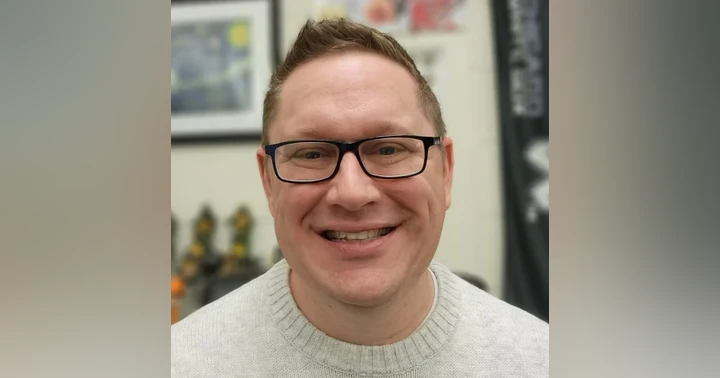
The 4 First-Page Mistakes That Get You Rejected Fast, with editor Joel Brigham

Your opening pages have about 30 seconds to keep a literary agent reading — and most manuscripts lose that fight before the first paragraph ends.
Developmental editor Joel Brigham returns to unpack exactly what makes an agent stop reading (and what makes them keep going): the four ingredients — tension, suspense, mystery, and unfairness — that hook a reader in the first few pages. He breaks down why agents almost universally reject prologues, the two-highlighter trick for catching your own info-dumps before an agent does, and where your inciting incident actually needs to land depending on your genre — it's earlier than most writers think.
If you've ever gotten a same-day rejection and wondered why, or you're prepping pages for a conference critique or your next query batch, this is the fix-it guide for those first ten pages.
Hit play — then check the chapter markers below to jump straight to the section you need.

 Apple Podcasts
 Spotify
 Castro
 RSS Feed
 Your opening pages have about 30 seconds to keep a literary agent reading — and most manuscripts lose that fight before the first paragraph ends.
Developmental editor Joel Brigham returns to unpack exactly what makes an agent stop reading (and what makes them keep going): the four ingredients — tension, suspense, mystery, and unfairness — that hook a reader in the first few pages. He breaks down why agents almost universally reject prologues, the two-highlighter trick for catching your own info-dumps before an agent does, and where your inciting incident actually needs to land depending on your genre — it's earlier than most writers think.
If you've ever gotten a same-day rejection and wondered why, or you're prepping pages for a conference critique or your next query batch, this is the fix-it guide for those first ten pages.
Hit play — then check the chapter markers below to jump straight to the section you need.
Visit the Website
Find Full Episodes on YouTube!
Writers with Wrinkles Link Tree for socials and more!
Threads: @WritersWithWrinkles
Insta: @WritersWithWrinkles
Bluesky: @bethandlisapod.bsky.social
Twitter: @BethandLisaPod
Support Writers With Wrinkles - become a subscriber
Email: Beth@BethMcMullenBooks.com
Writers with Wrinkles Link Tree for more!
00:00 - Welcome back, Joel Brigham
02:30 - Why we built this episode: the First Pages problem
04:30 - What actually gets an agent's attention
06:30 - Tip: a compelling, distinct voice
07:30 - Tip: immediate narrative momentum (in medias res)
08:30 - Tip: character agency and desire
09:30 - Why authors info-dump in chapter one (and why to cut it)
12:30 - Why agents hate prologues
15:30 - Does anyone actually read prologues?
17:30 - The big four: tension, suspense, mystery, unfairness
19:30 - How to build tension and suspense
23:30 - How to build mystery
26:30 - How to build unfairness (the reader's favorite)
30:30 - Fixing world-building info dumps: the two-highlighter trick
33:30 - The breadcrumb rule + making dialogue a weapon, not a funnel
38:30 - How to world-build with subtlety
42:30 - Where the inciting incident should go, by genre
49:30 - Final advice: agents are the gatekeepers
52:30 - Wrap-up and where to find Joel
Joel Brigham interview
Beth McMullen: [00:00:00] Hi, friends. I'm Beth McMullen
Lisa Schmid: I'm Lisa Schmid Schmidt
Beth McMullen: we're the co-hosts of Writers With Wrinkles. This is season five, episode 23, and today we're excited to welcome back editor Joel Brigham to the show. Joel is a developmental editor, author, and lifelong writing advocate. He holds a bachelor's in creative writing and English education, and a master's in teaching and learning, and has spent 21 years as an English educator. He's the author of six books and spent 12 years as a senior NBA writer for Hoops World and Basketball Insiders. He's a board member for Revpit, a 2021 Pitch Wars mentor, and has critiqued and spoken at numerous writing day workshop events.
He brings decades of storytelling and teaching experience to help writers polish their manuscripts, whether they're prepping to query agents or heading towards self-publishing. So welcome back, Joel. Thank you for joining us again.
Joel Brigham: Yeah, thanks for having me. [00:01:00] It's been a while since we last did one of these, but I am very eager to get back into it
Beth McMullen: We were just talking earlier before I turned on the the record that we have been, during the summer, putting up old episodes, like encore versions of old episodes. And your... I did both of yours, and they are just as big the second time around. So we've got a whole new bunch of people who are now fans.
So that was gratifying
Joel Brigham: Yeah, that's great. I, I always work really hard to try and make the scary process of writing feel not so scary, more accessible easy to digest kinda tips and tricks for just how to do things that authors wanna do and just don't know how. So hopefully this is some more advice that your listeners can take home if you got your pencil and paper.
Many of you are probably gonna be taking some notes. Looking forward to getting in, I hope. Yeah, 100%. The teacher in me can't help but come out a little bit in this, but no, I'm excited. I'm excited
Lisa Schmid: One of the reasons we [00:02:00] asked you, of course, to come back on is 'cause you're so amazing. But also first pages. This has been... We had started an episode or a segment called First Pages, where we would review people. Obviously, people would send in their first pages, and we would go through 'em, and the one thing we found the con- there was a consistent problem that, the problems were consistent with all the first pages just am- just about. And it was, we found ourselves addressing the same issue each submission. And rather than doing that episode by episode, we wanted to bring you here so you could address what is supposed to be on the first page. What are we supposed to be looking for? What are we supposed to be cutting?
It just... I think let's remove the mystery from that so that people know what they need to be doing with the first pages.
Joel Brigham: Yeah, and it's not just that. It's also knowing that the, the first line is what hooks an agent into wanting to read the first paragraph. And then the first paragraph is what hooks them [00:03:00] to, to wanna read the first page, and then the first 10 pages, and the first cha- like, it is a domino effect.
And if you lose an agent at any point in that process, especially early on that can be a rejection for your submission before they really had a chance to get to the good stuff. And I just, I keep telling authors agents are not gonna keep reading to get to the good stuff. The good stuff has to come almost right away.
And that's a little bit of a change, but it's the way that the attention spans of agents has gone recently.
Lisa Schmid: That would explain my 10-minute rejection.
Joel Brigham: Yeah, exactly. They re- it can. It's crazy and very frustrating to think that you could pour, a year or three years or five years of your life into something that could be rejected in 30 seconds, but it happens. And
Lisa Schmid: It
Joel Brigham: yeah, we wanna keep 'em linked in as long as possible, and hopefully today's conversation will help with that
Lisa Schmid: So with that, why don't we just jump into the first question? Because I don't wanna waste time your precious time, 'cause I know you have so much to offer. So what [00:04:00] gets an agent's attention in opening pages? That's the critical question everyone wants
to the answer to
Joel Brigham: Yeah, it's good to start there, I think. It's, it gives us kind of an objective, right? So it's not, we're not just looking at writing the best story, but looking at writing a story that is gonna sell basically. It's the difference between creating art and the world will take it as it is, versus like a Shark Tank pitch where, you need one of the sharks to agree to invest in your idea.
And when you're pitching to agents there's stuff they they expect to see. And I've got a list of a few things that, agents really like to see in those opening pages. And when I say opening pages I do for these Writers Day workshops, I do almost exclusively first 10-page critiques, the first about 3,000 words.
But when I say first pages, I'm looking more at like what the agent is gonna request for you as like their writing sample from you. So it could be the first 10, it could be the first chapter, the first three chapters. But that's what [00:05:00] I'm looking at when we say first pages.
We'll assume it's the first 10 but it could be a little more, a little less than that based on what agents want. So first things first I, I encourage authors to start their stories in a clear, grounded sense of space. That means I, I try to get them to avoid like the preamble or that like vague floating void of thoughts that people start off with sometimes that can delay us getting attached to a character, that can delay us getting right into a plot a little bit.
Those clever preambles can be very well-written. They can show off the writer's chops, but agents are looking to invest in characters. And beyond that, like when a reader has a sense of like the physical environment it's easier for them to just settle in and invest in the story.
When there's that preamble, it's like we know the beginning is coming but it hasn't started yet. So it like delays our ability to just settle into a flow as a reader [00:06:00] and start investing in what's going on. If we don't do that, we're having to fight off those like, what's going on here feelings that authors can have sometimes.
And that disorientation can be effective but I'm not talking about like purposeful disorientation. I'm talking more about when are we gonna get to the point kind of sensations. So starting in a clear, grounded sense of place is tip number one. My second one is just a compelling, distinct voice.
Agents are looking for a mix of personality and- like rhythm, in a opening few bits. They wanna see that you have kind of the gift. They wanna see that your character's gonna have a voice that they can invest in. And voice is really important for agents in opening pages because voice isn't something that you can necessarily teach.
I've had so many writer clients where I can help with, character growth and development. I can help with making sure the plot's all in the right order, and character agency, and world building, and romance beats, and all that, but voice is not something that I can really [00:07:00] teach.
That comes from years of honing your craft and reading lots of books. And so if you have that mix of personality and writing rhythm in your opening pages, that's a massive green flag. And I've certainly had pages where I've read the first few paragraphs and I'm just excited. It just lights me up to know that this is something special.
I don't know what the plot is yet, I don't know where they're going with it, but just the way they're writing. We all have authors that we will buy their books sight unseen because of the voice, john Green is one of those authors for me. I don't care what he writes, I'm buying it because of the way he writes it, so voice is a big one, too.
My third one is immediate narrative momentum, and I've kinda touched on this with the, delaying the start of things. But I do want something to happen a- almost right away. They call this in media res, in creative writing school. I'm pushing my glasses up my nose like a dork, right?
Ugh, creative writing school. [00:08:00] But in media res, the idea is that, you're in the middle of something and we're right in it. It doesn't have to be the main something. If it's The Hunger Games, page one isn't Katniss in The Hunger Games, but page one in The Hunger Games is Katniss hunting something in the woods.
There's immediate sense of place. We have immediate ... We can see her what her hunting instincts are. We can see that she's tough. We can see that she is capable, in the wilderness on her own. We get that immediately instead of Katniss giving us, four paragraphs about when I was 16, it was the hardest summer of my life," and going into that. So that makes a big difference. Tip four character agency and desire. I want the character right away to be wanting, doing, or reacting to something. I see this a lot in early pages where- The world is happening to characters. And I want characters making the world happen.
And we can see that in [00:09:00] these small choices that they're making early on. But yeah, it can be like an everyday life kind of thing, it just can't be boring. These moments are gonna be based in tension or trouble frustration, unfairness, mystery, something. But the main character needs to really want something right away so we can put antagonistic forces in the way of them getting that something, and then we have immediate tension, right?
As opposed to those opening pages being more about observation or stage setting or context building or throwing in background information or info dumping. All of that pulls us away from that opening scene. I got a lot of grief, by the way, on, on social media one time for suggesting that authors not flashback in chapter one.
You ... I've got all..." This is my impression of social media. "I've got all kinds of people who ... Have you ever read anything but Dostoevsky? He writes in fla-" I'm like, "Just calm down. Calm down." Flashbacks in the opening chapter, again, if we're [00:10:00] trying to establish a flow, if we're trying to allow readers to get lost in what they're doing a flashback is our enemy right away.
We're, instead of investing in what's happening right now, we're going back to something that they've already survived and are clearly okay despite having gone through. Let's chill with it. We have a whole book to explore backstory and stuff. So I wanna see a character wanting and doing, and I wanna stick in that scene early on.
I see a lot of wandering in those early pages, and it's not it's not a mystery as to why authors do this. Here's a little aside that explains this. Like, when we're writing chapter one, we don't know what our story is yet. We have ideas, but we don't know. So when we're over-explaining, when we're info dumping, when we're putting in flashbacks and context building, we're doing that for us to get a sense of what we're writing.
But then once the book has been written, there's a, there's 300 pages worth of opportunities to sprinkle that background information in pieces leave breadcrumbs instead of giving us the [00:11:00] whole loaf in chapter one. And then we look back at chapter one and realize, "I don't think the reader needs this.
This isn't engaging and fun and tense to read. This was for me, not the reader." But we're loathe to highlight and delete that stuff because we wrote it. There's pages there. No one wants to click delete 10,000 words. That's an awful feeling, but we have to sometimes, right?
So that's why that, that happens. And so that's something else, is like the, the subtle world building. If it's a historical novel, like subtle historical context building. Avoid the over-explanations. Avoid the extra stage setting. Give us little hints as to where we are, little hints as to how this magic works.
Let's see it. This is the show, don't tell thing. Let's see little bits of it at a time, and those hints can let agents and readers know what's going on.
Beth McMullen: L- I love this idea of the of not needing that warmup. Like you're warming up in the first couple chapters possibly 'cause you don't really know what you're doing or where you're going, and you're figuring it out, and you're [00:12:00] doing that warmup, and then realizing that the book starts on chapter four, and you can dump all of those pages because that's you wandering around trying to find the path. I
Joel Brigham: Yeah
Beth McMullen: I think w- I see that a lot in writing where I'm like, "This is not where it needs to start. It needs to start over here." Like you get there eventually, but you gotta get rid of this because like you said, the agent's gonna read that one page and be like, "I don't care," and
Joel Brigham: Угу
Beth McMullen: They never get to the good stuff. Such an
Joel Brigham: Yeah
Beth McMullen: think about your beginning as maybe not really your beginning.
Joel Brigham: Let's talk about prologues for a second. I get a lot of opening pages that are prologues, and for you listeners who don't know, agents hate prologues. They really hate prologues. And if you're like, "Why do they hate prologues so much? It's not fair," there are certain flavors of prologue that are okay, but the two that agents hate are when a prologue exists only to info dump.
We are doing that stage building or, excuse me, that stage [00:13:00] setting or that world building. We're giving effectively giving our readers an answer key for the book to come. Which isn't necessary, by the way, and does remove some of that disorientation. The analogy I always give, it's like, imagine you've been, like, just dropped into a brand new city.
You're just dropped into Rome, and you've never been to Rome before. You have no idea what's going on in Rome. You don't speak the language. As a human being, we're gonna just, we're gonna explore Rome. We're gonna figure out the streets, we're gonna figure out where to get food, we're gonna get used to the language.
We're not starting with reading, several guidebooks about Rome and then going. That's ... There's no excitement, there's no discovery to that. Those kinds of prologues are a no-no. And the other kind of prologue that agents hate are when it's about characters who aren't the main characters.
We get this prologue, with characters who e- we're just, we're led to believe they are the main character, and then they die or something at the end of the prologue or we j- or we just move on from them and never come back to them again. And then we get chapter one, and now as [00:14:00] readers, we're having to reinvest.
A- and it's frustrating, right? Wait, I just spent eight pages with this character and they're not the main character? What are we doing? They don't ma- so there's that kind of thing going on too. The, the prologues that are okay are ones where it's like there's some kind of prophecy and we have to see the base of the prophecy or, there's some traumatic event that happened as a child and that sets forth.
Imagine a mom dropping off a kid at the fire station 'cause they can't take care of it, and then chapter one is this kid as a, as an adult. Even that I would argue it's worthwhile to maybe hide that traumatic event and let us see the destructive behavior first and wonder why they're acting that way.
There's more page-turning goodness to that. But those are more forgivable prologues. And I would say worst case scenario, instead of calling it a prologue, friends, let's just call it chapter one and and kinda go from there. And let the agents not have icky feelings the moment they see that word.
It's just a ... I know that's a total tangent and we didn't talk about prologues at all, but I see a lot of that as the, quote-unquote, [00:15:00] "opening pages." Yeah
Beth McMullen: and I feel like it shows a lack of trust in the reader. You're assuming the reader is not gonna get this. So a
Joel Brigham: Угу
Beth McMullen: in the reader to figure out what it is that you're trying to convey, and also doubting your own ability to tell your story. If I need to tell you upfront, "This is the roadmap to what's gonna happen," then I don't have a lot of confidence in my ability to lead you through it. And I- it's interesting
Lisa Schmid: wonder how many people actually read prologues. I n- I never,
Beth McMullen: I skip that
Lisa Schmid: read prologues. I just skip
Joel Brigham: Yeah
Lisa Schmid: it 'cause I'm like, you know what? If I can't figure it out in the story, I don't need to know it. I just
don't wanna know what's in the prologue 'cause I feel like it's like a back dump. You know what I mean?
I
Beth McMullen: Yeah, they're
Joel Brigham: It usually is. Yeah
Lisa Schmid: I'm gonna do a little poll on the Writers With Wrinkles thread page and ask people who reads prologues. I'm, it's
Joel Brigham: Yeah.
Lisa Schmid: I wanna
Beth McMullen: It would be interesting
Joel Brigham: Yeah, the it's [00:16:00] almost, I hate to say this, but like it almost comes off as like the mark of an amateur writer. Th- there, there are genres where prologues are expected. So if you're writing like epic fantasy, a prologue's kind of expected. Like that, in a, if we're reading epic fantasy, we know that a third of the pages are gonna be just random world building and wandering, and
There, there are some genres where we expect it, but most kind of mass market traditionally published books don't expect it, and it could be wedged in there. I would say if you're submitting pages to an agent, and you have a prologue, and they say, "Send me your first chapter," don't send the prologue, send chapter one.
Th- those are your opening pages, not your prologue
Beth McMullen: Yeah, I also I relate to your flashback thing. I hate flashbacks in the opening chapter. I don't know the character well enough to care what happened to them before. That feels like something important for people to note because it is [00:17:00] another to info dump and feel like you're getting away with it, but you're not getting away with it.
Joel Brigham: Right. Yeah.
Beth McMullen: Okay,
Joel Brigham: No, you're not
Beth McMullen: about how important all of these things are in the beginning. Get that tension in there, get that suspense, build your mystery whatever it is that you are hoping to achieve. What are some ways that writers can do that in those opening pages to keep the proper balance where the reader is getting to know the character enough to care about what happens, but also making things happen? How do you g- how do you get-- how do you do that well?
Joel Brigham: So let's take a step back and look at this process as sales instead of art. I have plenty of writer clients of mine who are like, just, "What do I do? Tell me what to do and how to do it, and I'll do it." And then about one out of every 20 authors, I'll [00:18:00] have somebody say, "I don't care whether or not this gets published, I just want it to be the best version of itself, via my vision."
So if you're like a, "I don't care about selling it, I want my vision," person, like some of this you can maybe just say, "Oh, I- I'm not buying into this," and disregard it. But these tips are geared toward, frankly like strategy. Because what we're trying to do, like I said earlier, is make them read the- those first couple of lines and go, "Okay."
And then read the first paragraph and go, "Okay." And the first page and go, "I'm in." Because if we can get an agent to read 15 to 20 pages, there's a very good chance they're gonna read 50. And if they read 50, there's a very good chance they're gonna read the full manuscript. And what we want out of agents is at, at the very worst, a rejection that comes from a place of having read the whole book and just having actual feedback for you to say, "Here's why it wasn't a fit for me," or, "Why I don't think [00:19:00] it's ready."
We- what we don't want is an auto-rejection after two sentences. We want them to really consider it. I can live with rejection if you actually read it. It's harder when you know they didn't, right? So these tips are strategic in tension, suspense, mystery, and unfairness. Those are my big four for how we immediately sink our fangs into readers, and that includes agents, in these early pages.
So let's talk about tension, suspense first I encourage authors to start with a small, like localized conflict. So for example, a character's trying to hide a trembling hand, or they're trying to avoid somebody's gaze, or they're rushing to clean up a spill before someone opens the door. These are not big things.
These are not the main plot. But we're opening with these things where it's like, why is their hand trembling? Why won't they look at that person? [00:20:00] Why is spilling something such a scary thing, and what's the punishment gonna be as this person walks through the door? We are asking questions as a reader that are the questions, not "What the heck is going on here?"
But "What's going on? I gotta see what's going on." And turn the first few pages, right? It is strategic. It is enough of these little small conflicts, these little small tensions where we're like, "I want more of that." Some of that comes from withholding, okay? So it is, Giving them enough to want to invest, but withholding something key where they don't have the full picture of things yet and are going to have to read on to figure out what it is.
For example, imagine page one we're describing this character and they have a letter, and we only see their reaction to the letter. They're looking at it with dread they've got sweat rolling down their face, they're near tears. I don't know, whatever, right? And the whole first page is there's this horrible letter, and it's clearly emotionally impacting them.
How are we not gonna turn the page to page two to [00:21:00] wanna find out what that letter says, right? Now, we can't withhold that for 300 pages, right? That's a very small, minor tension. There's gonna be bigger mysteries to work with but that can be something that gets us to page three, right?
Like I said, get them to page three, and then we introduce something new. We get them to page seven, we get them to page 15, right? Another tip is to create a secret. So make one of your characters hide something or lie about something. Readers will immediately want to see if that person's secret will get found out or if they'll get caught lying about it.
They're waiting for the other shoe to drop, right? And that goes back to that character agency thing where we see them wanting something. We lie for reasons, right? We keep secrets for reasons. And the secret can be juicy, but so too can be the reason for that secret, which we might not know yet, and that's a little bit of tension or suspense that we'll read on for.
And then the, the last thing for this is just, create a little looming threat [00:22:00] or a deadline right away. Something where we- they only have so much time to get something done or they're doing something before the big bad boss comes back. There's some kind of looming threat that is just kinda the way to go.
R- really you can think of suspense and tension as a two-step process. Step one being, like, what is the character afraid is gonna happen in this exact scene? And then two, what step are they actively taking to prevent that thing from happening? That's how you create that, the, the suspense and tension comes from the fear, and then that character agency comes from their reaction. And the messier their reaction is, the better that reading is gonna be. We love messy people, and they have to be messy in the early chapters because they have to have room to grow. We're gonna read the book to see if they get less messy as things proceed.
It's- they don't have to be trying to prevent something right now, but, that scene has to have some kind of micro-tension to keep agents, readers glued. So that, that's tension and [00:23:00] suspense. For mystery, I've talked about in media res, and I'm again, I'm pushing up my glasses.
Beth McMullen: Нет
Joel Brigham: That Latin term that means starting in the middle of something. Mystery happens where, Oh gosh, I don't know. Like, when we're in the middle of something and we're running away from someone. Don't do that, that's a cliche. But we're we're ar- in an argument, or we slam the car door or something.
We're starting in the middle of something instead of the beginning of something. But again, we're asking questions. Why are they slamming that car door? What are they arguing about? Why is he so mad? Those are questions that get us to turn pages. Another way to kinda create mystery is to have a contradiction of expectations, and this is what I mean by that, is that our brains are, like, wired to spot patterns in things.
And authors, let's be real we're more wired to those patterns than most people. We're looking for that. So screw with that. Mess with those, those expected patterns. So [00:24:00] in other words, predict what the reader's going to expect, and then create a contradiction of what they would expect.
So for example, a character's about to get married, but they have a passport in their purse on their wedding day Now, not what you would expect, right? Like, why the hell do they have a passport in there? There's that. Or there's a high-ranking wizard who's the most powerful, magical wizard in the realm, but he keeps like some unbroken, like non-magical object in his pouch as a good luck charm.
Like, why would the most powerful wizard need a good luck charm? These kinds of like little contradictions, again, that just create questions. And like that's like the big part of it, is I call those like micro questions, right? Like, why is she hiding underneath the desk? Why did they leave their baby with a stranger?
It- it's key of course like to not ask those questions in the narration. I see that a lot too in these pages, where authors will, they'll ask the question rhetorically out loud. You want the reader asking those [00:25:00] questions. So you don't need to say them. They're already thinking those.
And the last way to create mystery is to have characters, like I call it play- playing pretend where they're wearing a kind of metaphorical mask. They're hiding something. They're not acting the way they usually would act, or they're acting two different ways in two different circumstances in this opening chapter.
Again, we're asking why, and we're also wondering when's that mask gonna slip. We will read on to find out when that slips. Mystery for the sake of mystery- It's not just about keeping the reader in the dark. It's handing them a flashlight and pointing it at a closed door, waiting to see what's gonna happen there, right? So yeah, we don't want them totally lost. We want them with just enough of an inkling of sight to see it. And then the last one is unfairness, which is my favorite 'cause that g- if we get our readers' blood boiling we're, right away we're looking for redemption and justice, if there's unfairness happening to us.
Forget the whole save the cat thing, where someone can [00:26:00] step in the face of unfairness and do a good deed for somebody, and so we fall in love with that character. There's that kind of added layer to this. But to create unfairness, a couple of things. One, the unfairness should be completely unearned, right?
Logical consequences are not interesting. Unfair consequences are. So someone's getting punished for something that's not fair. Combine injustice with dignity have the main character kind of under-react to the injustice. So instead of a character, like, throwing a tantrum and immediately going nuts make them endure the unfairness quietly and powerfully and nobly.
Then we're thinking "Are you kidding me? They're just gonna stand there and take this and not do anything?" That upsets people too, and they wanna keep reading to see what that boiling point's gonna be and when they're gonna blow up. Play w- play the double standard card, the unfairness, where you've got a son and a daughter and they both come home late for curfew, and the son gets no punishment 'cause he's a boy, he can handle himself, and the girl gets punished 'cause girls are just, they're frail.[00:27:00]
They can be taken advantage of out there. I totally ... So that double, that upsets people, those double standards. There is the micro betrayal where the unfairness comes from someone who's supposed to be, like, a, a love interest or a support or a friend or a protector. A small casual betrayal from a spouse or a parent a mentor.
It's not like a knife in the back, but maybe dismissing a big achievement or doing a little bit of gaslighting. Enough of a red flag for this character for us, be like, "Oh, that's not cool. That's emotional abuse." And the last one is just creating functional agency. Once the unfair thing happens make it clear the character is not just going to wallow in misery.
The world may treat them unfairly, but damn it, your main character is not going to accept that they belong at the bottom, eventually early in, in those early pages, maybe you see the unfairness happen and they steal back a small item at the end of that scene, or they end with a silent look of defiance, or they build this secret [00:28:00] plan in their head.
And now we're invested because we've seen the unfairness and we know this character is gonna blow up eventually. So if we use ... Again, you don't have to do all those things in opening pages, but that's the kinda stuff that really helps agents lean in. It is tension and suspense, it is mystery, it is unfairness.
Those are my big four.
Beth McMullen: Unfairness is the one that always gets me as a reader. I
Joel Brigham: Yeah
Beth McMullen: like... I started a book couple of days ago, and it opens with a scene that has a high level of unfairness, like just enough that I was like, "Oh, yeah, I'm in. I'm in,"
Joel Brigham: Yep.
Beth McMullen: she's gonna pop off at some point, and things are gonna
Joel Brigham: Yep.
Beth McMullen: and I wanna be there when that happens. I think it's just such an effective way, and like you kept saying, think about these things as at a micro level. You're not doing a huge lift. You're just doing enough to capture and hold the
Joel Brigham: Exactly.
Beth McMullen: which, in some [00:29:00] ways it's harder to be small and subtle than it is to be, like, big and loud.
But yeah, those are... have not thought about those things in that concise way. That list, I think captures all of those things that... I hope everybody's writing this down is what I'm saying. I wrote it down. And I'll have the video and the transcript, and I still wrote it down, so anyway.
Lisa Schmid: I, yeah, it's ... er, as, as you're talking about this, I was going through a checklist of my book that's out on sub, and I'm like, "Okay. Okay, did
Joel Brigham: उह हाँ।
Lisa Schmid: to pack in a lot in those pages without being too obvious.
Joel Brigham: उह हा।
Lisa Schmid: it screaming, "Look at me. Look what I'm doing."
It just has to be, like, little nuggets, enough to start, like, pulling you in. And one of the things that and this is the next question is the world building in the first pages. I think
Joel Brigham: उह
Lisa Schmid: biggest area that we've seen being problematic [00:30:00] on first pages, is that people are doing too much world building.
There's too much details, and you get
Joel Brigham: Yeah
Lisa Schmid: because it's "That's just not important to me. These details are..." Unless it's very specific and it's adding, it's important to moving the story forward you just don't need so many details. And so I'd love to hear your thoughts on that, and how, how you do that world building in those first pages.
Joel Brigham: Okay. This is, that's a load, it's a loaded question. There's a lot to consider there.
Lisa Schmid: know.
Joel Brigham: But let's look at this in kind of two parts. Like one, let's look at how do we avoid doing that. And then let's look at some of the like altern- alternative strategies that are better, right? So we're gonna look at how to not do it, and then we're gonna look at how to do it.
Okay? How to avoid those info dumps I think the best piece of advice is to start with like the, the need-to-know basis, [00:31:00] we very often, I do this in my own books, and I know better, and I do this. Like we over explain in those early pages. And again, I think there is this, we have in our heart, like we want them to have everything packed in their suitcase that they're gonna need for their journey as we read this, this book together, right?
And so we give them, we over pack, we pack the hairdryer we're never gonna use, and there's just more than we need, right? And I think of it more as like what we should have is just a, a very small carry-on. What's the minimum we need to make this vacation work, and that's where we start with like this information and info dump.
The what's the need to know? And my tip, and this is, I think this has worked for a lot of writers, but get your opening scene and get two different highlighters. Like print this page out. Two different color highlighters. In one color highlight the information that you think the reader has to have to understand the immediate scene.
In the other color, highlight information that explains why things are the way they are. So backstory, [00:32:00] world mechanics, history, and I think you'll be surprised at how much of one color you have and how little you have of the other color. And once you've got that, you can then revise that, eliminating as much of that second color as possible.
That's the kind of way to see it. Print off your first 10 pages and highlight the need to know in one color, and highlight the extra stuff in another color. Because, and I know I've already said this, but like you have a whole book to slowly help us acclimate to this world. And if you're writing fantasy or sci-fi chances are you've got more than one book to, to build this world, I know historical fiction's often more contained at one-off, so you have to do that historical context setting a little more efficiently. But- You know, very often you have plenty of time to do this world building. So for the first chapter, these opening pages, that's the point of this podcast, what's the need to know, right?
I also talked earlier about, the breadcrumb versus the loaf. You want the reader to have enough breadcrumbs to make [00:33:00] them hungrier. We don't want to satisfy them with a full meal right away. It's okay for some things to be a little disorienting early on. That fuels the hunger, there's a line in my favorite movie is O Brother, Where Art Thou? Which has come back into the public consciousness, 'cause it's like an Odyssey, retelling of The Odyssey, such a big deal right now. And there's this line in there where, the guys have escaped the prison and they're cooking gophers over the campfire.
And one of the characters goes, "Gopher, Everett?" And he's like, "No, one gopher would only arouse my appetite without bedding it back down." And I think about that in terms of of writing. If we give them too much to eat in that opening chapter, they're not still hungry. Little bits to keep make sure that appetite is still there.
So you know, keep that in mind too. Next for world building eliminating those in those early pages, is to make sure that your dialogue is a weapon and not a funnel. And this is what I mean by that. If you are using your dialogue to [00:34:00] explain things, to funnel information to your readers, you're doing it wrong, especially in those opening pages.
If you are using your dialogue as a weapon, so there's conflict in the dialogue, there's subtext in the dialogue, you're doing it right, I see a lot where it's like, "What are you doing out here so early, Billy?" "Oh ever since President put the laws in place for us to never have shoes on in public, and my magic has become so powerful that I can..."
We see a lot of that, and the dialogue becomes all about info dumping, and we don't want that, right? Keep that in mind. Dialogue should be about conflict and subtext, especially early on. Really throughout the book, but especially early on, and not for info dumping, right? And then I know, we already said this, but what happens if you completely delete the first chapter?
What happens? Pull up your book, highlight chapter one, delete it, and read it and see what you're left with. And if it works, if the story still functions, then don't put that chapter one back in. So that's where most of the info dumping happens. So those are my tips [00:35:00] for getting rid of it, and we start there.
Lisa Schmid: Oh my God, that's so funny. Your like little is just
Beth McMullen: Lisa Schmid just lost it.
Lisa Schmid: I know, but it's so funny because and we all do it, and I think one of the things that, I'm guilty of and I see so many people guilty, is we have these clever lines or these clever descriptions that we're just like, "Oh my God, look at me.
I'm like such a good writer" and then your critique partner comes along and is like, one needs to go."
Joel Brigham: Yep. Yep. That's,
Lisa Schmid: hard
Joel Brigham: they mean when they say kill your darlings. That's what they mean,
Lisa Schmid: and it's
Beth McMullen: Yes
Lisa Schmid: first chapters, you're like being like you're getting in the mood, and you're like, "I'm a writer and I'm writing this" and then you realize like There was in one, in this one book, I remember there was like two lines that I just kept in forever, and it was ... I just thought I was so clever, and then I finally, like right [00:36:00] before I sent it to my agent, I just deleted it and I'm like, "Oh my God, that's so much better."
For a year and a half I
Joel Brigham: yeah
Lisa Schmid: like loving on these lines in the first chapter, and I'm like, "Oh my God," I just it was so unnecessary.
And so I feel like you have to really sharpen the knives
Beth McMullen: It's hard to let go sometimes 'cause you
Joel Brigham: Yes, it has
Beth McMullen: own little bits and stuff, and then you're like, "Ah, it hurts me to,
Lisa Schmid: so
Beth McMullen: to chop you up." So
Joel Brigham: And
Beth McMullen: this-
Joel Brigham: of why chapter one's so hard to cut is because that's when we were most excited about writing this book, was when we sat down to start it, and so we have all these feelings about what we wrote, and this is where we got started, and then to cut that of all chapters, it's the most heartbreaking.
But yeah that's so funny. Yeah, that's ... Usually a lot of that is cuttable, so
Lisa Schmid: Can I add one more thing that I
Joel Brigham: Of course
Lisa Schmid: recently, they really zeroed in on an object in their
first chapter as part of their world building. And so for the rest of the book [00:37:00] I was like, "Why is this important?" Like, why is, why was this brought up, or why did that, why did the author zero?
And it was never brought up again, and it was a distraction for me. So
it's if you're gonna zero in on something and really point it out, y- you better have a reason for it. Y- it
just it's one of those things, it became a distraction for me, and I kept looking. I'm like, "When's she bringing it up again?"
Joel Brigham: Yeah.
Lisa Schmid: And when I
Beth McMullen: Yeah
Lisa Schmid: "Okay, this is making me mad."
Joel Brigham: No, 100%.
Lisa Schmid: those things
Beth McMullen: y- the if you roll the cannon out on stage, you better blow it off
Lisa Schmid: Yeah, totally
Joel Brigham: That's Chekhov's gun, right? If you show the gun, you have- someone has to use the gun. Yeah.
Beth McMullen: I went to
cannon. I just revised it.
Joel Brigham: Checo- Chekhov's cannon, right?
Lisa Schmid: you always
Joel Brigham: Che-
Lisa Schmid: to go
Joel Brigham: Chekhov's slingshot. I love it. Che- Chekhov's atomic bomb.
All right, well-
Beth McMullen: let's talk about inciting incidents because I know there's always a lot of [00:38:00] confusion when people are starting to draft a first novel or a 15th novel, but maybe I'm just talking about myself.
Joel Brigham: Beth, real quick. I hate to interrupt. Can I go through my things for how to actually world build?
Beth McMullen: Yes!
Joel Brigham: Okay. 'Cause I said I was going to and then I didn't.
Beth McMullen: Oh yeah. Yeah, so just
Joel Brigham: I'll just,
Beth McMullen: launch
Joel Brigham: pick it up. Yeah. Yep. So then let's look at how we do world build with subtlety. How do we do this the right way, right?
And being subtle, it's so hard because we're so excited to tell our story. But I always, again, I'm, I'll, there's always an analogy. It drives my wife crazy 'cause I don't just, I speak in riddles. But I think of it as like after a first date, is it more effective for a young woman to kiss that young man on the first date or to get right up to his face and say, "Good night," and then close the door in his face, right?
There's a little bit to that with world building is it has to be subtle. And so my tips for making sure that it's subtle, first one, assume [00:39:00] normalcy. So your characters need to interact with things that to us as readers are extraordinary as though they are boring, everyday things. So we can see them, this is show, don't tell again, but we can see them if their world has a floating island.
We're not gonna explain the anti-gravity crystals that are keeping it up. Instead, we're gonna write the character complaining about how the humidity is messing with the altitude stabilizer on their morning commute. We're treat, we're treating speculative elements like they're boring, mundane things to help the reader accept them as real, right?
Another way to do it is to consider like the margin of error. So in other words, instead of a world that functions perfectly show a character dealing with some kind of friction or fracture with the world they live in. Technology that's like crumbling or environmental catastrophe or magic that's failing or something, right?
Something's not perfect in the world. We can, again, show, don't tell. We see that. Focus on sensory stuff. This is really good for like [00:40:00] historical. So the, the city doesn't just smell like smoke. It could smell like sulfur if it's in a heavily like industrialized area. Or maybe the smoke smells like roasted chicory in a world where like coffee is being rationed, or the, the air could smell like brine if the world is near the sea, right?
Use the senses instead of exposition to bring this place to life. Vocabulary is great, too, so like replacing real-world idioms with things that are just not what we would expect. That tells us we're not in Kansas anymore. So like maybe instead of saying, "Boy, you're skating on thin ice," a character in the in the desert might say something like, "You're walking the shifting sands here, buddy."
Because that's what they would say in like a desert kind of world, right? I see this a lot. The best example of this is in fantasy when they say, "Oh, my gods," instead of, "Oh, my God," there's multiple of them, like that kind of thing. And then lastly, just you know- I call it the incidental witness.
Have the main character [00:41:00] notice like some piece of world-building in the background that they barely notice because they're too focused on their own immediate goals. So for example, they'll brush away like an annoying honeybee because they're ... Sorry, an annoying mechanical honeybee because they're late for work.
Their world, which is magical and amazing to us, like annoys the heck out of them the same way like traffic does for us, or the Internet's down for us. What's the equivalent of that in this world? And show those things. That's all show, don't tell, right? It's instead of saying what these things are, we're showing what these things are, and you can leave, these are the breadcrumbs that you can leave.
And you can do these throughout the book, not just in the beginning, throughout the book, and then your world-building is much cleaner and much more subtle
Beth McMullen: They're really small too. These are small, they're small, powerful images. It's a, it- it's a... I'm thinking about the mechanical bee. It's a very small moment that actually carries so much more weight than the space it takes up in your [00:42:00] pages. And I think throughout this conversation so far, there have been a number of things that are small in, how many lines they're gonna take up on your first 10 pages, but they're doing double duty.
They're conveying a lot of important stuff with- in a very small space, which I think is part of the challenge of those first pages, 'cause you do have to have multiple things happening, and they have to all be happening, and you don't have a, an unlimited bandwidth to roll them out. So I find
Joel Brigham: Yep
Beth McMullen: It's a challenge, and it's the sort of thing that you may write your first chapter 25 times before it feels like it's doing all the things it needs to do. That's just being a writer, right?
Joel Brigham: Yeah. Yeah
Beth McMullen: let's switch gears to the inciting incident, which is something I think causes confusion, endless confusion. Mostly it's not so much about what it is, but, like, where does it go?
Is it too early in chapter one? Do you have to do it in chapter one? I'm just saying [00:43:00] chapter one to represent your beginning, say your first 10 chapter whatever. Does it come later? How do you... We know it's important, but we don't totally know where to put it
Joel Brigham: It's, yeah, industry standards are shifting, right? So if you have a copy of Save the Cat!, and most serious authors have at least heard of that or looked at a beat sheet or ha- you know, p- a lot of us have read it, right? But Save the Cat! said that the inciting incident goes between 10 and 15%, that kind of area of the book.
15% is definitely too late in today's landscape. It's just, it's way too late. That, that's page, in a 300-page book, that's page 45 where we're getting the inciting incident. That's just, that's too late to be doing that. The reasons why it's too late and why these things are shifting it's not hard to suss out, like, why.
In, in a, a digital world with apps that give us [00:44:00] instant gratification, if we don't like a TikTok, we can immediately scroll to the next TikTok until something, shoots off the dopamine in our brains, right? As human beings, we are expecting more efficient consumption of this stuff.
Social media hasn't helped. But beyond that publishers are acquiring shorter books these days. Shorter books cost less to print. They're lighter, and so they cost less to ship. They're shorter, so they cost less to edit and format and all that. There's higher profit margins on shorter books, right?
So these are all reasons why this has moved up. So I'll just say the new industry standard is between 1 and 10%, and the genre matters. So let's just run through them, right? If you're doing a thriller, a mystery, or horror it's going to be very early. It's always been earlier for those than most other genres.
But in a mystery we're gonna find the body on page one, or at least in chapter one, right? There is no normal world setup because we're beginning with the thing the [00:45:00] crime, the mystery the scary bit, the whole ... we're starting right away. We're getting right into it.
So for those genres, you can dive right in, which, these other genres, we're, we might delay it because we want that everyday life. We have to set a baseline of what they are and where they currently exist and what their current issues and downfalls are so we know where they're starting so we can track their growth and see how they're gonna change, right?
But not all genres need that same level of kind of baseline. So romance. I do probably more romance than any other genre. I don't know why. I get so much romance, but it's okay. The, the meet cute, that's the de facto inciting incident in a romance novel. And that should happen before the 5% mark.
That's really early. Ideally, the love interests meet somewhere in chapter one, but if it's like a dual point of view romance i- it can be chapter two, but it better be quick. And chapter one better be short. In romances if we don't have the meet cute by the end of both of the [00:46:00] characters' introductions, it's too late.
I I've seen plenty of romances where they put it in chapter three, chapter four, kind of the, the second run in that dual POV, and it's just too late. So for th- those sake, we have to see those characters bump into each other. The, meet where they, the papers pile on the floor and they look up and, "Oh my God, they're so handsome."
That kind of thing happens very early. As far as like fantasy, sci-fi, historical I recommend the inciting incident go between chapter two to four, which is more in that like 7 to 10% range. These have a little bit of a longer leash for an inciting incident, because we do need to establish that everyday life for these kinds of books, right?
Because in these kinds of books, fantasy, sci-fi, historical, typically our characters are being uprooted before we get to the promise of the premise. They are, those are more typical kind of hero's journey-ish kinds of stories. So we have to see where they're starting before we disrupt everything for them.
So chapter two to four is a good sweet [00:47:00] spot, kinda 7 to 10% is what I recommend for those. If you wait beyond these recommendations readers can maybe not quite grasp like the stakes that they're supposed to be investing in, right? Especially if they're veterans of the genre, if they read a ton of romance and they know the meet cute's supposed to happen early, and they get through the end of chapter two and it hasn't happened yet, they're like, "What the hell?"
We've all seen those Hallmark Christmas movies and, my wife watches those. She loves those, but she watches them because at that time of year, she's very stressed. She wants something very predictable, cozy romance. I've heard of cozy mysteries, cozy thrillers. I've heard of cozy horror.
And all that means is predictable. It's genre stuff for people who are looking for something that there's no surprises, they can just settle into it. I know not all books need to just meet expectations. We want to defy expectations or exceed expectations or throw a curve ball or be surprising or unique or different.
That's fine. But anyone [00:48:00] reading a certain genre of book does have expectations for kind of the rhythm of a story like this, even if they don't know it consciously. Most readers don't know how these percentages and story beats and how they impact storytelling. But we do, so we have to be responsible for making sure at least some of those beats fall in the general area of where they expect them to.
So my rule of thumb for an exciting incident, and I'll end with this, is give us one really strong scene that anchors the protagonist in the status quo. Show us their desires and flaws, and then drop the match onto the gasoline, that's pretty standard kind of across genres, with the exception maybe of like thriller mystery horror
Beth McMullen: I think that is really good, a good way to think about it, and a good way to frame it for everybody who's trying to figure out where to put this. You just don't have the runway that you used to maybe have. You've gotta, you gotta deliver quicker. And I find myself I look for [00:49:00] that in the genre reading that I do.
I love thrillers, I am very aware if we've gone beyond a certain point and I still am like, "What? What's happening?" And you're more inclined to lose me as a reader if you're not delivering to my expectations. Again, that doesn't need to be formulaic, but it does need to be con- following the convention so that, within that convention you can play all you want, but you still have to deliver the expectations of the reader. So any final words that you wanna throw out there to our audience to help them navigate the first pa- the, what do we call it? The landmine of the first pages. And
Joel Brigham: Yeah,
Beth McMullen: talking to me 'cause I, I'm all over the place with my beginnings.
Joel Brigham: No, I know. We all are, to be honest. I think the important thing to remember is that, like it or not, agents are the gatekeepers. We have to impress them [00:50:00] if we wanna be traditionally published, and impressing them these days is harder than ever because it's easier for people to write books.
They're getting way more submissions than ever. I have agent friends, and it's, they'll joke and say when they open up for submissions, for a half a day they'll have 200 submissions in four hours. There's so many people who are writing books now, more than ever. Not all of it's good.
A lot of it's not which is why the agents are the gatekeepers. Their job is to find what they think pub- or publishers can sell, and deliver it to them. And so it is strategic. We do have to be mindful of not only "I think this is good," or, "Gosh, this could be so good if some agent would just give me a shot, or just invest in me and just show me the way," that's not what's gonna happen. It's our responsibility to really get these books in as good a shape as they possibly can, and that starts with those opening pages. I've said it, I know four times today, but they are not going to give authors the [00:51:00] benefit of the doubt and assume that the, quote-unquote, "good part" is coming up.
It has to be good from page one. And we've discussed all kinds of different ways of what good can look like, right? But that is ultimately what we're trying to do, is break through the slush, agents are not going through their inbox looking for people's to make people's dreams come true.
They're looking through their inbox to make sure they don't miss something that they can sell. I know that's very cynical, and doesn't meet the romantic ideal of the author, but they just don't wanna lose out on the next, Children of Blood and Bone, or they don't wanna miss out on the next, whatever.
All these books that just pop up out of nowhere, they don't wanna miss it. And so we need to give them a reason to stand out in the slush, we gotta make sure that we're doing the, this basic stuff. And frankly, if we can do this basic stuff, I'm dead serious, you're above 90% of query submissions, if you're giving any thought to these things at all.
I'm not [00:52:00] kidding. There's a lot of folks that write and send. So if you're taking any of this podcast into consideration as you write or revise, you're ahead of 90% of people in the, the slush files, and that's a good deal. So put your thought and love into it, and then release it to the world, get some feedback, and grow from there.
It's not easy. You're gonna get some rejections, but,
Beth McMullen: Yes. That is a perfect place to wrap up. I
Joel Brigham: It just is what it is.
Beth McMullen: think it's good advice. We're giving you the tools, now go execute on them.
Joel Brigham: Amen
Beth McMullen: time to get it right. You only get one shot at an agent, so make sure what you're sending is the best that you can do. So thank you, Joel, for coming back and sharing yet another treasure trove of wisdom with us.
I know our listeners are going to be thrilled to get this episode, and they're gonna be sitting down with their pencils and jotting down all of this stuff, 'cause I know I was as we were talking. So thank you again for coming on.
Joel Brigham: I enjoyed myself. Anytime
Beth McMullen: And listeners, remember you can find out more about Joel by visiting our podcast notes and the [00:53:00] blog at writerswithwrinkles.net, and we will be back next time with an Ask Beth and Lisa Schmid episode. So if you have questions, thoughts, feelings, please send them our way, and until next time, happy reading, writing, and listening