Guilty Until Proven Human: AI's War on Authors
AI companies scraped and destroyed rare books to train their models — and now authors are the ones being told to prove they didn't use AI to write their own work. In this episode, Beth and Lisa unpack publishing's newest, most unfair double standard.
The Machine That Ate the Books
Before AI ever asked a writer to defend themselves, it came for the books first. Beth breaks down the disturbing pipeline behind large language models: companies are reportedly buying enormous quantities of pre-2022 books from used booksellers around the world, shipping them to processing sites, tearing off the spines, and feeding the pages through scanners — destroying the physical books, including rare ones, in the process.
"It's literally like a monster eating books," Beth says. And the goal, according to some investigative reporting, is comprehensive: acquiring every book ever written, cataloged by ISBN.
Guilty Until Proven Human
Here's where the double standard kicks in. The same industry profiting from scraped books is now asking authors to prove their own work is human-made — often with no real evidence, just a "vibe" from an AI detector or a suspicious editor.
"You're guilty until you prove yourself innocent," Beth says. Lisa adds the obvious question nobody in publishing seems to be asking out loud: "They've created this machine that has stolen all our work... and then they've created this other machine that's accusing us of using AI. Why did you create this machine to begin with?"
The result is a strange, exhausting new tax on writers — one that has nothing to do with the writing itself:
- Deleting em dashes so no one assumes AI wrote the sentence
- Deliberately messing up polished prose to look "more human"
- Keeping multiple saved drafts as a paper trail, just in case
- Bracing for accusations with zero way to definitively disprove them
Who Gets the Pass — and Who Doesn't
Both hosts point to a real double standard playing out in real time: some authors openly use AI and face no backlash, while others — often newer or more vulnerable writers — get accused with no basis at all, sometimes losing book deals over it. As Lisa puts it, "It just seems like there's a different set of rules for different people right now."
Beth reframes the whole situation through an unexpected lens: behavioral economist "nudge theory," and the recycling bin. Individuals were nudged to recycle their cans so companies producing mountains of plastic never had to change. It's the same setup here. "We are the plastic bottles," Beth says — writers absorbing the burden that AI companies created and refuse to own.
So What Do You Do?
Neither host claims to have the fix. But their bottom line is clear: the market, not a paranoia-driven checklist, should decide what succeeds. Beth's take: "If the market rejects AI books, doesn't like them, nobody's buying them — then it becomes a non-issue." Until then, she's not interested in jumping through hoops to prove her humanity to a "vague, nebulous you."
Their advice for writers feeling the weight of it all? Don't lose the joy. Find whatever path — traditional, indie, hybrid — actually makes writing feel worth doing again, and don't let fear of accusation freeze you at the blank page.
(Stick around to the end for a lighter story: an AI-sounding conference invite that had Lisa convinced she was being scammed — until a "proof of life" phone call proved otherwise.)
Listen to the full episode for Beth and Lisa's unfiltered take on AI's double standard in publishing — and let us know: has AI made you second-guess your own writing voice?
Up next on Writers With Wrinkles: Susan Marston, editorial director of Albatros Books, on what one of Europe's largest publishers is up to as it expands into the U.S.

Author
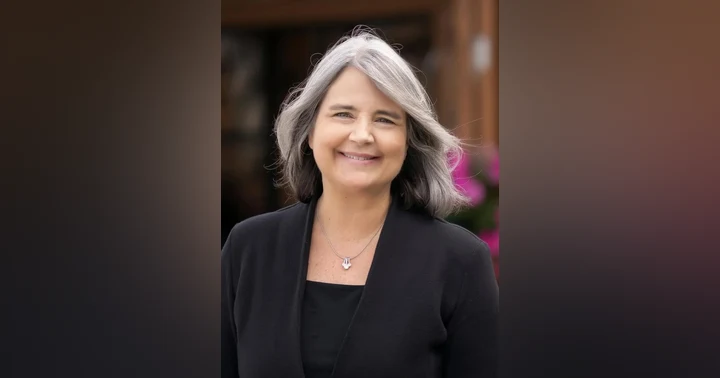
Beth McMullen is the author of the Mrs. Smith’s Spy School for Girls series , the Lola Benko, Treasure Hunter series, and The Secret of the Storm series (Aladdin/S&S).
She is also the author of the Spy Mom series (Hyperion).
Beth lives in Northern California with her husband, kids, and very grumpy cats. She's obsessed with podcasts and might give up writing in order to have more time to listen. Could happen.
How a Thriller Writer Wrote a Cozy Mystery in Four Weeks