The 4 First-Page Mistakes That Get You Rejected Fast
Literary agents are rejecting most submissions in under a minute — sometimes in under thirty seconds. Not because your story is bad, but because your first few pages are doing the wrong job.
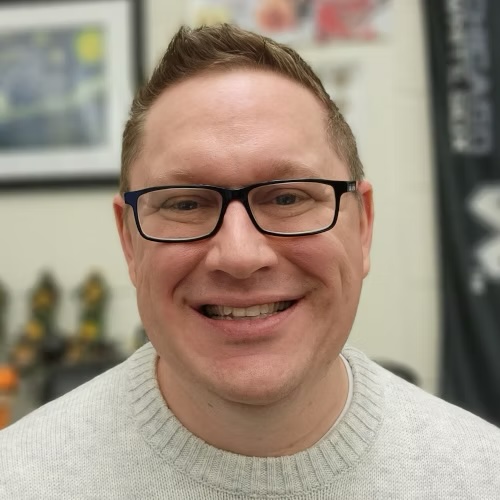
That's the topic developmental editor Joel Brigham tackled when he returned to Writers With Wrinkles to answer the question hosts Beth McMullen and Lisa Schmid say comes up more than any other in their First Pages critique segment: what's actually supposed to happen on page one?
Joel has spent 21 years as an English educator, written six books of his own, and worked as a developmental editor and Pitch Wars mentor helping writers get their opening pages in front of agents. His answer wasn't vague craft advice — it was a specific, repeatable list of what agents are scanning for, and the four mistakes that get manuscripts auto-rejected before the "good stuff" ever shows up.
Here's what he covered.
Why your first page has to work harder than you think
Joel's framing for the whole conversation: treat your opening pages less like art and more like a pitch. Agents aren't reading with the assumption that things will get better — they're deciding, sentence by sentence, whether to keep going.
"The first line is what hooks an agent into wanting to read the first paragraph," Joel explained. "And then the first paragraph is what hooks them to want to read the first page." It's a domino effect — and losing an agent early means your manuscript never gets a fair read.
Mistake #1: Starting with a floating, ungrounded opening
Joel's first tip: give readers a clear, grounded sense of place immediately. Skip the atmospheric preamble or the "vague floating void of thoughts" some manuscripts open with. It might be well-written, but it delays the moment a reader actually settles into the story — and agents are looking to invest in a character right away, not admire your prose in the abstract.
Mistake #2: Withholding the character's voice
Agents are scanning for a distinct, compelling voice in those opening lines — a mix of personality and rhythm that signals you have "the gift." Joel's take: voice is the one thing he genuinely can't teach a client. Structure, pacing, world-building — all coachable. Voice comes from years of reading and writing. When it's there in the first paragraph, it's what makes an editor (or an agent) buy the book sight unseen.
Mistake #3: Delaying the story instead of starting in it
This is the classic in medias res advice, but Joel's example makes it concrete: page one of The Hunger Games isn't Katniss's backstory — it's Katniss hunting in the woods. We learn who she is through what she's doing, not through four paragraphs of context before the story starts.
Mistake #4: Characters reacting instead of wanting
The last of Joel's core four: your character needs to want, do, or react to something right away — not just observe the world around them. "I see this a lot in early pages where the world is happening to characters," Joel said. "I want characters making the world happen." Small stakes are fine. Boring passivity isn't.
The bigger pattern: info dumps, prologues, and flashbacks
Underneath all four mistakes is one root cause Joel kept circling back to: authors explaining instead of showing, because they need to figure out the story as they write it — but then never cut that scaffolding once the book is done.
This is where prologues and flashbacks get writers in trouble. Joel doesn't mince words: "Agents hate prologues." Specifically, the two kinds that exist purely to info-dump backstory, or that follow a character who isn't actually the protagonist. His fix, half-joking but not really: "Worst case scenario, instead of calling it a prologue, friends, let's just call it chapter one."
His practical test for catching this in your own pages: print your opening scene and grab two highlighters. Mark what a reader needs to understand the immediate scene in one color. Mark backstory, world mechanics, and history in the other. Most writers are shocked at how lopsided that split is — and once you see it, you can start cutting.
Where the inciting incident actually needs to land
The conversation also covered a question that trips up writers at every level: where does the inciting incident go? Joel's answer: earlier than most people think, and it depends on genre.
- Thriller, mystery, horror — almost immediately, often page one
- Romance — before the 5% mark; the "meet cute" is the inciting incident
- Fantasy, sci-fi, historical — chapter two to four, roughly the 7–10% mark
Older craft guides like Save the Cat! put the inciting incident closer to 10–15% of the book. Joel's read on the industry: that's now too late. Shorter attention spans and shorter books (which are cheaper to print, ship, and edit) have pushed the expectation earlier across the board.
The bottom line
Joel's closing point is the one worth sitting with: agents aren't reading your inbox hoping to discover the next great novel. They're reading to make sure they don't miss something sellable — and they're doing it fast, often across hundreds of submissions in a matter of hours.
"If we can do this basic stuff, I'm dead serious, you're above 90% of query submissions," Joel said. That's not a small thing. It means the fixes covered in this episode — grounding your opening scene, establishing voice, starting in motion, giving your character agency, cutting the info dumps, and timing your inciting incident correctly — aren't polish. They're the difference between getting read and getting an auto-rejection.
Listen to the full episode for Joel's complete breakdown of tension, suspense, mystery, and unfairness — the four narrative tools he says do the actual work of keeping an agent (or any reader) turning pages — plus his tips for building subtle, believable world-building without the info dump.
Chapter markers are available in the episode player if you want to jump straight to a specific section.

Author
Beth McMullen is the author of the Mrs. Smith’s Spy School for Girls series , the Lola Benko, Treasure Hunter series, and The Secret of the Storm series (Aladdin/S&S).
She is also the author of the Spy Mom series (Hyperion).
Beth lives in Northern California with her husband, kids, and very grumpy cats. She's obsessed with podcasts and might give up writing in order to have more time to listen. Could happen.
What a Graphic Novel Editor Wants You to Know Before You Write One